
Everyone could use a little more confidence. Imagine a campus where faculty, staff, and students walked around with a little more confidence, it would make a significant difference in the academic environment. When you have more confidence you feel like you are a person of worth and value and you feel like you can take on anything. You feel like what you do matters. Below you will find 3 tips on how to improve your confidence. Hope you enjoy!
Tag Archives: education

The Mark of an Educated Mind
The ability to think critically is the most important tool education can provide. It is a universal skill that is advantageous regardless of experience, background, or future ambitions. It should not be a surprise that one of the few common themes between my three years of writing for Write6x6 is critical thinking.
Since I transitioned to online teaching, there has been one series of assignments that I have continued to incorporate into all my courses. It starts as an entry-level writing assignment where I first give students carte blanche to defend a personally held belief. Next, the students summarize their defense into a discussion post and then play devil’s advocate with other students’ submissions. The final stage is writing a defense of the opposing viewpoint to their original work. The overall goal is to introduce students to the concept of understanding, without adopting, differing opinions.

A favorite quote of mine comes from Aristotle, “It is the mark of an educated mind to entertain a thought without accepting it”. I felt, and still feel, these assignments put that wisdom into action.

The assignment originated from a journal prompt I gave before doing a lecture on critical thinking in my face to face courses. In those courses, the students were able to get a full lecture of context before they were challenged to “put on someone else’s shoes”. The online assignments evolved into a background to a larger module of materials.
Without the face to face lecture to provide specific context, I received some impassioned pushback when I first started using the series of assignments. I still have an e-mail archived away from a student who accused me of pushing my personal political bias on them for making them write an opposing viewpoint on the issue of abortion. This was, of course, the topic the student had chosen to defend in their first assignment. I will say it was one of the more heated and accusatory letters I have ever received from a student.

The letter probably had the opposite impact the student hoped for. It serves as a continual reminder to me that critical thinking skills are the true definition of “educated”. I have since added more context to the assignments, but I have every intention of keeping a similar assignment early on in every course I teach for the rest of my career.
I plan on elaborating more on the need for critical thinking in politics in my final Write6x6 post, but the need expands well beyond politics and permeates the fabric of our society. The first and last lines of defense for critical thinking are educators, so find your battlefield and dig in.
WE MATTER
In January, I had the honor of emceeing the 2019 Districtwide Faculty Convocation. All faculty throughout the district took the time out of their day to join us for a day of learning, sharing, and celebration. I was honored because I was asked to emcee an event that had not been conducted in years, in 2019 this special event made its comeback.
As the emcee, I had the honor of sharing final thoughts with the audience at the end of the event. The statement below is what I shared at the event. The message was WE MATTER. The message is definitely geared towards faculty, but I think anyone can pull something from the message. When we feel like we matter we bring our best to the table and those we are serving receive the best that we have to offer, and that is a wonderful thing.
“We matter. As a collective, as a whole, we are some of the best and brightest. We are responsible for teaching students. Everything we say and do impacts their lives in direct and indirect ways. We are responsible for engaging in instruction, systems, and processes that will contribute to their success. This engagement requires change and it makes us uncomfortable, which can lead to uncertainty and can lead to anxiety. We matter when change comes about. Our thoughts, ideas, opinions, and actions can go a long way and has a significant impact. We can help things thrive when we come together. When we realize we are on the same team. I’ve seen amazing things happen when faculty come together. I’ve seen faculty pull together and donate textbooks so that the students will have the materials they need to be successful in the classroom. I’ve seen faculty senate come together and contribute to Student Appreciation Night so that students feel like they are important, and that they have worth and value. The two examples I just gave, are just two of the many reasons why we matter. There is power in the work that we do, especially when we come together. We are stronger together than we are apart. That power is diminished when we are working against each other. I encourage all of us to remember that we matter and that we serve a purpose in this district. We all have worth and value, and we’re not alone. We are surrounded by colleagues and campuses who support each other and are here to ensure that we are successful throughout the district. Thank you.”

To bend WITHOUT BREAKING
Several years ago, I had a student at GCC who taught me that a major difference between success and failure as an educator is malleability.

― Confucius
When I received the notification that I would have an American Sign Language interpreter in my class for the first time, I was excited. My mother is also an educator, currently in administration, but taught ASL early on in her career. When I was a child, she could not afford a babysitter and frequently brought me along as she taught late night ASL college courses. I never learned sign language outside of the alphabet or how to ask and answer basic questions, but was excited to make use of what little I knew from my mother’s teachings from twenty years earlier.

Overconfidence leads to cruel reality checks. I was not prepared or capable of communicating with my student without the help of the interpreter. The interpreter was very kind about my attempts, but I had to give up on using any sign language as to not create confusion. I quickly reverted to my default teaching method, which is high energy and high speed.
After the first few writing assignments, I knew something was wrong. It was obvious that the lessons and lectures were not getting through. The reality is that I was the one struggling and not my student. I had become rigid in my methods after three years of teaching the same curriculum and using the same PowerPoints, videos, and handouts. Those methods were directly leading to an obviously gifted student failing my course. I’m ashamed to admit that I did not want to adapt, I defended my stubbornness by telling myself that I should keep doing the same thing I had always done because change would hurt the rest of my class.
My student’s first essay broke through that stubbornness. I still remember her conclusion on how the deaf still hear the music of life. There were grammatical, mechanical, and formatting errors aplenty, but the poetry of her language revealed passion and talent. I could tell she was upset when she saw the grade. After class that day I sat down with her, pointed out her gift for language, and did my best to encourage her. Once she left, still downtrodden, I had a conversation with her interpreter. They confirmed everything I already knew I was doing that was making learning more difficult.
I needed to slow down the speed at which I went through lectures, re-work my materials, and dig for relevant videos with subtitles. I won’t say it was a perfect transition, but over time my methods improved and the entire class, not just one student, benefited. She ended up passing that course, and the next level course after it.

One day, a semester later, I saw her in the curved glass hallway in the HT2 building on campus. She waved me down and walked up with a contagious smile. Without her interpreter the conversation was a bit awkward, but I had learned if I spoke slowly enough she could lipread incredibly well. After a short update on her coursework, she thanked me for helping her pass English. It is hard to put into words, but her genuine excitement created a memory I still treasure now. I was able to reply with one of the few signs I did know: “Thank you”, and that was the last time I saw her.
I like to think that she is now nearing a decade into her career in art design. If I could, I would elaborate on my final words to her: “Thank you for making me realize that malleability isn’t a bad word, that sometimes we have to bend if we are to evolve into a better version of ourselves.”

Do You. Be You. You Matter.
In high school I remember this message very clearly: High self-esteem is everything. In high school, some of us rolled our eyes at the cheesy posters and videos preaching the importance of this message. Fast forward to our adult years and we find that all of that cheesiness is true. Self-esteem is connected to feeling like you matter. People with high self-esteem feel like they matter because they feel like they are a person of worth and value. People with low self-esteem may not feel like they matter because they don’t feel like they are a person of worth and value.
 One of the many contributing factors to your self-esteem is social comparison (McCornack, 2016). Comparing ourselves to others impacts how we see ourselves. It’s our measuring stick. We use it to see how we size up against others. Social media has introduced society to the ultimate measuring stick. Every day we are inundated with posts and images of others we think are better than us, or are living the lives we want to live. Students see images of their friends graduating from universities, while they are here at the community college. Faculty see posts from colleagues who are getting published, being awarded grants, and obtaining Ph.D.’s. Staff see individuals getting promoted to higher positions in education and think to themselves, why not me? We feel like if we are not famous, or doing anything significant that is on the level of Michelle Obama or Oprah Winfrey, that we are not important, that we do not matter, and that we don’t have value or worth.
There are two things that can be done. Number 1: Stop comparing yourself. In the words of my colleague Michelle Jackson, “Stop comparing yourself to others! They are not you and you are not them. Be and do you. Enjoy it! Embrace it!” Number Two: Practice critical self-reflection to cultivate self-awareness (McCornack, 2016). Here are some critical reflection questions to start with:
1. What am I thinking and feeling about my worth and value?
2. Why am I thinking and feeling this way?
3. Are my thoughts and feelings accurate about my worth and value?
4. How can I improve my thoughts and feelings about my value and worth?
The questions were adapted from a textbook from my course (McCornack, 2016)
Give it a try and see if it makes a difference. It has for me. =>)
Source:
McCornack, S. (2016). Reflect and relate: an introduction to interpersonal communication (4th ed.). Boston, MA: Bedford St. Martin’s.
(*Note: I know my hanging indent is missing for my APA citation. =>) The struggle was real with the formatting. =>( )
The Professor and the Politician
This is my third time doing a six-week blog for Write 6×6. In previous years, I focused on the prompt and sort of went spur of the moment with what I talked about with very little connection or theme between posts. I wanted to shake things up a bit this year. Over the next six weeks, I am going to take an in depth (or at least as in depth as six blog posts allow) look at the skills that teaching develops and how those skills can be useful in other arenas. Before I get into specifics, I need to provide a little context…
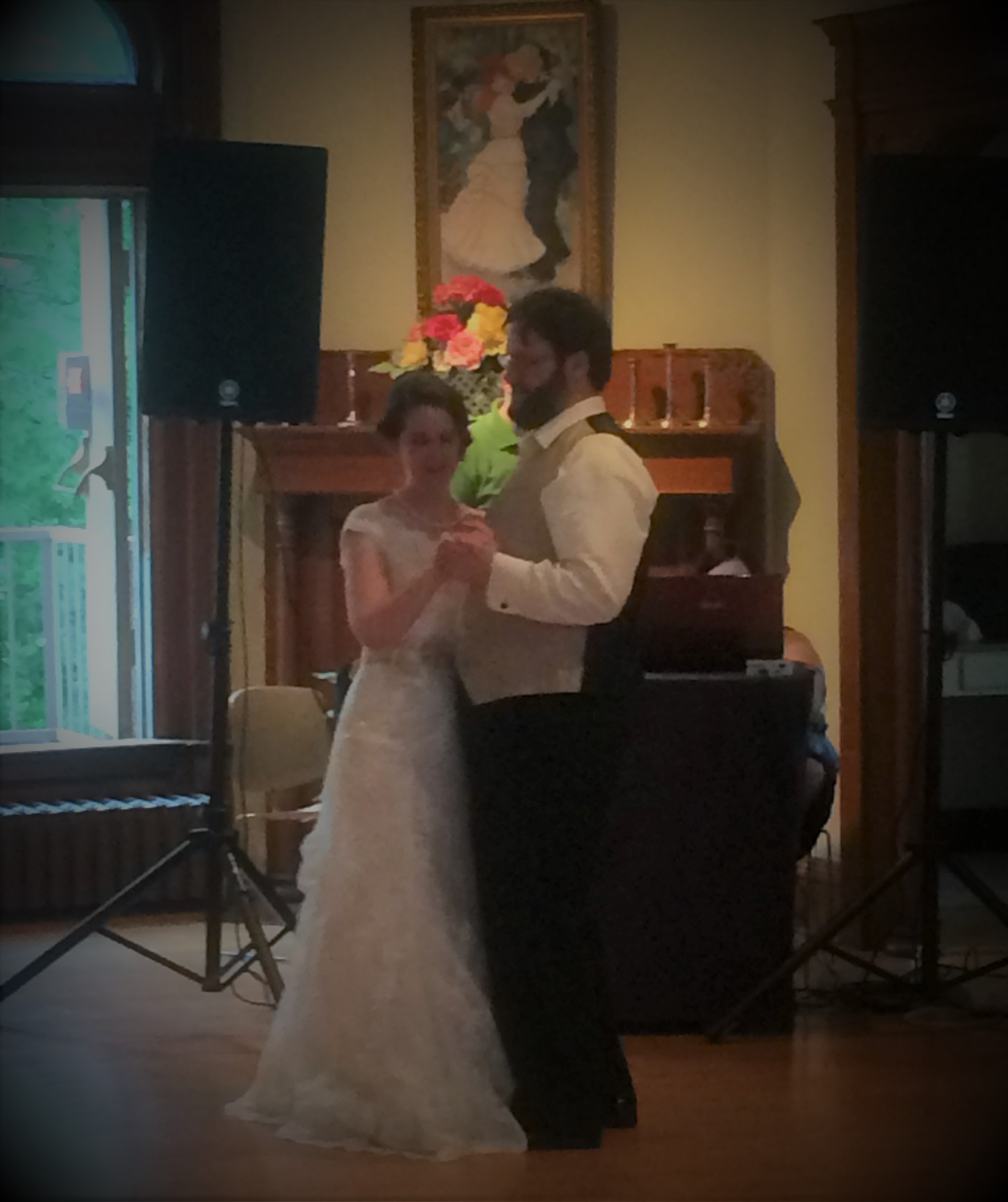
Those who know me know that my life has undergone some significant events in the last half decade, starting with my marriage to my partner of (now) 17 years. In 2017, the first year I participated in Write 6×6, I was still in the process of adjusting to life in a new area and trying to get both my physical and emotional well-being on track. Life’s track is more like a roller-coaster and finding any sort of balance was near impossible, but through the ups and downs I began to find bits and pieces of a better version of myself.
Moving forward to 2018, I had become active in my local community by serving as a member, and eventual chair, of the Economic Advisory Board. That volunteer service forced me to expand my knowledge of web design, photography, videography, content creation, and marketing. The reason I say expand is because being an online instructor had already provided me with a base knowledge in most of those areas. My skills as an English instructor specifically became invaluable when I was placed on the Planning Commission. This may come as a shock (/sarcasm), but how laws and municipal code are worded can have a major impact on their effectiveness (and legality).
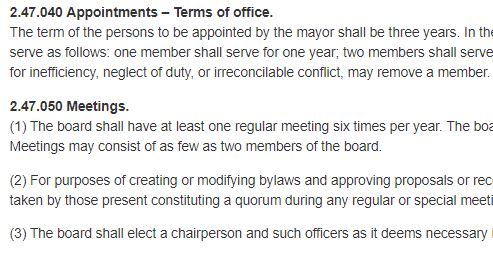
In Summer of 2018, the unexpected happened. One of our local council members had to retire for health concerns, and I was appointed to fill the vacancy. It was both exciting and horrifying at the same time. As a teacher, I have always striven to see the good and promote the best in those around me, and that effort was almost always reciprocated in kind. I discovered in my time as a volunteer the political arena had the potential to be a much uglier experience, even with the best of intentions.
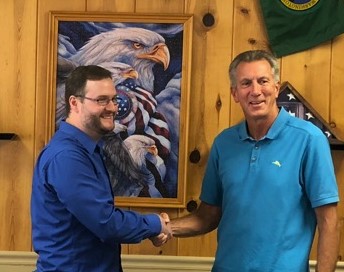
Without going into specifics, I will say that both my excitement and my fear have been justified on multiple occasions. Outside of the support of my amazing wife, the thing that has kept me from drowning in the stormy seas of politics has been the experience and skills I acquired over the last dozen years of teaching. Over the next few weeks I want to elaborate on those skills and why they are so important and underrepresented, and exactly the sort of skills communities need. I hope that maybe (just maybe) in the process I will encourage fellow instructors to get active in their communities as well.
Best case scenario: I succeed.
Worst case scenario: I educate.
It is a win-win.
YOU MATTER!!!!
 A message that has been on my heart lately is YOU MATTER. In order to be successful in anything that you do in life on a personal and professional level, you have to always remember these two important words. I truly believe that our success is dependent on it. How do you know that you matter? I think that it really starts in the mirror. When you look in the mirror, what do you see? Do you see a person of worth and value? Or do you see a person who is worthless and has no value? Your perception of yourself significantly impacts your actions.
I have worked in higher education since 2006. I’ve worked for community colleges and universities and I have worked with faculty, staff, students, administrators, and community organizations. I have witnessed the difference between individuals who believe that they matter and those who feel like they do not. Those who feel like they matter walk around with an air of confidence that radiates off of them. They work from a place of excellence and integrity because they know that the work that they do not only impact themselves but impacts others as well. They approach life ready to invest the time that is needed for success. If you don’t feel like you matter, every day can be a struggle. You may put in the work, but wonder if your efforts really mean anything at all.
At this point in my career, I feel like I matter. I feel like I am a person of worth and value and I am confident in the work that I do. Unfortunately, I have not always felt that way. I have been in the place where I felt like my efforts did not matter. To be perfectly honest with you, that was a tough place to be in, and it really hurts my heart when I come across people in life who feel this way. No one should ever feel like they don’t matter!!! It’s one of my missions in life to make sure that every person I come across in life feels like they matter. I want every person that I come in contact with to feel like they are a person of worth and value, I want people to feel like they matter.
For the next six weeks, I am going to focus on this theme: I matter, you matter, we matter. I hope that you will join me for the ride. I truly believe this message significantly impacts teaching, learning, student success, and life. =>)
WEEK 6: The “One Thing” and The Final Step
Welcome back to the final week of the” One Thing” you can do to raise enrollment, a six week “how-to” series.
The NUMBER ONE REASON employees cite for NOT completing their employee bio page:

Now you know!
Your employee Bio Page is the ONE THING you can do to influence the student decision-making process, raise enrollment, and raise GCC’s reputation in an increasingly crowded marketplace.
If you’ve been following along, you know by now that completing your employee bio page is a seemingly SMALL thing that pacts a powerful, influential punch.
But if you are just joining us, follow these links to catch up on this data-driven strategy:
Week 1: What’s on your GCC bio page right now?
Week 2: Quotes – their power to connect.
Week 3: How to get a rep.
Week 4: Your face.
Week 5: The “One Thing” Before and After
Here we go – Week 6 – the final step: today you find out how to copy and paste your story into a simple Employee Biography online form, and click “submit”.
Here’s what you’ll need:
- First name
- Last name
- GCC email address
- Credentials (such as MS, Ph.D.)
- Biography (Hint: Review Weeks 2, 3 and 5, and be relatable, not stiff)
- Areas of Expertise (Special knowledge or field of study)
- Office Hours
- Headshot (This is a photo of your face. It should be cropped to a perfect square. You will click to upload a jpg, which will be resized to 280×280 pixels. See Week 4 for photo tips)
- Personal Website URL (This is a separate step: To include a link to your work-related Website, login to your Maricopa profile using the Manage My Account tool, and add the url there. It may take up to a week for the link to appear on your Employee Bio page, depending on how often the Web Team refreshes the Website.)
Ready? Use this form to update your bio page. (The link to this form is listed here on the GCC website.)
That’s it! 

For those itching to know the broader impacts, read these final bits:
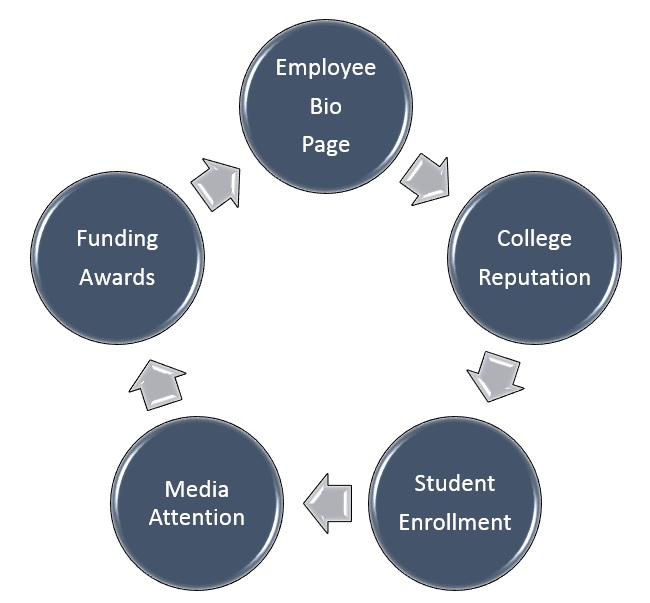
Dear Faculty, you, perhaps more than anyone else, are uniquely empowered to factually communicate GCC’s reputation by explicitly stating your credentials and experience, why you continue to choose to teach at GCC, your areas of passion, and your teaching methods. You have been empowered to give the community concrete reasons to choose you, and GCC, over every other institution. The broader impacts of doing this one thing includes reputation, enrollment, media attention, and funding.
College Reputation
Your employee bio page impacts the reputation of the college. Faculty completing their Employee Biography pages serves to significantly elevate GCC’s reputation and raise its credibility on a local, national and international scale. We need to tout the talent and body of experts who teach at GCC. It hinders efforts to fill classes when faculty are too humble to talk about their personal contributions and proudest moments.
Student Enrollment
Your employee bio page impacts enrollment. When comparing colleges, student not only look at cost, location and facilities, but they also compare faculty between colleges. “Who will be teaching me? What are their qualifications? Will I like them?” Students want to pick the “right” instructor and are looking for a reason to choose you. Your employee bio page empowers you to teach students how to think about you. Be relatable.
Media Attention
Your employee bio page impacts media attention. The enormity of all faculty specifying their “areas of expertise,” on their employee bio page cannot be emphasized enough. Members of the Media are using google to find experts to weigh in on current events and issues. For example, a USA Today reporter used a google search to find an expert on “Living Libraries,” and GCC popped up in the top of the search results. “Everybody has a fascinating story, all of us,” said GCC faculty member Heather Merrill in a USA Today article on the Human Library. “Our students are craving this, and they’re craving help having these conversations.”
Funding Awards
Your employee bio page impacts the GRANT AWARD decision-making process. It is common for REVIEWERS to search the web for insight into the applicant’s reputation. When a GCC Faculty member applies for grant funding, they are competing against other institutions to win that award. Faculty bio pages provide an opportunity to showcase your integrity and past performance, both of which work to influence the REVIEWER COMMITTEE’s decision to award a grant.
Small things make a big difference. Tell your story in your employee bio page.

School Lunch
The major downside to being an online instructor is the lack of meaningful interaction. Outside of a few e-mails, I rarely have a conversation with fellow faculty. Most of those are usually related to development of course materials or help with a student or technical issue.
When I taught face to face there was a fellow adjunct, Gary, who was in a similar situation. Twice a week I would walk into the adjunct office to find him sitting there at his laptop, cup of coffee in hand, smiling and commenting on the various comings and goings. Wearing a baseball cap and shorts, he made it clear he was just there to socialize. Looking back, I now understand and appreciate that longing he had to simply associate with a group of peers.
Sadly, I can’t come in a few times a week like he could, but what I can do is stress how important it is to do so if you are able.
Gary and I ended up having lunch a few times and talking about everything ranging from education techniques to our shared interest in writing fiction. I credit him with giving me enough courage to finally self-publish my first short story. Fast forward five years and I now have several short stories published, and am working on putting together a collection. Those lunch time conversations, and Gary’s need to socialize, were the main catalyst for me stretching myself to accomplish more than I would have otherwise done.
You never know how people you meet will influence you, it won’t always be positive, but more often than not in education it will be. Despite having various backgrounds, I find that most educators are open minded and friendly by nature (it is one of those unspoken requirements of staying in the field).
So, as I sign off for the last time this year, I wanted to leave everyone with a message of encouragement. Find a fellow teacher and go have lunch. Talk about ideas, education, hobbies, interests. Appreciate every moment of it, because whether you realize it or not, that ability to connect is not a given, and who knows, it may even help you become a better version of yourself.
WEEK 5: The “One Thing,” Before and After
Welcome back to Week 5 of “The One Thing You can do to Raise Enrollment,” a six week “how-to” series.
Let’s review the steps so far:
Week 1: Google yourself.
Week 2: Quotes – their power to connect.
Week 3: How to get a rep.
Week 4: Your face.

Are you working in higher education because you want to effect positive change in the world?
Are you unhappy with declining enrollment?
People shopping around for colleges and classes have more access to more information about you, and your competitors, than ever before.
Would you describe yourself as helpful?
What if there is one SMALL thing you can do to make it easy for students to choose you (and thus GCC)? The employee bio page is by far the most under-exploited opportunity available to intentionally connect to students during the decision making process.
Providing students with what you want them to know about you works to develop positive preconceptions about you. Conversely, do nothing and you risk falling off your potential students’ radar completely, and losing them to a competitor.
The “One Thing” is deceptively small, yet powerful.
How it works: When students can relate to what they see and read on your employee bio page, they feel immediately connected to you.
(Before we proceed to the “Before and After,” my apologies to Marty Reker.  We have never met. You were randomly chosen to be a part of this process because your name appeared in a recent college press release.)
Marty’s employee bio page BEFORE:

Marty’s employee bio page AFTER:
These elements compel students to choose you. But why?

These elements work to build not only your reputation as a competent instructor, but also builds the perception of a shared identity between you and the reader. Feelings of having a shared identity holds a powerful and influential sway over the reader.
Robert Cialdini is recognized as one of the top authors in field research on the psychology of influence. In his most recent book, Pre-Suasion: A Revolutionary Way to Influence and Persuade, he shares newly published research results: people develop powerful feelings of unity the more they identify with you. “Anything that is self-connected gets an immediate lift in our eyes. Sometimes the connections can be trivial but can still serve as springboards to persuasive success.”
When thinking about what to put on your employee bio page, don’t be stiff – be relatable.
So, after 5 weeks, you now know almost everything you need to know about the “one thing” you can do to influence the student decision-making process, raise enrollment, and raise GCC’s reputation in an increasingly crowded marketplace: Take control of the persuasive, engaging power of the employee bio page.
Now what?
Come back for our final installment in WEEK 6: Now what? The “One Thing” and the final step.
Make sure you’ve done your homework:
Week 2: Quotes – their power to connect.
Week 3: How to get a rep.
Week 4: Your face.