Category Archives: GCC Students

Coming Full Circle

Many years ago, I was a student at Glendale Community College, couch surfing to avoid homelessness and struggling to finish a successful semester. An instructor noticed, offered support, and helped me when I needed it most. Today, I stand in front of my own classroom at GCC, given the opportunity to pay that kindness forward. This is the power of community colleges, and it’s why I chose to teach here.

Community colleges have always existed to bridge gaps. When Joliet Junior College opened its doors in 1901 as a direct connection to the high school, it addressed a fundamental inequity: higher education was largely reserved for white, moderately wealthy, male landowners. The 1944 GI Bill expanded this mission, and when John W. Snyder’s report on “The Veteran and Higher Education” challenged President Truman to examine what higher education could become, the resulting Truman Commission report transformed the landscape. The Commission wanted students of all social and economic backgrounds to access higher education, to create better citizens and a stronger society. Their vision worked. Campuses became more inclusive, enrolling Black students, women, and other minorities in unprecedented numbers. Today, community colleges exist in every congressional district in the United States, continuing that mission of access and opportunity.

In 2022, I was part of a conversation with then Under Secretary James Kvaal of the U.S. Department of Education that crystallized why this mission still matters. He spoke about the inequities perpetuated by institutions that are “proud to turn students away” and emphasized that community colleges have a vital role, particularly for students at “lower and medium income levels.” Higher education, he said, needs to meet students where they are and consider their mental health and financial needs as a whole person, not just an enrollment number.

This is exactly what community colleges do. We try to do so much for everyone, working to remove the barriers to education. And in doing so, each of us makes a tangible difference in students’ lives.

In my first semester teaching as an OYO, fresh back in the United States after a decade abroad, a student confided that he was couch surfing at different friends’ houses because he was homeless. The situation was affecting his ability to complete coursework. As a new hire, I wasn’t yet familiar with all the campus supports available, but I knew some community resources. I brought him information and suggested places on campus where he could study and complete homework with reliable access to technology and space. That student finished the semester successfully.

Years later, as a newly hired probationary faculty member, I worked with a student facing financial issues that threatened to derail their entire educational pathway. This time, I knew exactly what the college could do to help and how to connect the student to those resources. They not only finished the semester successfully but went on to enroll in a bachelor’s program, which they’re on track to complete.

I used to work at universities where, as Mr. Kvaal noted, some were indeed “proud to turn students away” from their educational hopes and dreams. The perspective at Glendale Community College is drastically different. Here, instructors not only have the opportunity to support students, but that support is available, accessible, and actively encouraged.

For me, GCC represents a full-circle life experience. I was that struggling student once, uncertain about my future, navigating homelessness while trying to get an education. An instructor saw me, helped me, and changed the trajectory of my life. Now, I get to do the same for my students. I am living proof of the difference we make in the lives of our students, and I teach at a community college that does its very best to make that difference every single day for our students and our community.

Weekly Gaucho Podcast – Try Something New

You may not know that GCC has an unofficial student podcast. In this bonus episode for the Weekly Guacho podcast, I explain a little bit about the podcast and how I get students to contribute episodes as part of our journalism class, JRN213: Writing for Online. You can visit our blog and podcast here: http://weeklygaucho.com/?s=podcast

Students are very creative when given the opportunity, so my message to you is to “just jump.” Try something that might make you nervous for fear of failure. You’ll be surprised by what can happen. If you’re interested in trying it, I added the podcast assignment to Canvas Commons, so you can download it to your class and try it out.

And for an added bonus, here’s a link to my favorite student episode from Season 5.

A Balancing Act

A Little of This – a Little of That

One of my goals as an instructor here at GCC is to improve students’ listening skills. Most of the time I do this without them consciously knowing it. That sounds rather odd. It’s not that they aren’t conscious, but they may be distracted — paying attention to other things — while improving their listening at the same time.

I ask questions that I hope will make them think about what they listen to in their every day life. I ask them to describe what they are hearing and what their first reactions are. I’ve found if I can include visuals they will listen a lot longer and understand more clearly what the music is trying to convey. I have discovered that students start paying more attention to everything that is part of their listening day, and that is my intention.

One of the questions I often ask is “Do you listen to orchestral music?” Most students answer, “No, never.” I then talk a little about film. Do they watch films? Again, most of them say, “Oh, yes, I watch movies all of the time.”

With that they usually realize that they have listened to lots of orchestral music. Here’s an example: Composer John Towner Williams (we have learned through trial and error that there are a lot of ‘John Williams’ out there so I have become accustomed to using his middle name just to make sure we are all talking about and listening to the same guy), who has had the temerity to scare us out of the water, share the feeling of flying under all sorts of conditions, whether on a broom, a bicycle, or as a bird, and show us the martial qualities of The Dark Force. I chose this clip because of the content, the audience reaction, and, in this case, not for the visual images, which are slightly blurry. The answer to your question about the first instrument you see is – a contrabassoon. This is as iconic as Bernard Herrmann’s strings in Pyscho, but I digress. One of these days someone will re-master it and it will be clear — but in the mean time, I dare you to stick your toe in the water….

Williams’ Jaws

Known for many different kinds of music, Elmer Bernstein’s music has been patriotic and poetic. Here is a well-known theme. I usually choose something from the film “To Kill a Mockingbird,” but you should all be familiar with this.

Elmer Bernstein’s National Geographic Theme

There are a number of others I could have included if we were learning some specifics, but I thought it might be interesting to simply poke a little fun with Vangelis:

Mr. Bean with one of my favorite conductors – Sir Simon Rattle

I hope you enjoyed the listening.

Apologies for any advertising that may have appeared. In Canvas this does not show up.

The Big Picture

As another episode of 6 X 6 begins, it is appropriate that we start with the topic of inspiration. If given the opportunity, this idea can momentarily draw our focus away from today’s to-do list and inspire us to look at the Big Picture.

From the Circulation Desk in the GCC Library, I have an amazing view of the Big Picture. If I pay attention, I can watch a preview of the future parading in front of me. It usually begins when a student requests a textbook at the Circulation counter. This simple encounter inspires me to imagine how many people this student will help in the future. For a few seconds, I think about what career she might pursue. The positive effect of this individual’s efforts to study at GCC could someday benefit countless others.

If I expand this Big Picture idea, I realize I play an important role in the GCC cycle of student success. My college experience started at GCC and involved countless hours of homework here in the library. As a student, I was primarily focused on my daily to-do list of assignments. At the time, I did not realize the ideas and inspiration I was developing at GCC would eventually lead me back to work in this building. Now I am proud to be part of the GCC staff. Today on this side of the circulation desk, I have a different to-do list and a more expansive view of the Big Picture. From where I sit, there is no shortage of inspiration.

Unforeseen struggles for my students and I

The beginning of the spring semester started my  7th year here at GCC. The semester started out the same , but I soon found that I was struggling with my college mathematics courses. I had taught these courses numerous times before and could usually anticipate the questions and confusion throughout each topic. This semester I thought would be no different, but I soon realized that many of my students had not taken a math class in 5 or more years and their knowledge about the basics were lacking,  The reason for this change is the way we now place students (High School GPA only). I had to really think about the knowledge that I expect my students to have when they enter my class, but also how I can help them remediate these skills if they are lacking.

I had to go back to the basics and started to explain examples differently, give some in time reviews, extra review practices and give some more ticket in the door and out of the door exercises. I am finding it difficult as the semester continues because I see that they are struggling more and they ask numerous more questions. I am grateful they feel comfortable enough to ask questions, and I am hoping that the extra information I have added to the course is helping them, but we will see.

I am hopeful for them and I will continue to try to support them as much as I can.


Flying Books Deliver Daily Inspiration

This is my reality: All day…every day, books fly through the library and ultimately land in my hands. It’s as if these items take flight from the book stacks and land right on my desk… This experience of coming into direct contact with countless, random books every day inspires me tremendously. I wish I could track how much I’ve grown and learned, professionally and personally, since I joined the GCC Library family. Working in Access Services at an academic library is certainly a dream come true for a bookworm like me. A sample of our library’s extensive collection materializes each day. On every horizontal surface, books perch patiently, inviting me to take a closer look.

The written word speaks to my soul. Spoken words are fine, but reading words on a page transcends an auditory experience. Silent and deep, books change my life, one sentence at a time. Each book feels like a stepping stone. Or maybe more like shells on the beach…I ignore most, but certain gems capture my attention. In the same way, some books go unnoticed while others introduce me to a perfectly-timed message with lasting effects. It’s magical actually.

Momentary, random encounters can yield deep thoughts.
Recently I found the words of Octavia Butler and Brian Bilston.  In the library, inspiration is just a page away…

Refugees by Brian Bilston

They have no need of our help
So do not tell me
These haggard faces could belong to you or me
Should life have dealt a different hand
We need to see them for who they really are
Chancers and scroungers
Layabouts and loungers
With bombs up their sleeves
Cut-throats and thieves
They are not
Welcome here
We should make them
Go back to where they came from
They cannot
Share our food
Share our homes
Share our countries
Instead let us
Build a wall to keep them out
It is not okay to say
These are people just like us
A place should only belong to those who are born there
Do not be so stupid to think that
The world can be looked at another way

          (now read from bottom to top)


WEEK 6: The “One Thing” and The Final Step

Welcome back to the final week of the” One Thing” you can do to raise enrollment, a six week “how-to” series.

The NUMBER ONE REASON employees cite for NOT completing their employee bio page:

Now you know!
Your employee Bio Page is the ONE THING you can do
to influence the student decision-making process, raise enrollment, and raise GCC’s reputation in an increasingly crowded marketplace.

If you’ve been following along, you know by now that completing your employee bio page is a seemingly SMALL thing that pacts a powerful, influential punch.

But if you are just joining us, follow these links to catch up on this data-driven strategy:

Week 1: What’s on your GCC bio page right now?
Week 2: Quotes – their power to connect.
Week 3: How to get a rep.
Week 4: Your face.
Week 5: The “One Thing” Before and After

Here we go – Week 6 – the final step: today you find out how to copy and paste your story into a simple Employee Biography online form, and click “submit”.

Here’s what you’ll need:

  • First name
  • Last name
  • GCC email address
  • Credentials (such as MS, Ph.D.)
  • Biography (Hint: Review Weeks 2, 3 and 5, and be relatable, not stiff)
  • Areas of Expertise (Special knowledge or field of study)
  • Office Hours
  • Headshot (This is a photo of your face. It should be cropped to a perfect square. You will click to upload a jpg, which will be resized to 280×280 pixels. See Week 4 for photo tips)
  • Personal Website URL (This is a separate step: To include a link to your work-related Website, login to your Maricopa profile using the Manage My Account tool, and add the url there. It may take up to a week for the link to appear on your Employee Bio page, depending on how often the Web Team refreshes the Website.)

Ready? Use this form to update your bio page.  (The link to this form is listed here on the GCC website.)

That’s it! 

For those itching to know the broader impacts, read these final bits:

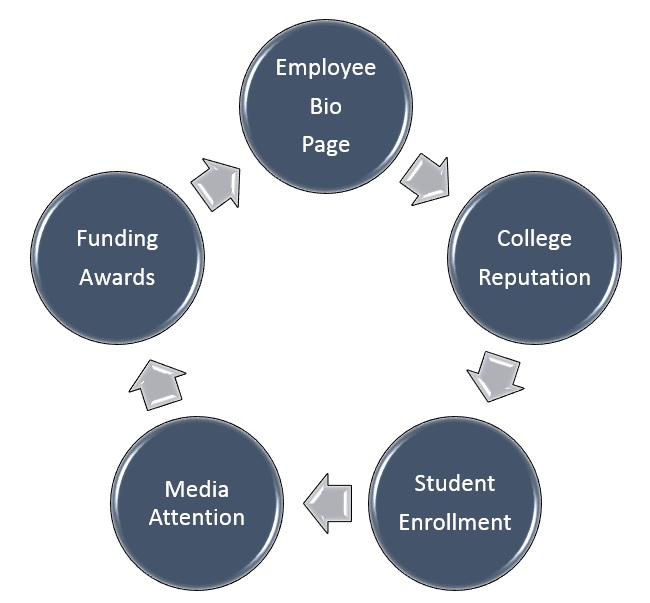
Dear Faculty, you, perhaps more than anyone else, are uniquely empowered to factually communicate GCC’s reputation by explicitly stating your credentials and experience, why you continue to choose to teach at GCC, your areas of passion, and your teaching methods. You have been empowered to give the community concrete reasons to choose you, and GCC, over every other institution. The broader impacts of doing this one thing includes reputation, enrollment, media attention, and funding.

College Reputation
Your employee bio page impacts the reputation of the college. Faculty completing their Employee Biography pages serves to significantly elevate GCC’s reputation and raise its credibility on a local, national and international scale. We need to tout the talent and body of experts who teach at GCC. It hinders efforts to fill classes when faculty are too humble to talk about their personal contributions and proudest moments.

Student Enrollment
Your employee bio page impacts enrollment. When comparing colleges, student not only look at cost, location and facilities, but they also compare faculty between colleges. “Who will be teaching me? What are their qualifications? Will I like them?” Students want to pick the “right” instructor and are looking for a reason to choose you. Your employee bio page empowers you to teach students how to think about you. Be relatable.

Media Attention
Your employee bio page impacts media attention. The enormity of all faculty specifying their “areas of expertise,” on their employee bio page cannot be emphasized enough. Members of the Media are using google to find experts to weigh in on current events and issues. For example, a USA Today reporter used a google search to find an expert on “Living Libraries,” and GCC popped up in the top of the search results. “Everybody has a fascinating story, all of us,” said GCC faculty member Heather Merrill in a USA Today article on the Human Library. “Our students are craving this, and they’re craving help having these conversations.”

Funding Awards
Your employee bio page impacts the GRANT AWARD decision-making process. It is common for REVIEWERS to search the web for insight into the applicant’s reputation. When a GCC Faculty member applies for grant funding, they are competing against other institutions to win that award. Faculty bio pages provide an opportunity to showcase your integrity and past performance, both of which work to influence the REVIEWER COMMITTEE’s decision to award a grant.

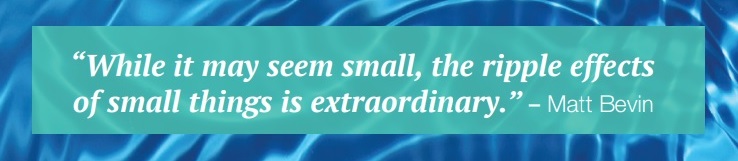
Small things make a big difference. Tell your story in your employee bio page.

WEEK 5: The “One Thing,” Before and After

Welcome back to Week 5 of “The One Thing You can do to Raise Enrollment,” a six week “how-to” series.

Let’s review the steps so far:

Week 1: Google yourself.
Week 2: Quotes – their power to connect.
Week 3: How to get a rep.
Week 4: Your face.

Are you working in higher education because you want to effect positive change in the world?

Are you unhappy with declining enrollment?

People shopping around for colleges and classes have more access to more information about you, and your competitors, than ever before.

Would you describe yourself as helpful?

What if there is one SMALL thing you can do to make it easy for students to choose you (and thus GCC)? The employee bio page is by far the most under-exploited opportunity available to intentionally connect to students during the decision making process.

Providing students with what you want them to know about you works to develop positive preconceptions about you. Conversely, do nothing and you risk falling off your potential students’ radar completely, and losing them to a competitor.

The “One Thing” is deceptively small, yet powerful.

How it works: When students can relate to what they see and read on your employee bio page, they feel immediately connected to you.

(Before we proceed to the “Before and After,” my apologies to Marty Reker. We have never met. You were randomly chosen to be a part of this process because your name appeared in a recent college press release.)

Marty’s employee bio page BEFORE:

Marty’s employee bio page AFTER:
These elements compel students to choose you. But why?

These elements work to build not only your reputation as a competent instructor, but also builds the perception of a shared identity between you and the reader. Feelings of having a shared identity holds a powerful and influential sway over the reader.

Robert Cialdini is recognized as one of the top authors in field research on the psychology of influence. In his most recent book, Pre-Suasion: A Revolutionary Way to Influence and Persuade, he shares newly published research results: people develop powerful feelings of unity the more they identify with you. “Anything that is self-connected gets an immediate lift in our eyes. Sometimes the connections can be trivial but can still serve as springboards to persuasive success.”

When thinking about what to put on your employee bio page, don’t be stiff – be relatable.

So, after 5 weeks, you now know almost everything you need to know about the “one thing” you can do to influence the student decision-making process, raise enrollment, and raise GCC’s reputation in an increasingly crowded marketplace: Take control of the persuasive, engaging power of the employee bio page.

Now what?
Come back for our final installment in WEEK 6: Now what? The “One Thing” and the final step.

Make sure you’ve done your homework:
Week 2: Quotes – their power to connect.
Week 3: How to get a rep.
Week 4: Your face.

If you see something nice, say something nice…


Adding small doses of daily kindness to GCC and the world in general is a dream of mine. I’d like to offer some explicit, easy, painless examples of how we can all increase kindness on a daily basis. Imagine how a collective effort of small actions could impact our lives. Gratitude and kindness are powerful ideas. See if you can incorporate one of the following suggestions into your super-busy daily schedule and notice the win-win feeling.

  1. While walking on campus, make a daily effort to notice on a pleasant sight. Examples: “Wow, that display in the student union is amazing.” Or “The roses are beautiful.” Usually, we might just think this thought and forget it. Take it a step further and send a quick email to recognize someone’s hard work. Email the department or individual responsible. The key is to be mindful and have an intention to recognize the positive.
  2. Acknowledge the success of others. Congratulate a faculty member or student who has succeed. Acknowledgments don’t have to be mushy compliments. Just recognizing the effort or outcome is enough.
  3. Even a semi-specific question to spark a quick dialogue conveys kindness and caring. Ask someone while you’re waiting in line for coffee or lunch “So how’s your semester going?” You might be surprised at the amount of enthusiasm that is returned to your inquiry.

Try to find opportunities to be kind to yourself and others. It’s easy to walk around campus on auto-pilot. Experience the present moment. See if you notice anything that brings a split second of joy.


Week 4: The “One Thing,” and How to Influence Assumptions

Welcome back to Week 4 of “The One Thing You can do to Raise Enrollment,” a six week “how-to” series.

Data is a powerful thing: It can confirm our assumptions as well as confound them, as in the story I shared in WEEK 1.

WEEK 2 empowered us upon learning that, when it comes to students choosing YOUR classes (and thus GCC), leaving choice up to chance is not our only option.

In WEEK 3 we covered how reputation is the most important factor in influencing people’s choices, and the importance of making our achievements public to enable people to make informed choices.

This week, let’s talk about your face.

Face Facts: Numerous published studies provide countless evidence to support the fact that, when viewing a photo of a stranger’s face, it takes us less than a second to formulate an impression .

Assumptions about the character of the person pictured are formed quickly.  One Princeton University study published by the Association for Psychological Science is a great example:

“Willis and Todorov conducted separate experiments to study judgments from facial appearance, each focusing on a different trait: attractiveness, likeability, competence, trustworthiness, and aggressiveness.” The results? Of all the traits, trustworthiness was the one participants assessed most quickly.

We cannot escape the fact that photos influence choice, so we will harness this fact and use it to our advantage.

Fear not – the good news is, people want to see trustworthiness and competence in your face, not a glamour shot.

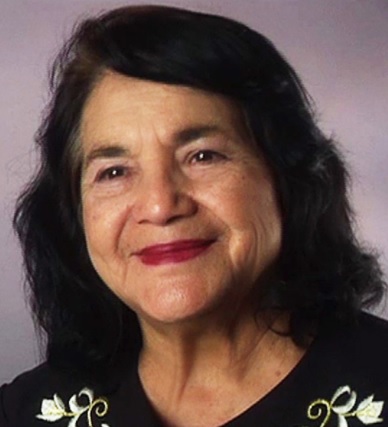
Consider the following photos of these notables: Albert Einstein, Delores Huerta, Ta-Nehisi Coates, Ruth Bader Ginsburg, Conrad Wolfram.


The reasons for not wanting to post a photo:
  • I’m not photogenic.
  • I don’t like the way I look.
  • My face will break the camera.

 It’s not about vanity. It’s about character. It’s time to embrace the powerful sway your photo can have upon a stranger’s choice.

The employee bio page is the most underestimated tool available to you. A photo of your face, backed up with a personal quote, your areas of expertise, and a list of your achievements works to establish YOUR personal reputation while raising GCC’s reputation.

By doing this “One Thing” you enable the public to make an informed decision to choose… you.

WEEK 4 Homework: Because you are your own worst critic, your homework is to recruit friends and family to help you sort through photos of yourself to find one that captures the characteristics of trustworthiness and competence. The photo chosen by others just may surprise you.

TIP: The size of the photo on your employee bio page is 280×280 pixels. Make sure the photo your choose is cropped as a perfect square.

For tips on how to choose a photo, read Lydia Abbots’ 5 Tips for Picking the Right LinkedIn Profile Photo.

If you can’t find a photo, a GCC photographer is available.

Come back for WEEK 5: The “One Thing” Before and After

“You’ll never get a second chance to make a great first impression.”