Tag Archives: inspiration

Vicariously Dreaming

This week is all about dreams, and I wanted to break away from the abstract big-picture view I normally go with and talk about something personal to me.

Several years ago through the glories of the internet I befriended a young man named Danny who, like me, was passionate about writing. Very quickly I realized he had a gift for wordsmithing, poetry, and editing that all surpassed my own. From that common love we became what would be the digital equivalent of pen pals. We share stories, poems, and ideas, and the edits that ensue always seem to produce much higher quality work for both of us. It remains a symbiosis.

Over the years I started to get to know Danny on a more personal level. Like me, he suffered from asthma but, unlike me, his asthma continued into adulthood and served as a constant source of hospitalization and medical bills. Like me, he has a wonderful sibling who serves as friend as much as kin  but, unlike me, whose father is an evangelical minister, politician, and pillar of the community in which he resides, Danny suffered through multiple negative parental figures.

Danny enrolled at the University of Cincinnati, initially pursuing a similar English degree to the one I had pursued during my Bachelor’s. It was at this point that I started to give Danny advice on more than just writing. In him I saw limitless potential and the same drive and passion for writing that I had as an early college student. I was a much wiser man than I was in college and had clear hindsight on all the poor choices I made during my academic career that impacted my professional and personal life down the road. I encouraged him to take advantage of the opportunities that came his way and, although I believe he would have made the same decision in my absence, he eventually became a writer and an editor for Odyssey. With that accomplishment he conquered one of my greatest regrets from my own schooling, failure to have meaningful writing experiences outside the classroom. As he continued to write more insightful articles he built up a portfolio and a reputation for quality that even my current resume would be jealous of.

Even though Danny is only ten years my junior, I began to understand what it was like to have a son to feel pride in someone else’s accomplishments. To see him grow in skill and confidence seemed more rewarding to me than it was to him. Without knowing it, Danny was purging all the demons of my past mistakes through his own achievements. It was a wonderful feeling, but I was unaware Danny was still dealing with his own demons. Thankfully, unlike me, he would face those demons down on his own instead of through someone else.

In 2017, Danny came out to the world in a lovely article. I had known for a short period of time before, but I could tell it was a struggle for him to admit it even to me, the professor who loves to talk about how important it is to appreciate other points of view and will rant for an hour about critical thinking skills.

In 2018,  Danny will be receiving the prestigious McKibbin Medal upon graduation and is on the precipice of making some major life decisions, but I can honestly say no matter where his life leads he is already a wiser, stronger man than I could have even dreamed of being at his age. I am truly thankful for the inspiration and confidence he has given me by simply having the courage that he has.

Danny,

Thank you for helping a middle aged professor dream again.

Now go conquer life.



Week 4: The “One Thing,” and How to Influence Assumptions

Welcome back to Week 4 of “The One Thing You can do to Raise Enrollment,” a six week “how-to” series.

Data is a powerful thing: It can confirm our assumptions as well as confound them, as in the story I shared in WEEK 1.

WEEK 2 empowered us upon learning that, when it comes to students choosing YOUR classes (and thus GCC), leaving choice up to chance is not our only option.

In WEEK 3 we covered how reputation is the most important factor in influencing people’s choices, and the importance of making our achievements public to enable people to make informed choices.

This week, let’s talk about your face.

Face Facts: Numerous published studies provide countless evidence to support the fact that, when viewing a photo of a stranger’s face, it takes us less than a second to formulate an impression .

Assumptions about the character of the person pictured are formed quickly.  One Princeton University study published by the Association for Psychological Science is a great example:

“Willis and Todorov conducted separate experiments to study judgments from facial appearance, each focusing on a different trait: attractiveness, likeability, competence, trustworthiness, and aggressiveness.” The results? Of all the traits, trustworthiness was the one participants assessed most quickly.

We cannot escape the fact that photos influence choice, so we will harness this fact and use it to our advantage.

Fear not – the good news is, people want to see trustworthiness and competence in your face, not a glamour shot.

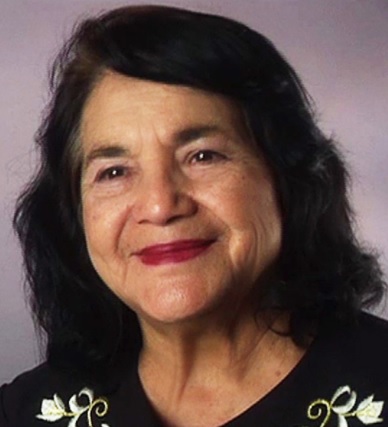
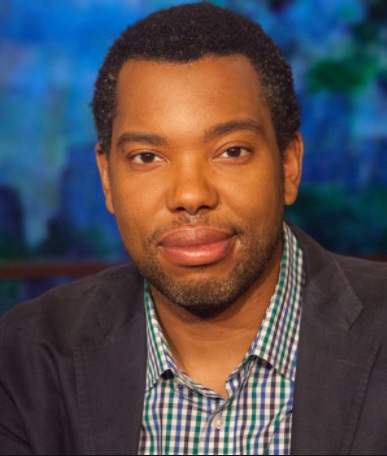
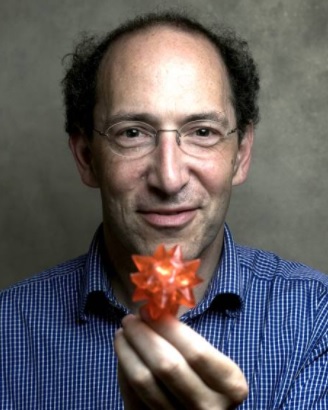
Consider the following photos of these notables: Albert Einstein, Delores Huerta, Ta-Nehisi Coates, Ruth Bader Ginsburg, Conrad Wolfram.


The reasons for not wanting to post a photo:
  • I’m not photogenic.
  • I don’t like the way I look.
  • My face will break the camera.

 It’s not about vanity. It’s about character. It’s time to embrace the powerful sway your photo can have upon a stranger’s choice.

The employee bio page is the most underestimated tool available to you. A photo of your face, backed up with a personal quote, your areas of expertise, and a list of your achievements works to establish YOUR personal reputation while raising GCC’s reputation.

By doing this “One Thing” you enable the public to make an informed decision to choose… you.

WEEK 4 Homework: Because you are your own worst critic, your homework is to recruit friends and family to help you sort through photos of yourself to find one that captures the characteristics of trustworthiness and competence. The photo chosen by others just may surprise you.

TIP: The size of the photo on your employee bio page is 280×280 pixels. Make sure the photo your choose is cropped as a perfect square.

For tips on how to choose a photo, read Lydia Abbots’ 5 Tips for Picking the Right LinkedIn Profile Photo.

If you can’t find a photo, a GCC photographer is available.

Come back for WEEK 5: The “One Thing” Before and After

“You’ll never get a second chance to make a great first impression.”

What’s Your Pur Pur?


Funny-Cat-Glasses-Wallpaper

     During an interview with the Stanford Graduate School of Business, Oprah said that “Everybody has a purpose, so your whole thing is to figure out what that is, your real job is to figure out why you’re really here, and then get about the business of doing it.” I wholeheartedly agree with Oprah. Here is my purpose:

“Because I value professional development and personal growth I will use my expertise to empower, motivate, and inspire faculty, staff, and students.”

      I believe in my purpose. I think that it’s critical that we help faculty, staff, and students become the best versions of themselves so that they can succeed in their lives and touch the lives of others. Purpose is a motivator, and it pushes me to strive for excellence daily. I’m actively working towards fulfilling my purpose. I have a long list of how I’d like to fulfill my purpose in my office. I’ve provided an abridged version of my list below.

Here are my questions to you: What’s your purpose? What’s your purpose statement? Are you taking the time to figure it out? Have you already figured it out? How will you fulfill your purpose? Did you give up on it? Why did you give up? Was it fear/doubt? Have you taken the time to work through it?

Why is this important? Purpose provides direction and focus in a noisy distracted world. Purpose is important when you are facing adversity and uncertainty. It’s that shining light in the darkness that can help you to find your way out. Purpose builds strength, and it’s needed when it feels like your world is collapsing and caving in on you.

If you don’t know your purpose, you’ll find it. If you’ve found it, you’re hopefully working towards it. I encourage you to find it, to not to give up on it, and to fulfill it.

How I am actively fulfilling my purpose based off of my purpose statement (abridged list):

  1. Help faculty and staff become master teachers and become a master teacher myself. How?
  • Co-faculty Developer: I am currently the co-faculty developer for the Center for Teaching Learning and Engagement. I am also an active participant in the Faculty Development Council.
  • Faculty Professional Growth: I am committed to investing 36 hours per academic year to my professional growth, not because I have to, but because I want to. I’ve already accomplished that goal for the academic year.
  • The 10,000-hour rule: The rule focuses on how an individual could become a master at something with 10,000 hours of deliberate practice. I am practicing teaching. I have acquired 4,130 hours thus far. (The concept can be found in Malcolm Gladwell’s book, Outliers)
  1. Become a Motivational/Inspirational Speaker for Faculty, Staff, and Students. How?
  • Blogging: I use this to serve others. I hope they benefit from it. Especially during the rough times. My goal is to post once per week.
  • Public Presentations: Participate in at least two community engagements per year.

2 P’s of Inspiration

Sometimes I have to self-start inspiration. These times come near the end of semesters, week four of the semester, and other times based on life circumstances. I remember one point last semester when I busily ran from day to day and desperately needed something to inspire me.

It was late November, and I had not planted my fall/winter/spring flowers. I wondered why, but I couldn’t come up with a reason other than being too busy. So one weekend, I headed to my favorite nursery, picked out some flowers–bright red petunias, lobelia, a couple of rose bushes, and dahlias–and potted them all in one day. I felt instantly better. I really did. I repeated this the weekend after in the back yard. Planting and nurturing those plants drew me outside, away from the distractions that don’t really feed me to a quiet place where I can think and plan. Even though I was busy with work, I put that work aside to have that meditative time. Those couple of weekends with my hands in the soil (gloves are for suckers) really fed me.
And now those plantings are still bring me some joy. When I sit outside and watch them grow, my mind opens to new ideas. When I periodically get my hands busy, pruning the dead from the living, I prune the old from my mind to make room for new thinking.

Week 3: The “One Thing” and it’s Not Bragging

Welcome back to Week 3 of “The One Thing You can do to Raise Enrollment,” a six week “how-to” series.

Study after study has produced empirical evidence to support the fact that reputation is the most important factor influencing people’s college and class choices.

“Without a strong reputation, colleges are unable to attract the resources necessary to build an effective educational environment. Institutional reputation attracts everything from the best professors and research talent to philanthropic donations and star students. Everyone wants to be a part of a winning team, and in education, that means investing in the best academic brand,” writes Joseph Torrillo, vice president of Reputation Management.

As employees, we cannot sit back and passively place our hope in the power of the marketing department alone to define and manage our institutions’ reputations. Why? Because no amount of marketing can trump a personal experience with a brand.

I love this definition: Brand equity “is the intangible asset of added value or goodwill that results from the favorable image, impressions of differentiation, and/or the strength of consumer attachment to a company name,” writes Michael Belch and George Belch in their book,  Advertising and Promotion: An Integrated Marketing Communications Perspective. (if this were a paper, the attribution would read, (Belch and Belch p. 56) …go ahead, makes me giggle a little, too.)

When a student has a good experience with a GCC employee, a curious thing happens: The student does not say, “I love that GCC employee named Lupe.” No, the student says, “I love GCC.” A single good experience with a single employee packs a powerful boost to GCC’s overall reputation. Suddenly someone is singing praises of GCC to their friends, family, and strangers on social media.

However, experience is a double edged sword. When a student has a bad experience with a GCC employee, it’s not the employee they heap coals upon, it’s the overall institution.

Last week you spent some time writing a few statements that speak to your personal humanity.

This week your task is to… take a deep breath…
list your achievements.The purpose of this task is to make public any information that enables students to make an informed decision to choose you.

“If we are to achieve results never before accomplished, we must expect to employ methods never before attempted.” – Francis Bacon

The simple act of listing your areas of expertise and accomplishments in your Employee Biography page serves to significantly elevate GCC’s reputation on a local, national, and international scale.

It’s not bragging.  You ARE the secret sauce in GCC’s reputation! You have a history of proud moments, achievements and accomplishments that needs to come up in a google search.

A bio page with secret sauce includes naming your areas of expertise, credentials, a personal quote, and some information that reveals your humanity and proudest moments.

Here is an example:

Name: John Doe
Credentials: AAS, M.A.Ed, Ph.D.
Areas of Expertise: Experiential Learning; Community Partnerships

Personal Quote:  “I got my Doctorate at Yale, but I identify more with the students who come to GCC.”

Bio: Example 1: Four generations of my family have come to GCC to get their first college degree. Ask me why…
Example 2: If it were not for my 9th grade math teacher, I would not be where I am today. He never gave up on me. I want to inspire my students the way he inspired me, and see what can be achieved.
Example 3: I was the first person in my family to go to college, and I was excited and scared at the same time.
Example 4: My proudest moment was when…
Bulleted lists might include: education, awards, specialized training, published research/articles/books, grant funded projects, committees, pro bono work, volunteerism, boards served, etc.

Teach others how and what to think about you, and it forms a reputation in their minds for GCC as well. Take this time detail what you offer – leave no doubt in the reader’s mind that not only are you are a devoted educator, but you are a nice person to boot.

Reputation wields compelling, persuasive, influential power.

Your homework this week: Begin listing the ingredients that make up your particular secret sauce. These may include your personal areas of expertise and scope of services, awards, thesis topic/description, published works, patents, specialized training, published news about you, your motivation, what inspires you, the thing(s) you love most about what you do, and…

…(at least) one thing you want to be remembered for should you drop dead tomorrow. 

It’s Presidents’ Day weekend, established in 1885 to honor George Washington and Abraham Lincoln whose reputations for honesty and integrity still inspire us today.

This weekend, carve out some time to work on defining YOUR enduring reputation. Then come back for Week 4. The “One Thing,” and How to Influence Assumptions

Recovering Assessment Hater


download.jpg

“Boring, lame, inconvenient, and unnecessary.” If you would have asked me several years ago my thoughts on assessment, this would have been my response when I was adjunct faculty. I abhorred assessment because I didn’t get it, but I didn’t get it because I was not educated in it. I had a resistance to it, and my resistance was rooted in my insecurities and my ignorance in the area.

download-1

When it was that time of year for the assessment reports, I thought to myself WHY!!???, and I submitted my assessment reports, gritting my teeth, just wanting to get them over with, and out of my face.

download-2.jpg

     It’s really hard for me to admit that I knew nothing about assessment when I started teaching as an adjunct. When I say I knew nothing, I knew NOTHING. I didn’t even know that the exams I had in my course were actually a form of assessment, that was how bad it was. When I started teaching part time, my knowledge of assessment was not a requirement. I met the qualifications on paper, I was handed a book and a syllabus, and off I went.

When I was hired as residential faculty I knew a little more. I had previous experience as a curriculum developer and I knew that I wanted to do better and I wanted to change my negative attitude. I had to be honest with myself by raising my hand and saying “My name is Tenisha Baca and there’s a lot about assessment that I still don’t know, but feel like I should know.” I knew that the only way to remedy my negative attitude towards it was to commit to taking the time to properly learn what it is, how it works, and why it’s important. So, I signed up for the assessment seminar at the Center for Teaching Learning and Engagement (CTLE), and my mind opened up to a whole new world of amazing in the following ways:

  1. Assessment is really not that big, bad, or scary. It’s simple and informative.
  2. I can do this, I can do a better job, and the CTLE can help me.
  3. If I’m all about student success, I need to do it and take it more seriously for the benefit of the student’s learning experience.

I applied it and I’m happy that I did. I have seen an improvement in my student’s exam scores, I revised the curricular areas where my students were struggling, and I have criteria that is clearer and grading that is more consistent. The commitment to assessment had a significant impact in my courses.

If you were like me several years ago, I encourage you to give assessment a chance and really look at the potential and the possibilities behind it. I see the value in assessment because of the improvements I have seen, not only in my students, but myself. Assessment is needed and our decision to take it on and do it right, or do it half way, or not at all, can make a huge difference in student success in the classroom.

Two P’s of Inspiration


     Sometimes I have to self-start  inspiration. These moments come at the end of semesters, week four of the semester, and other times of life that are filled with stress. I remember last semester being so busy and looking for something to inspire me. 

sage


     By late November, I had not planted my front, winter flowers yet and wondered why without coming up with a reason. I planted every year–why not this year?  So one weekend I went to the nursery, picked out some flowers–bright red petunias, lobelia, two rose bushes, dahlias–and potted them all in one day. I felt instantly better. I really did. I repeated it the weekend after with the backyard. Planting and nurturing those plants drew me outside, away from the distractions that don’t really feed me, to a quiet place where I can think and plan. Even though I was busy with work, I put it all aside to have that meditative time. Those couple of weekends, with my hands in the soil (gloves are for suckers), really fed me.

petunias


     And now those plantings are still bringing me some joy. And when I sit outside and watch them grow, my mind clears and is open to new ideas. When I periodically get my hands busy with pruning the dead from the living, I prune the old from my mind to make room for some new thinking.


Week 2: The “One Thing” and its Powerful Sway

Welcome back to Week 2 of “The One Thing You can do to Raise Enrollment,” a six week “how-to” series.

Did you complete your Week 1 homework assignment? If not, take a moment to search for your name on gccaz.edu, click on your employee bio page, and make a note of any information that uniquely reflects your own personal humanity.

When it comes to class enrollment, do you leave it up to chance? You have a lot to offer, and are a passionate educator. But students don’t know this about you ahead of time. What if you could influence students before you even meet them?

Studies show that when it comes to choice, a good reputation is king. To influence a student’s choice in which class (or college) they enroll, we must increase perceived reputation. Reputation is a fragile thing, and a student’s initial experience plays a critical role in the decision-making process.

This brings us to the old adage, “You’ll never get a second chance to make a great first impression.” A first impression is critical to reputation, and Step Two is all about taking control of the timing of that first good impression.

Timing, they say, is everything.

So, the “one thing” you can do to influence the student decision-making process, raise enrollment, and raise GCC’s reputation in an increasingly crowded marketplace is to teach others what to think about you before you even meet.

I am going to show you how to not just make a good first impression, but a viscerally good first impression, using your employee bio page. During the decision making process, students check out who is teaching a class – why? They are looking for clues  for who to choose. The purpose of this blog series is for you learn how to make it easy for student to choose you, and thereby GCC. When you are done with your bio page, students who view it will “get” you. I have done random checks of comparable faculty at NAU, ASU, UofA and GCC. The sad fact is that very few instructors have posted any information on their bio page beyond name, email, and office hours.

As a result, students turn to sites such as RateMyProfessors.com to help them make a decision. The problem with these ratings sites is that other people are defining your reputation for you – and influencing reader choice. Remember, reputation is a fragile thing.

Consider the following:

“I grew up in a poor family, and I identify with the struggles some of my students have.” – Dr. Carlos Nunez

When I first read that quote, a picture of who this man is immediately formed in my mind: Genuine. Sincere. Empathetic. Successful. When I met Dr. Nunez, I quickly became aware that he was all this and more. He was courageous in and out of the classroom, and we all miss him, bless his soul.

Quotes – we love them. We share them, post them, tattoo them, frame them and hang them on our walls. We love quotes because quotes resonate with something deep inside of us. Quotes inspire us. Quotes give us hope. Quotes make us laugh at ourselves and life. Quotes make us cry with empathy. Quotes rally us together.

But the greatest power of a quote is that it connects us to each other’s humanity.

Your homework is to write a compelling introductory statement that reflects on a particular aspect of your personal journey through college. Here are a few examples to get your juices going:

  • “Juggling work, family, and college was hard, but I wanted a better life.” (inspires resilience).
  • “The first time I looked through a microscope I saw my future.” – (conveys vision)
  • “I didn’t know what I wanted to do with my life. College helped me find my passion.” – (inspires hope)

Experiment writing statements that uniquely reflect your own personal humanity.

“It’s not up to chance, it’s up to you.” ― Rob Liano, Author and Business Speaker

Come back for Week 3, Step 3: The “One Thing” and It’s Not Bragging.


See me. See You. See Possibility.


My cultural reflection/inspirational story is connected to Dr. Velvie Green, the former President of Glendale Community College. I met her when I was a student at GCC. I was hanging around the Communication Department and Jim Reed, the Department Chair, was giving our newly appointed President a tour of the department. Jim came around the corner and said that he wanted to introduce me to her. When she came around the corner I saw an African American woman standing in front of me. I had a moment of pause. I looked at this stranger and felt like I was looking at my future physical self. I couldn’t tell you what I was expecting, but I could definitely tell you that I was not expecting her.

I recognized something in her that connected with me on a level I had never recognized before. I recognized possibility in something that I would have never considered without this encounter, the possibility that I could become a college president myself. I saw a cultural reflection of myself on campus and it inspired me. For years I pursued becoming a college president. My pursuit brought me to teaching and I fell in love with it and changed course.

That day motivates and inspires me daily. It really showcases the importance of cultural reflection on college campuses. That day is one of the things that motivates me to bring excellence into everything that I do, because someone out there may see themselves in me through my work. They may see me and they may be encouraged to be excellent in their career. They may see me and see the possibility of a career path that they would have never considered for themselves. They look at me and think to themselves if she can do it, I can do it too.

I encourage others to think of themselves in the same way. All it takes is someone seeing themselves represented, right in front of them to inspire and motivate them to greatness.  Each encounter that you have on this campus could make or break someone’s hopes, dreams, or desires. Be mindful of the fact that you matter to someone and that they are paying attention to what you say and do.

I don’t know Dr. Velvie Green personally. She doesn’t know the impact she has had on me. I hope that she will come across this one day, so she can read about the difference she has made in my life. I am thankful and grateful that I had the opportunity to meet her. It changed my life.

Theoretical War of Theory

When pursuing my Master’s I enrolled in a summer course entitled “Theory of Education”.  For many in the class it was the kind of backward psychobabble  that bore little relevancy on actual classroom technique and management, focusing primarily on Behaviorism and Constructivism.

Theory Meme

It has now been well over a decade since those early days of learning, and I have only grown in appreciation of the experience gained during those few months.

Fear not, this will not be a summation of educational theory and delivery methods. I could not give any theory justice this far removed.  No, like any good learning experience it wasn’t what was said that impacted me so much, but rather what was done.

Although most of those taking part in the class checked out day one, there were a few of us interested enough to make the classroom dialogue interesting. All the other students were already elementary or secondary teachers attempting to shore up their credentials and bank accounts by adding a Master’s to their wall. I was still in my educational infancy, a TA at the college without much in the way of practical experience.

The professor was a devote Contructivist and every lesson seemed to have a tinge of personal bias. Excellent for me who had latched on to Contructivism, but bad for the other interested parties who had seen Behaviorism work in their early education classrooms. Many of our sessions ended up turning into debates, often heated and passionate. At one point, midway through the summer semester, a frustrated elementary teacher stood up and declared that she would never understand Contructivism, and that the instructor would have to fail her on the spot because she was a Behaviorist for life.

I was at full attention, expecting some witty retort and conversion right then and there. What I got was a life lesson that stuck with me more than all the academic and education theories crammed into my textbooks. He smiled, warm, friendly, his debate tone drifted away replaced by a Bob Ross jovial melancholy, and he said that was okay, that he respected her beliefs even if they weren’t his own, and he wouldn’t want her beliefs to change simply because of his.

More important than theory I had witnessed practical implementation of the the greatest skills higher education can instill; patience, kindness, and critical thinking.  The ability to accept that there are different views beyond your own, and even if you are in a place of power you should not attempt to convert opinions, but encourage personal discovery.

Beliefs may define an individual, but they are not the reason society succeeds. Kindness, understanding, and curiosity are what propel both education and mankind, allowing us to achieve great things together, no matter what theories we happen to follow.