Category Archives: Write6x6

Two Roles, One Mission: Supporting GCC Students

I have a couple of  roles at GCC.  As the primary administrator for Canvas on our campus, I have extensive Canvas knowledge and experience. As an adjunct faculty member for the Psychology Department, I teach the MCCCD curriculum for Psychology 101.

Each semester on the first night of my live online class, I give a tour through my course and show students how to effectively navigate through Canvas. At the end of the tour, I invite students to come to me for help with Canvas, even if the help is related to another course. I let them know I am the Canvas go-to person for faculty and staff and I can also be their personal Canvas go-to person to support them on their academic journey. Every semester at least one student has come to me for Canvas support. Since Canvas is deeply integrated into the teaching process at GCC, helping students cross the Canvas threshold helps them on their learning journey. Through the years there has been several students who expressed how grateful they were for the Canvas support and how my assistance helped them understand how Canvas works.

As faculty, all of us are subject matter experts in our designated area.  However I challenge everyone to ask themselves “What else am I am expert in, and how can that help our GCC students?”

Basic Needs: The Basics

In light of this week’s prompt…whether traveling the Interstate or taking the scenic route, all travelers need to stop occasionally at rest stops for refueling and rest.  These are basic needs for the journey.  And with that as my segue… I want to look at some key issues arising from the GCC Basic Needs Task Force!

The academic literature on basic needs insecurity among college students continue to grow as it documents with increasing precision the fundamental problems for our students.  I recently spent some time online researching these issues and here is a sampling from that literature.

  • “As the literature grows and improves in quality, the magnitude of food insecurity among college students becomes clearer.  While 11.1% of households nationally were estimated to be experiencing food insecurity in 2018, the estimates of food insecurity among college students are significantly higher in most cases.”[i]
  • “The most recent comprehensive food insecurity study of students at 31 two-year and 35 four-year colleges found that 36% of college students were food insecure.”[ii]
  • “Surveys of community college students typically yield higher estimates of basic needs insecurity.  A 2015 Wisconsin HOPE Lab survey of 4,000 students at 10 community colleges found that 39% of respondents reported low or very low food security, and 52% reported housing insecurity, including 13% who had experienced homelessness.  A 2016 HOPE Lab survey of 33,000 students at 70 community colleges found that 56% of students experienced low or very low food insecurity, 51% were housing insecure, and 14% were homeless.”[iii]

The effects of this food insecurity are far-reaching for our students.

  • “Links between food insecurity and student success seem evident and include lower concentration, energy, test scores, and student retention.  Some suggest there to be a relationship between food security and mental health (e.g., depression, anxiety, disordered eating, suicide ideation), which likely influences performance as well.  Finally, food insecurity often coincides with other factors that hamper student success (e.g., difficulties with housing, transportation, time management, employment, affording books, and supplies) and reflect other disparities in higher education.”[iv]
  • “…food insecure students are about three times less likely to be among the highest 10% GPA compared to their food secure counterparts.”[v]

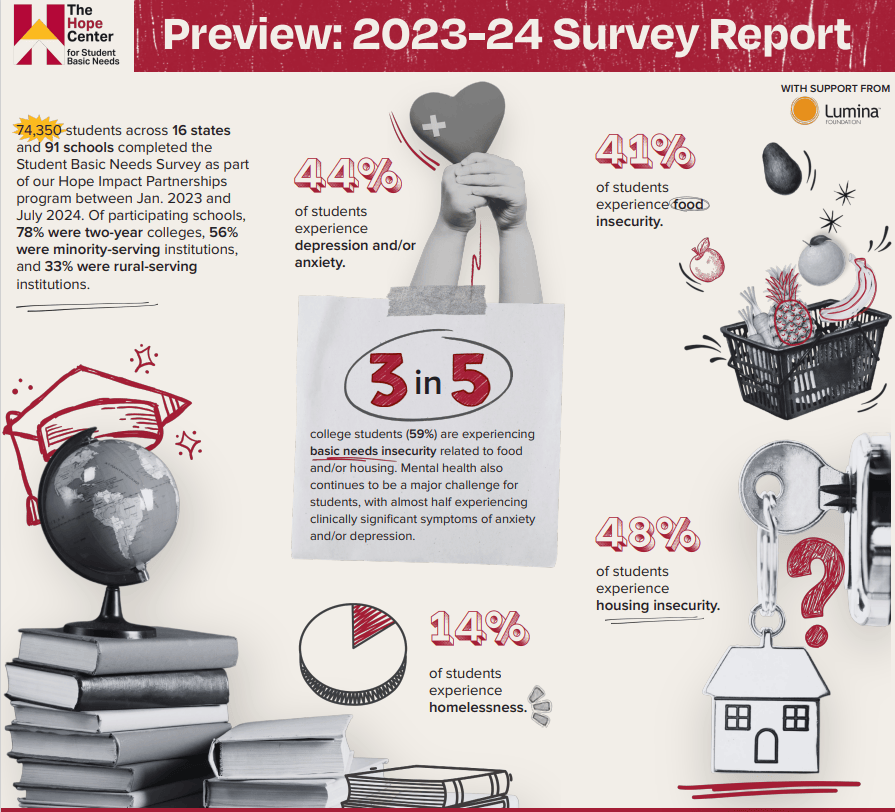
These numbers continue to trend in an alarming trajectory.  Here is nice infographic preview of the numbers for 2023-2024 from The Hope Center for Basic Needs associated with Temple University. 

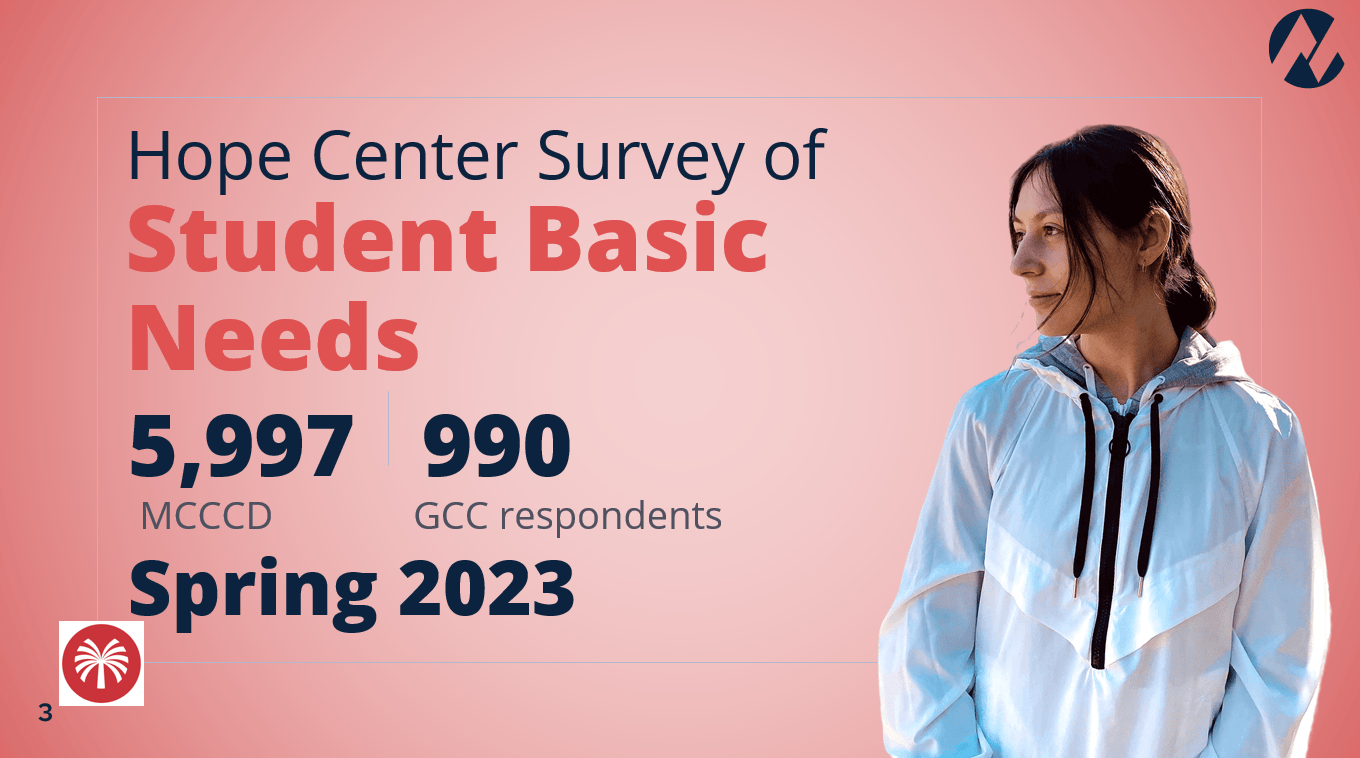
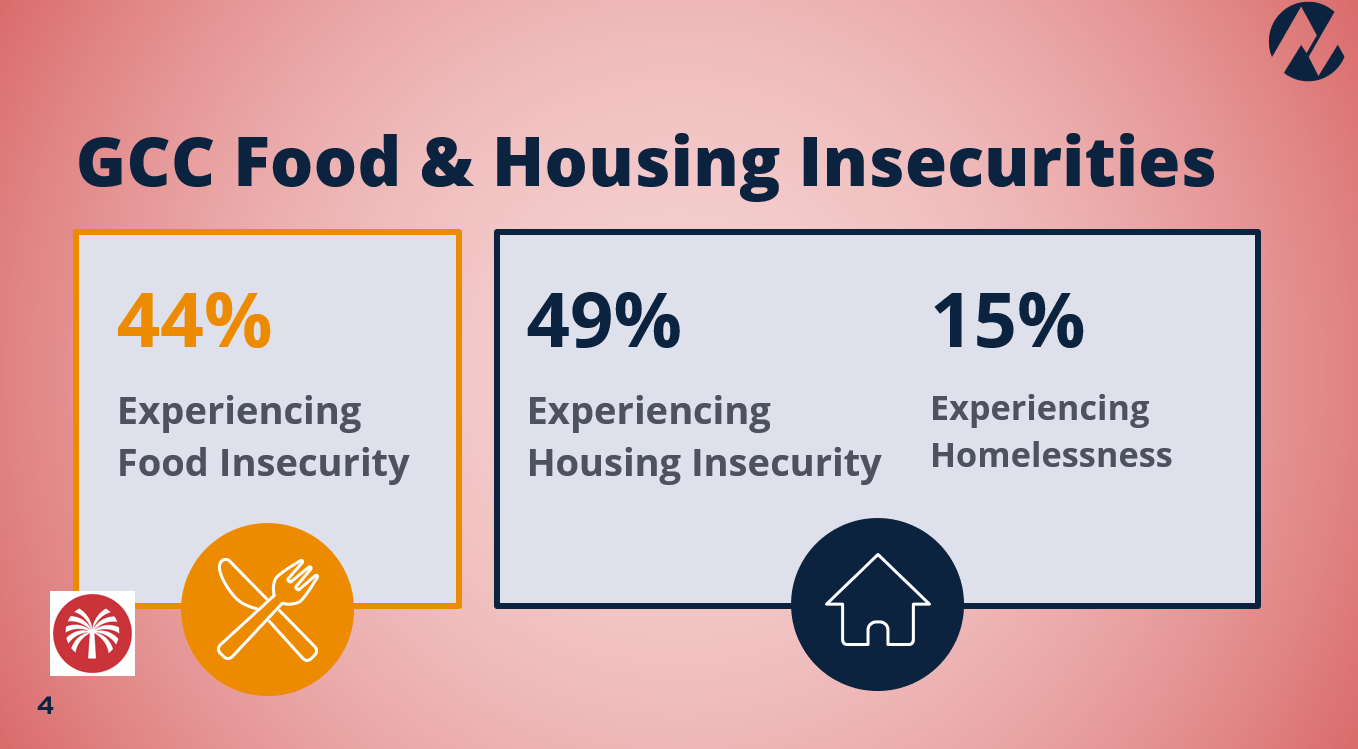
These numbers track with what we are seeing here at Glendale Community College.  In a recent “GCC College Conversations” Genesis Toole presented a detailed PowerPoint on these issues.  Two of the slides below give us some indication of the challenges our students are facing.

The problem of basic needs insecurity is significant and growing and yet, “Instructors often underestimate the extent of food security on campus and remain unaware of many students in their classrooms who can barely afford to eat.”[vi]

The GCC Basic Needs Task Force exists to spearhead the efforts to both raise awareness regarding these issues as well as move forward with specific actions and policies devoted to overcoming the challenges surrounding basic needs.  But this task force cannot do it alone.  It will take the development of a campus-wide culture of awareness and action. 

Keep your eyes and ears open for more to come from the GCC Basic Needs Task Force that will help create this culture as well as provide the resources needed to overcome the challenges of students’ basic needs insecurities.


     [i] “Food Insecurity Among College Students.” Erica P. Regan. Sociology Compass 14.6 (2020), 7.  Available online: https://compass.onlinelibrary.wiley.com/doi/abs/10.1111/soc4.12790

     [ii] Ibid., 7.

     [iii] “Still Hungry and Homeless in College.” Sara Goldrick-Rab, Jed Richardson, Joel Schneider, Anthony Hernandez, and Clare Cady. Wisconsin Hope Lab (April 2019), 5.  Available online: https://www.bhcc.edu/media/03-documents/voicesofhunger/Wisconsin-HOPE-Lab-Still-Hungry-and-Homeless-April-2018.pdf

     [iv] “University Student Food Insecurity and Academic Performance.”  Robert R. Weaver, Nicole A. Vaughn, et al.  Journal of American College Health 68.7 (2020), 727-728.  Available online: https://pubmed.ncbi.nlm.nih.gov/31063031/

     [v] Ibid., 730.

     [vi] Ibid., 732.

You Are Amazing!

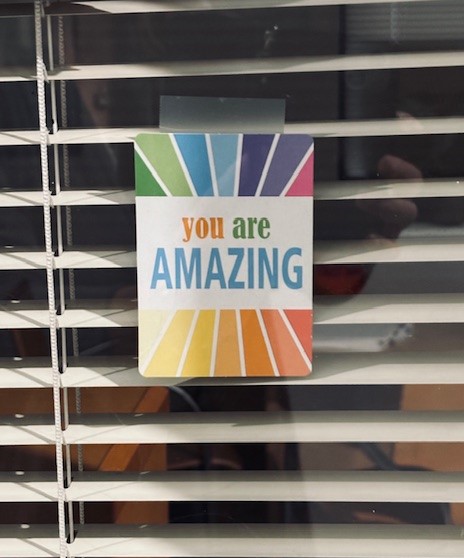
When people walk past my office, I want them to feel like they’ve encountered a space that embraces them, and that’s why the sign that says “You Are Amazing” is so important. it’s a reminder that every individual—whether they’re stopping by for a quick question or simply passing through—deserves recognition and respect. With the door open and the lights on, I try to create a space where employees and students can feel comfortable. I want my office to be a place where they know they are seen, appreciated, and heard.

Our day to day work is busy and often filled with multiple meetings and multiple competing priorities. It can be easy to get lost in tasks or feel disconnected, and sometimes we have things going on that are personal and not ‘seen’ by our colleagues. I want anyone who enters to know that their thoughts, ideas, and concerns are important, that each of us is amazing in our own way. Whether they need a listening ear or a moment of encouragement, my goal is create an office space that promotes mutual respect and understanding. The sign on my office entrance isn’t just a decoration—it’s a commitment.

The Digital Blind Spot

When Dr. Michelle Yeo discussed content knowledge blind spots, my mind went toward one of the biggest hurdles some students face: the digital divide. For those unfamiliar with this access challenge, the digital divide is a term used to describe those individuals, communities, or even regions that do not have access to digital technologies. This occurs when students do not have smartphones, computers, tablets, or even access to the internet or have limited experience with these devices. This divide usually consists of issues with access, skills, and/or how it is used. This leads directly to the blind spot I have had to address: digital literacy. 

Digital literacy is a content area that can fall within several majors differently. The basic understanding involves effectively using digital tools and technologies and using critical thinking skills around those tools, content, and technologies. As an English Composition faculty, the sub-category of information literacy and critical thinking around digital content was a blind spot for me. One of the course competencies for my English Composition courses is to generate, format, and edit writing using appropriate technologies. I entered my classroom believing students would be familiar with basic word processing skills and understand how to use Google Docs or Microsoft Word and certainly the use of Canvas. I thought students would be more familiar with the technologies and know how to use the programs better than I would. I was wrong. 

I have been teaching in technology-rich environments for over 20 years, long enough to forget that not everyone has access to or has grown up with these tools. It is easy to forget that being young doesn’t automatically make someone tech-savvy, and being older doesn’t mean someone is tech-averse. It is also easy to forget that my access to technology over the past 20 years is not equal to that of other people, whether students or faculty.    

What I came to realize is that the appropriate technologies, as it is termed in the competencies, are something I am expected to teach. Assuming that students have an awareness of or access to the technologies was my issue, not theirs. So, a change needed to be made. 

This awareness has transformed my teaching approach. I no longer make assumptions about students’ comfort levels with technology. Instead of just listing the digital requirements in my syllabus, I build in time to orient the students to the different technologies at the appropriate time in the semester. I support the students so they don’t feel overwhelmed by the technology, and I never choose a “one-and-done” tool. I scaffold the technology into the lessons so that it becomes a literacy element and provide skills support for those who feel challenged.  

I have developed several practical strategies to address this blind spot. At the start of the semester, I conduct an anonymous survey about students’ experiences with various digital tools I regularly use in my classes. I have curated short tutorial videos for everyday tasks, such as Google Docs or Canvas features, that I expect students to know. If more than one student asks a technology-based question, I create a short tutorial or walkthrough video and post it to the announcements for every student. I also offer students time in my student support hours to review any digital tools as we begin using them. I have incorporated weekly reflection journals that provide the students a back channel to share challenges and recurring issues. I have reviewed my technology use on a semester-by-semester basis to make sure I am not providing an unseen barrier. Most importantly, I make it clear that questions about technology are just as valid as questions about the course content and provide an avenue for anonymous questions to encourage them to ask.    

The main thing to remember is that blind spots are natural, and recognizing a blind spot makes for a better teacher. Regularly stepping back and examining assumptions about what students already know helps to improve the approach and the lessons. And, asking for student feedback through anonymous means reveals more than you might expect. 

Jack

When asked about someone who I feel was exemplary in teaching, learning, or student success, I immediately think of my high school Political Theory teacher. His name was Jack Wallace. As high school seniors, we probably should have called him Mr. Wallace, but for some reason we just called him Jack. We loved that and I think he did too.

Political Theory was a seniors-only class that I had looked forward to attending since I started high school. Why? Because it was considered a “hard” class and my friends and I were overly competitive and loved an academic challenge. (Full Disclosure: Throughout high school, these friends and I were collectively referred to as “those smart kids who didn’t party” at a time when the Beastie Boys were encouraging all of us to “Fight for our Right, to Parrrrrtyyyyy!” We were Type A and nerdy and damn if we didn’t love a good political argument on a Friday night.)

As a student in Jack’s class, I was pushed academically, but I also felt seen and respected for wrestling with big, complex ideas. He didn’t deride us when we used rationale based on emotion or our parents’ ideals rather than independent, well-reasoned arguments based on research. He used humor to push us to challenge our biases and assumptions. He’d periodically and energetically shout out “Socialism is the halfway house to Communism!” and “America! Love it or leave it!” I knew he didn’t ascribe to either idea, but that was beside the point. He wanted us to interrogate our own viewpoints by developing a mindset of curiosity and critical thinking.

More than anything, I knew that I did not want to disappoint Jack. I deeply respected him because he designed his course in a way that showed he respected us. I pushed myself and I took risks by speaking up in class even though I was usually fearful of being wrong in front of my peers. Because of Mr. Jack Wallace, I know what it feels like to be encouraged and celebrated as a learner. As I look back on my years as an instructor, I hope that I was able to create a learning environment in which students could be academically challenged, feel safe enough to be vulnerable, and above all be celebrated for trying. Thanks, Jack.

“Bad” Teaching, “Good” Teacher?

In a previous Write 6X6 season, I wrote about my teaching heroes (Teaching Inspiration En Pointe and Just a Girl in Senior English). In those essays I waxed nostalgic about teachers who were undeniably “good.” Hallmark movies could be made about them all, “She had solid pedagogy” could be written on their tombstones.

So, I’m not sure why another set of teachers came to mind when asked this week, “Is there anyone in education you felt was exemplary in teaching, learning, or student success?” I’ve studied teaching for the last 38 years, and I know all the qualities that would be on the “good teacher checklist.” But sometimes teachers go off-the-good-book, so to speak, and their students can be all the better for it.

In my doctoral program, I took Research Methods in the Learning Sciences with a highly-respected and highly-introverted professor. She had a funny habit of curling up like a cat on a desk in the front of the room and lecturing from her scratching post podium. And as with all doctoral courses, Research Methods had a heavy reading load.

In one of the first weeks of class, we all filed in as the professor vaulted her tiny frame above us. She started class by asking, “What are your reactions to this week’s readings?” I don’t remember if we were all shy/didn’t do the reading/were still asleep from an all-nighter, but none of us spoke. She employed the good-teacher tactic of using wait time, and then promptly, but not unkindly, announced, “Well, if you all don’t have something to share, class is over.”

She matter-of-factly padded her way out of class, and we all just sat slack-jawed. What just happened?

The good-teacher checklist would dictate the professor should have offered scaffolded prompts to get us talking. She should have used encouraging words to help us take risks. But the effect of her walk-out was the same: We all came prepared to discuss the reading in every class moving forward.

Her strategy only worked because she knew her students. She knew we were a bunch of highly motivated (read: somewhat neurotic) PhD candidates. And when she wordlessly left the room, she communicated loud and clear, “You are responsible for your own learning!” I personally would never do the walk-out with my own students. But this experience reminds me of the importance of transferring the responsibility of learning to the student.

Another professor in the same doctoral program was a renowned qualitative scholar. It was amazing that she was still teaching 1) because she was world famous, and 2) she had a very interesting (read: strange) approach to teaching: She would sit in front of the room with notes she had handwritten in a big book and read them . . . verbatim . . . for over an hour . . . in each and every class! The good-teacher checklist would not be amused.

I don’t know how she did it, but she made it work. She would read for a bit, take off her glasses, and chuckle to herself about some aspect of what she just read. She was provocative – challenging all of us quantitative folks by saying our numbers had just as much potential for bias as the ethnographic methods she taught us. In her own little weird way, she roped us all in as she recited her notes class after class.

I would never straight-on read notes to my students and attempt to pass it off as teaching. But I am reminded that I don’t have to be the entertaining dancing monkey for my students that sometimes I feel compelled to be. I’m not sure any student ever stitched these professors’ names on a pillow, but I believe we all benefited from their unconventional (read: not research-based) instructional approaches. And this former-kindergarten teacher learned to have elevated expectations for college students who are ultimately responsible for their own learning.

Finding Balance: Knowing the Size and Shape of your Plate

Life definitely feels like these goats on a thin sheet of metal at times. You never know if you are going to stay up or come crashing down. One of the things that has greatly impacted my balance in a good way, is knowing the size and shape of my plate (the proverbial plate on which everything I do rests). Discovering the size and shape of my plate was a process for me and I had help along the way. 

During my probationary period, my wise mentor Polly Laubach realized I had a problem of saying yes to too many things. This “say yes” problem caused a major imbalance which had my plate running over. I felt like I was exceeding the size and shape of the plate I had to offer. Polly identified this problem significantly faster than I did which is one of the reasons she is a great mentor. She was paying attention to me and noted all the things I was doing. Polly’s remedy for this problem was simple, say no. Trust me when I say that we actually practiced saying no. She would run a scenario and provide me the opportunity to say no. We also practiced at the end of our meetings together which was a great way to help me practice saying no. 

I am going to be honest, I do not like to say no. Which is why I do not say no, rather I say:

  • What are the deliverables of the project? 
  • When do you see this project being completed?
  • What days and times would the committee meet? 
  • What are the expectations of the committee members? 
  • How often would you want to meet to complete this project?
  • How will the product we create or project we complete be used in the future? 

All of these questions have led me to being better at selecting which project, committees, and other opportunities I say yes to. 

Sometimes my balance might look like this where everything is balanced even if there are lots of cups or tasks or commitments but the important part is balance. Everyone’s plate is a different size and shape so take on what you can within your limits. 

My Inspiration

The love for learning, the love for inspiring, and the love for building a better tomorrow come to mind when I think about those who have been my superheroes and for those who I hope to become a superhero for in the future. 

My parents (AKA my superheroes) knew all along my destination was to make “going to school” my career. From the time I could remember, I would “play school” with my two younger sisters in our basement, using old workbooks and even having recess in the yard. Yep, the good ‘ol days of telling them what to do 😉 What I didn’t realize in those moments, was how gratifying it felt to watch my little sisters do something they didn’t think they could. 

Fast forward a few decades, all grown up but my family would say that I haven’t changed a bit.  They are my superheroes and the ones who gave me the inspiration to inspire others.  They are the ones who let me find the love for learning through my love for them. And, my nephews have become the ones that remind me why it is so important to make tomorrow even better than today. 

My hope is that we each find a way to appreciate the gifts of our superheroes and to maximize our talents. Superheroes bring their best selves each and every day and I couldn’t imagine a world without them. 

The Nature of GCC

Before you read any further, take a moment to watch this video with the volume on high. (You’ll thank me later.)

When asked, “What area or areas on campus hold a special significance for you?” my resounding response is anything outdoors! I have a distinct memory of feeling awe while touring the grounds as a new faculty back in 2019. I texted pictures of trees, plants, and rocks to my husband and children. “Aren’t I lucky to get to see this every day!”

Then along came COVID, which is really a story for another day. To be sure, when we all returned to campus the following year I was excited to see my students and colleagues. But, I was also gratified to return to views like this:

I strongly believe that how GCC tends to its natural environment is an important factor in how students feel about school. An enriched natural setting communicates to students that we care about them and that they are worthy of being surrounded by such beauty. It’s as if all the trees and plants envelop students in a metaphorical hug each time they step on campus.

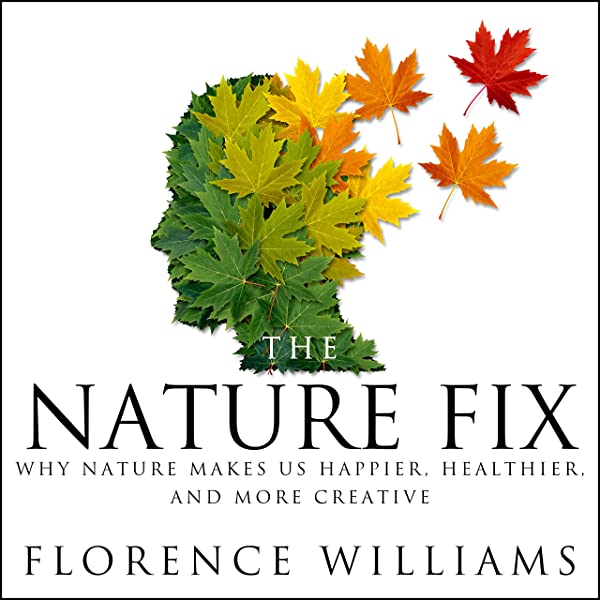
Okay, did I go too far there? Maybe, but I’m a true believer in the healing powers of nature. For anyone who needs convincing of this, I highly recommend the book The Nature Fix: Why Nature Makes Us Happier, Healthier, and More Creative by Florence Williams.

And when I snapped these photos this week, the sky was just showing off, don’t you think?

We Are Family: My Problem is Your Problem

In preparing to write this week, I boogied down memory lane to find my song. While I didn’t really come of age in the 70’s (I’m an 80’s kid … Neon! Huge bangs! Who Shot JR?!), the songs from the 70’s were the soundtrack to my early childhood and set some wild expectations for what I thought adulthood would be like. As it turns out, I have far fewer groovy dance parties and bell bottom jumpsuits than I had thought I would.

I ultimately landed on We Are Family by Sister Sledge as a song that reflects my approach to working with students. I remember my sister and I dancing to this song in our family room with wood-paneled walls and orange shag carpeting. We were very cool. And what a wonderful way to live life… with the assurance that a group of people who love you, have faith in you, and also have your back. Consider these lyrics: “Have faith in you and the things you do; you won’t go wrong, oh no, this is our family jewel.”

In my first few semesters of teaching, I was focused on the content of my courses and how I would organize my lectures and exams. Over time, I learned that the course content was almost beside the point; students can access that content in other places. Building trust through relationship and creating a supportive learning environment was my biggest contribution to the success of my students. I am now convinced that teaching is caring.

How do we extend an Ethics of Care framework into the classroom? I’d love to explore this idea and learn from you in a community of practice at GCC. I’ll bring the fondue!