
In light of this week’s prompt…whether traveling the Interstate or taking the scenic route, all travelers need to stop occasionally at rest stops for refueling and rest. These are basic needs for the journey. And with that as my segue… I want to look at some key issues arising from the GCC Basic Needs Task Force!
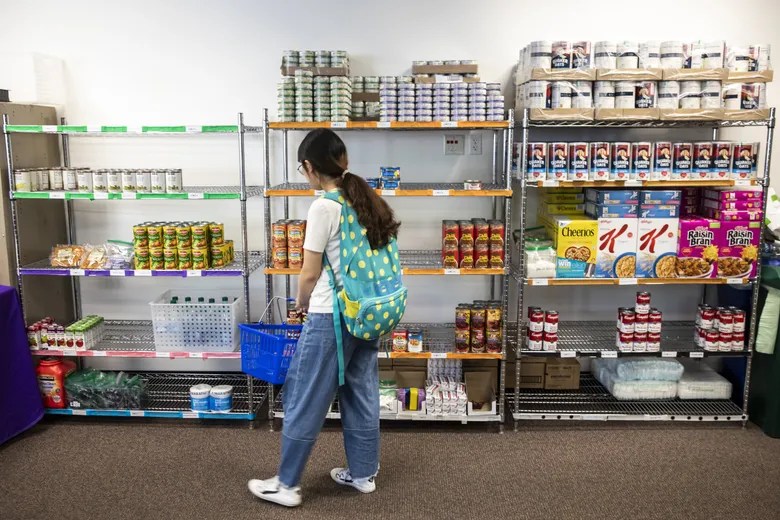
The academic literature on basic needs insecurity among college students continue to grow as it documents with increasing precision the fundamental problems for our students. I recently spent some time online researching these issues and here is a sampling from that literature.
- “As the literature grows and improves in quality, the magnitude of food insecurity among college students becomes clearer. While 11.1% of households nationally were estimated to be experiencing food insecurity in 2018, the estimates of food insecurity among college students are significantly higher in most cases.”[i]
- “The most recent comprehensive food insecurity study of students at 31 two-year and 35 four-year colleges found that 36% of college students were food insecure.”[ii]
- “Surveys of community college students typically yield higher estimates of basic needs insecurity. A 2015 Wisconsin HOPE Lab survey of 4,000 students at 10 community colleges found that 39% of respondents reported low or very low food security, and 52% reported housing insecurity, including 13% who had experienced homelessness. A 2016 HOPE Lab survey of 33,000 students at 70 community colleges found that 56% of students experienced low or very low food insecurity, 51% were housing insecure, and 14% were homeless.”[iii]
The effects of this food insecurity are far-reaching for our students.
- “Links between food insecurity and student success seem evident and include lower concentration, energy, test scores, and student retention. Some suggest there to be a relationship between food security and mental health (e.g., depression, anxiety, disordered eating, suicide ideation), which likely influences performance as well. Finally, food insecurity often coincides with other factors that hamper student success (e.g., difficulties with housing, transportation, time management, employment, affording books, and supplies) and reflect other disparities in higher education.”[iv]
- “…food insecure students are about three times less likely to be among the highest 10% GPA compared to their food secure counterparts.”[v]
These numbers continue to trend in an alarming trajectory. Here is nice infographic preview of the numbers for 2023-2024 from The Hope Center for Basic Needs associated with Temple University.
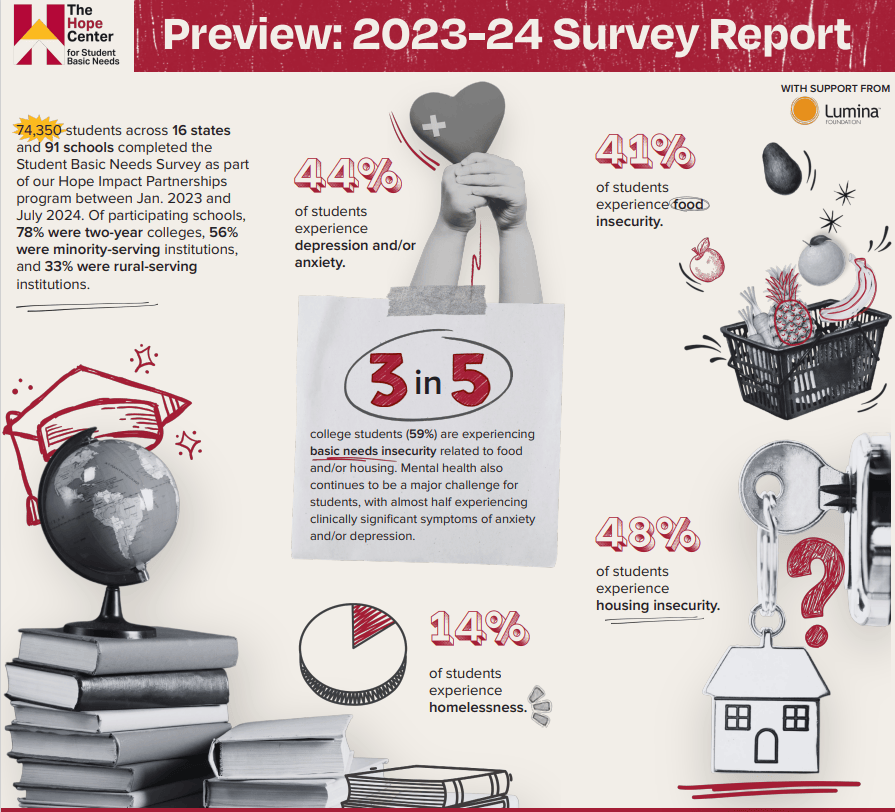
These numbers track with what we are seeing here at Glendale Community College. In a recent “GCC College Conversations” Genesis Toole presented a detailed PowerPoint on these issues. Two of the slides below give us some indication of the challenges our students are facing.
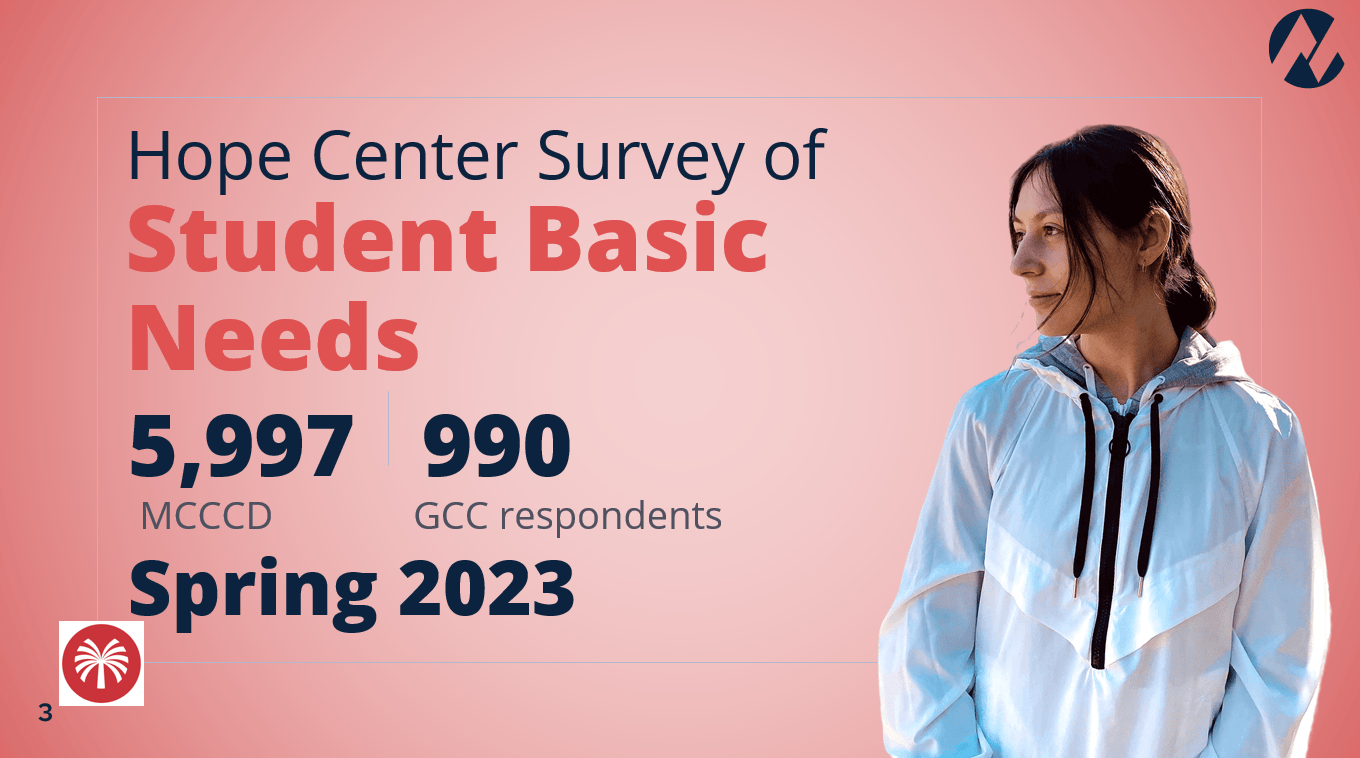
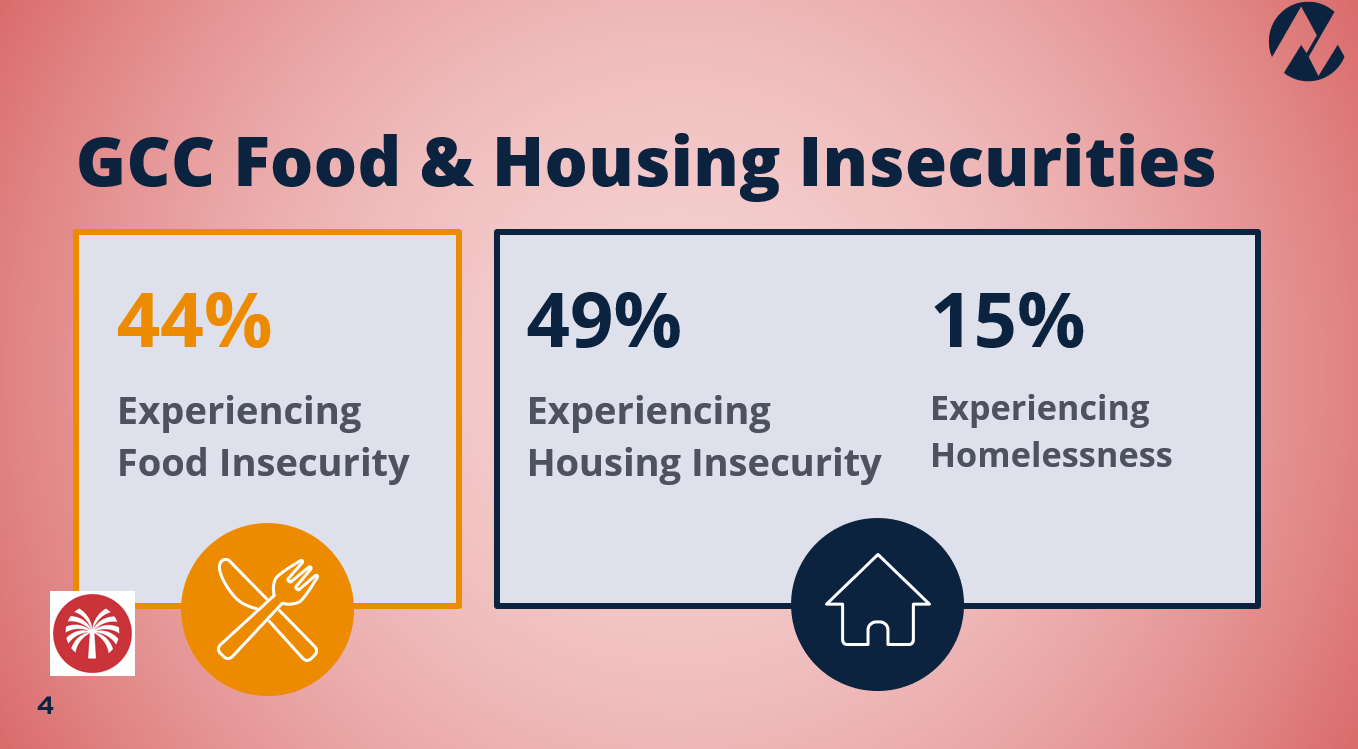
The problem of basic needs insecurity is significant and growing and yet, “Instructors often underestimate the extent of food security on campus and remain unaware of many students in their classrooms who can barely afford to eat.”[vi]
The GCC Basic Needs Task Force exists to spearhead the efforts to both raise awareness regarding these issues as well as move forward with specific actions and policies devoted to overcoming the challenges surrounding basic needs. But this task force cannot do it alone. It will take the development of a campus-wide culture of awareness and action.
Keep your eyes and ears open for more to come from the GCC Basic Needs Task Force that will help create this culture as well as provide the resources needed to overcome the challenges of students’ basic needs insecurities.
[i] “Food Insecurity Among College Students.” Erica P. Regan. Sociology Compass 14.6 (2020), 7. Available online: https://compass.onlinelibrary.wiley.com/doi/abs/10.1111/soc4.12790
[iii] “Still Hungry and Homeless in College.” Sara Goldrick-Rab, Jed Richardson, Joel Schneider, Anthony Hernandez, and Clare Cady. Wisconsin Hope Lab (April 2019), 5. Available online: https://www.bhcc.edu/media/03-documents/voicesofhunger/Wisconsin-HOPE-Lab-Still-Hungry-and-Homeless-April-2018.pdf
[iv] “University Student Food Insecurity and Academic Performance.” Robert R. Weaver, Nicole A. Vaughn, et al. Journal of American College Health 68.7 (2020), 727-728. Available online: https://pubmed.ncbi.nlm.nih.gov/31063031/