Category Archives: Write6x6

For Bisia (What Inspires Me Daily)

What amazes me is to see how the lines of lives come together — lead to a single time or a place. I am a big picture person, and I like to contemplate it. When I think about what inspires my work every day at GCC, I think of my grandma, Helen Kobylski. My sisters, cousins and I called her Bisia (pronounced Bee-sha). Bisia was the daughter of Polish immigrants, and she grew up in a Polish neighborhood on Detroit’s west side. When she was in sixth grade, her father died of cancer, and she dropped out of school to work to help support the family. She never went back to school.

Bisia was an avid reader, but she didn’t write much. The only evidence I ever had that she wrote was when she signed birthday cards, “Love, Bisia.” That was it. But she loved Westerns. She loved baseball. She loved a good political discussion. She loved bingo. She was so passionate about what she loved. She was also so limited by her lack of education, not at all in terms of her intelligence, but in terms of her ability to secure good work. Bisia never had a job that wasn’t in retail. She never had a job that earned much over minimum wage. She worked hard for decades, and when she retired, she was on a fixed income. Every single year for Christmas, my two cousins, two sisters, and I received the same gift from Bisia: a single, crisp, two dollar bill.

Bisia was not the kind of grandmother to spoil her grandkids.  She’d be more likely to yell at you to finish your homework or be too busy washing my cousins’ mouths out with bricks of Dial soap than she would be to give you a hug and a kiss. But when I went away to graduate school — all the way from Detroit to Cleveland — and came home on my breaks, Bisia would have a whole collection of food waiting for me. She would give me her bucket-sized government peanut butter, the government block of cheese, her ration of canned ham, and the gigantic rectangles of butter, all generic, all utterly delicious. I’d drive these back to Cleveland with me and share them with my fellow graduate students who didn’t live close enough to home to receive such a bounty.

Despite her own lack of education (and likely because of it), Bisia made sure that my mother was the first in the family to graduate from high school. Somehow, she sent my mother to Mercy College. Somehow, back when women didn’t really go beyond their bachelor degrees (if they went to college at all), my mom went to the University of Michigan for a Master’s Degree in Social Work. She did this before she met my dad and before my sisters and I were born. Somehow, my mother earned a graduate degree in the early 1960s.

Bisia’s story, and thus our family story, reminds me greatly of our students’ stories. So many GCC students come from somewhere else, speak another language, are first generation college students, are negotiating two languages (or more) and cultures daily — the one in public, and the one at home. I look out over my classroom, I listen to my students speak, I read their writing and learn their stories, and, when I do, my grandmother is always nearby. I see my GCC students, and I am reminded of where I am from. Every single day. I think of the tradition that existed only between my grandmother and me, of Bisia saving her allotment of government-assisted groceries, and it inspires me daily to help others achieve their higher education.

Bisia was the first person in her family of origin to live past age 49. Then she made all the way to her 80s. I was 34 when she died. There isn’t a single day when I’m in the classroom that I don’t think of my grandmother. She had a tough life, and she was fierce because she had to be; her energy went into investing in the future despite having very little resources. The lines of her life eventually helped draw the lines of mine. And now I just keep drawing them and extending them. In addition, I am blessed to be in the position of offering the opportunity for my students to draw their own lines to see where they might lead. When it happens this way, and all the lines come together –if even only for a semester or two — there really is no beginning, and there really is no end. It is the most motivating big picture for me ever, and it’s precisely what keeps me going.
I wore compression socks to work today

My non-teaching job forces me out of bed at 4:30am to work stock crew at a retail store and requires me to be on my feet for long periods of time. In an effort to combat the leg fatigue and edema, I broke down and purchased compression socks—and not the really cool kind that lifters and runners and crossfitters wear. The ugly kind…the ones that are purely functional and “flesh”-toned, with subtle hints of jaundice.

They are glorious.

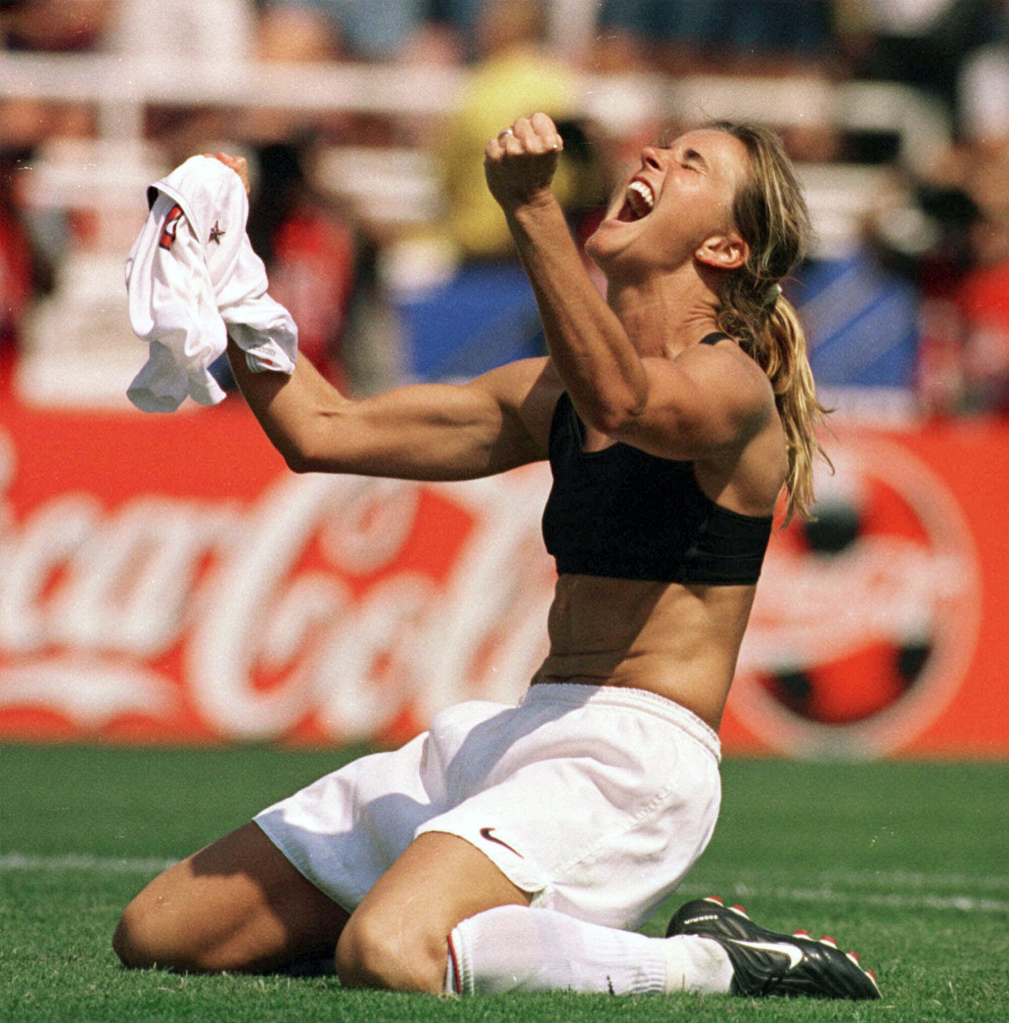
I’m pretty sure they solidify my status as “old,” and while I may be a few years shy of my AARP card, they are a reminder of the ever-growing age gap between me and my students. Every year, I get older, but my students stay roughly the same age. When I first started teaching at community colleges, I was 29, just 11 years older than my youngest students. Finding course content that connected with them was easy, mostly because they had experienced the same significant cultural moments that I had. I could pepper a class discussion with references to the O.J. Simpson trial or Brandi Chastain’s game-winning kick and subsequent disrobing; and my students responded with knowing head nods.

AP Photo/The San Francisco Examiner, Lacy Atkins, File

That isn’t the case today. I’m 15 years older; they’re still roughly 18-25.

Earlier this week when a class discussion on precise word choices afforded me the opportunity to quote Inigo Montoya, I suggested that it’s important to choose words wisely to avoid comments on their paper like “you keep using that word. I do not think it means what you think it means.” My students didn’t laugh. Instead, they just stared at me…blankly. Even when I humbly offered, “The Princess Bride?…anyone? No? Just me?”…nothing. And in that moment, I realized that another one of my “go-to” references needed to be updated.

Giphy

Every semester, I’m faced with the reality that connecting with my students is much harder than it used to be. I am growing increasingly more aware of the fact that my students aren’t knowledgeable of the same events I am, nor do they relate to the world the same way I do.  As educators, we talk a lot about the importance of student engagement and its direct correlation to student success and retention, and so every semester, in an effort to close the growing age gap, I actively seek out new supplemental content that will help them make connections between their reality and the skills we ask them to master. Surprisingly, a majority of this new content comes from former students.

When a class asks me if I have heard about a recent event or seen a viral video or a social media post or a T.V. show, I carve out time to look it up. At worst, I find it obtuse or offensive; but even then, I am learning more about the interests of this generation of students, and that knowledge helps me connect to them in other ways. More often than not, though, it is something I can use during a future class discussion, and in those moments, they teach me, helping me understand their world—and mine—a little bit better.

I hope that I never lose the ability to make those connections with my students, that I never get to the place where my class never changes and I have become Ferris Bueller’s economics teacher Professor Binns, droning on incessantly and completely oblivious to my classroom of sleeping students. I hope that I never run out of new material…but if I do, I can always fall back on a cute kitten .gif. Everyone loves a cute kitten .gif.  

Giphy

Contagious Spaces


HeadshotGCCFall2017.jpg

My name is Tenisha Baca and I am Residential Faculty for the Communication and World Languages Department at Glendale Community College in AZ. I am also the Co-Faculty Developer for the Center for Teaching Learning and Engagement. Welcome to this post!

We’re always encouraging others in higher education, but there are moments when we need it ourselves. When we’re motivated and inspired it impacts everyone we serve. It’s contagious and I’m here to spread it.

One way to stay motivated and inspired is to surround yourself with items that cultivate that feeling within you. The best place to start is the office. We spend a significant amount of time in the office. We should surround ourselves with items that encourage us to be awesome in what we do.

My office is a haven of motivation and inspiration. I’ve included pics below. Here’s a list of some of my top motivating/inspirational items in my space.

1. Purple Heart Award: Award I received after completing chemotherapy. I’ve been a cancer survivor since 2008. It reminds me of what I overcame and it encourages me to encourage others that they can overcome what they are going through.

Purple Heart Award.jpg2. Picture of my husband and I: He strives for excellence in everything he does. It reminds me to strive for the same thing inside and outside of the classroom.

Hubby and I.png

3. Notes of appreciation on my wall: Over the year’s people have been nice enough to write me such encouraging notes. I keep all of them and it touches me to know I have touched others in my work.

Thank you notes.jpg

 4. Wonder Woman: All of my figures inspire me because I love WONDER WOMAN!!! Everything she stands for is something I strive for daily.

Wonder Woman.jpg

5. Door of Inspiration: Place where I post people, sayings, notes, etc. that encourage me to be the best version of myself every day.

Door of Inspiration.jpg

Cultivating this space and mindset makes a difference. I pass these messages along to my students when they stop by my office and we have conversations about life. I also pass them along in the classroom. One day I asked a student: “Hey, have you found all of this motivational/inspirational stuff we have discussed to be something helpful to you?” He said yes “It makes me realize that I can do anything. And that I can work hard to get there if I put in the work.” That is a great lesson a student learned, not just for the classroom, but in life. Like I said before, motivation and inspiration are contagious and I’m here to spread it. Thank you for reading.


Mindfulness in Everything

I thought the word mindfulness was a little overused and overrated. And then I started abusing the word myself. In the classroom, in meetings, with my friends, with my kids.

I have actually boiled it down to the one thing that could save us all from ourselves. If something is going wrong in your life, you are likely on autopilot. Handy for planes. Bad for most people…unless you are a really good habit builder.

Too much body fat…eating mindlessly.

Too little sleep…surfing (internet, TV channels) mindlessly.

Depressed…wishing mindlessly.

Anxious…fearing mindlessly.

I think we just do things because it’s the way we have always done them, never questioning why. Always on autopilot.

Mindfulness is about being present and focused on people and the world around us. On our thoughts, on our food, on our lessons, on quiet, on noise, on smells, on textures, on colors, on tastes and on how we feel about it all.

The mind is powerful and controls our body and ultimately our health. If you are having a hard time getting focused, start with your breath. You’ll will find stillness there and will eventually be able to expand your areas of focus.

I encourage my students to touch, feel, hear, see and question as they are learning. I encourage mindfulness in the classroom because it teaches the student to learn in new ways and reach surprising new levels of comprehension.

This Too Shall Pass

Difficult Situations

I served as the GCC Professional Staff (PS) President for a couple of years and sat in many meetings with PS employees and HR to discuss difficult situations. I always maintained a professional demeanor, which helped me in these often uncomfortable and emotional situations.  I put myself in the employee’s shoes to do what was best for them. I supported them and ensured their rights were met. I spoke up to managers a couple of times which wasn’t easy, but I did it for my colleagues which made it easier.

I believe putting the best interests of the people who need help really gives me the backbone and courage I need to endure difficult conversations and situations.

For me, 1983 was the best and worst year of my life. The very best things and the absolute worst things in my life happened that year. It was then that I learned the mantra “this too shall pass.”  I realized that I could get through anything that year. I learned that for better or worse, time passes and everything flows down the river, the good, the bad, and the ugly. It all becomes history. I think back on times when I would obsess over something, usually a negative thing and the hours and energy I would waste in  worry. A few weeks later I recalled being very upset and agitated about something, but couldn’t remember what caused all of the angst. This too shall pass.

Sometimes just knowing this is enough to get me through.


One Last Write 6×6 Post

My last and final Write 6×6 post of 2017 goes out to Alisa Cooper and everyone at the Glendale Community College Center for Teaching, Learning & Engagement (CTLE).

Thank you all for encouraging us to write about our educational experiences not to mention offering all the other amazing activities and events you do throughout the year. You have made a difference for me and always set a good example for others to follow. I thank you from the bottom of my heart for enriching the culture of Glendale Community College.

Signing off for Write 6×6 2017!

Sincerely,
Kristin


Filed under: STEAM Tagged: Write 6X6

Shhh! … Listen!

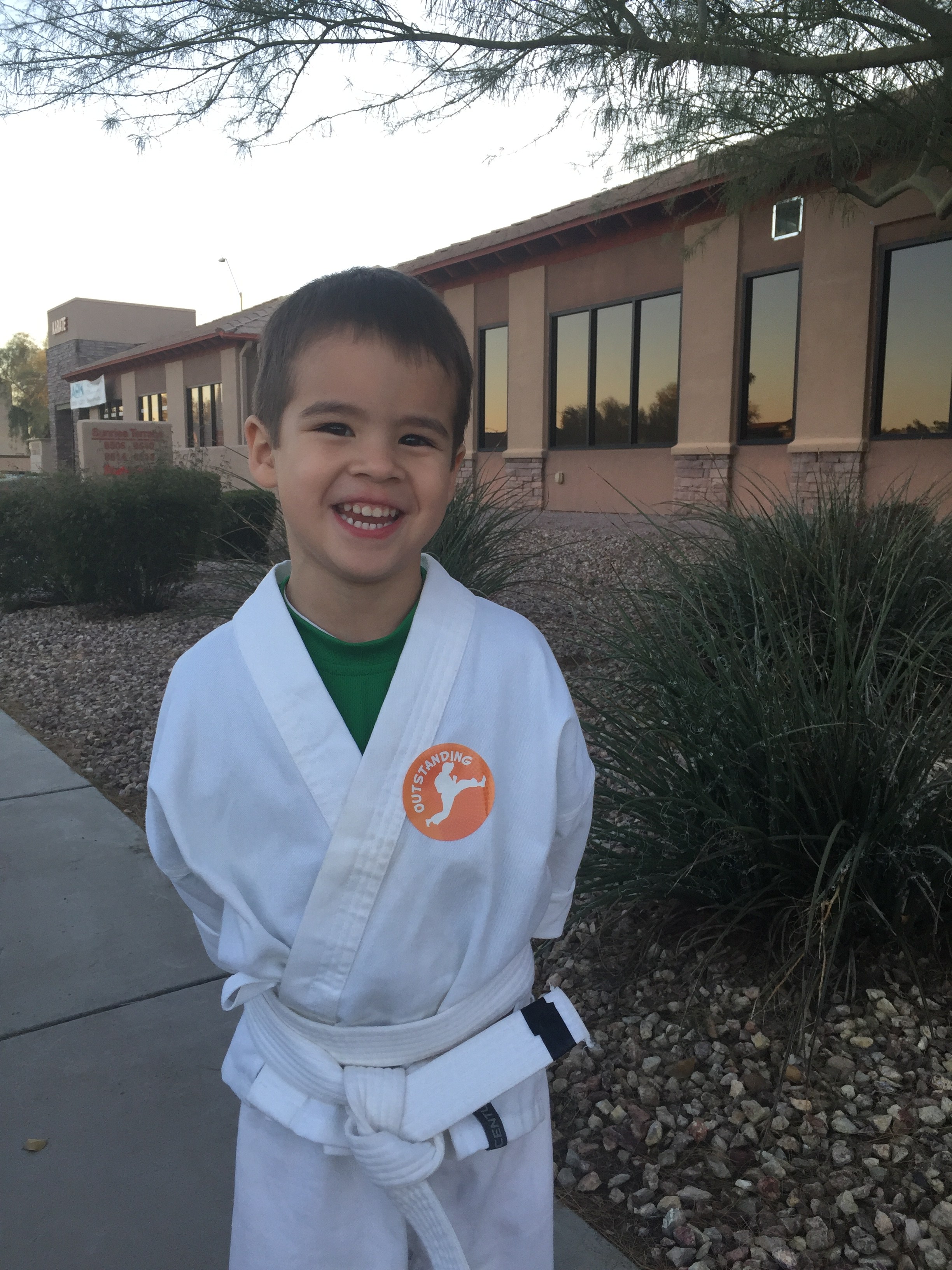
My 4 year old son is taking karate. He is a proud white belt with three stripes. Last week he earned a big orange “Awesome” sticker. The instructor singled him out of about 20 kids for being the best listener. He was so proud of his award and has been telling everyone about it!

Fast-forward to Write 6×6, week six. The grand finale. How do I foster relationships at work, home and at play? Honestly, I don’t know. Well, I think I might know…

My father was an engineer. Engineers are known for their lack of communication skills. They are straight talkers and only if you ask them. Mostly they are introverted and prefer to keep to themselves. He is still pretty set in his ways, but has softened a lot over the years.

I got 50% of that gene. That, along with the fact that I swam four hours a day in secondary school. I had no social life except for the three minute breaks between sets and when the coach gave us a “social kick” set. I did not have much training in the way of building relationships.

Fortunately my mom was good at it and through my observations, I learned to relate to people from all genders, ages, races, cultures, sexual orientation and socio-economic status. She passed away in January, and the piece of my heart that is still functional wants to honor her talents.

I like to observe people. The people who I relate to the best are listeners, not talkers. I can’t do idle chatter very well. I need my conversations to be meaningful, where I walk away with a little piece of that person’s positive energy and life vision and they with mine.  I like being present with people and really understanding their motivations and how they, in turn, relate to others.

Back in the karate studio, the teacher asks the group how many ears they have. “Two,” they shout! “And how many mouths do you have?” “One!” they shout. “So you should listen twice as much as you speak!” he reminds them.

I like to listen. Especially to people who appear to be unhappy or grumpy. Grumpy people are grumpy because people have stopped listening to them. Ignore the grumpiness and really listen! You can learn a lot!

Listen to learn. Listen to understand. Listen to be kind.

Stop talking and really listen.

Shhh!

Building Relationships

Fostering and sustaining healthy relationships is one of the greatest skills and challenges in the workplace. Ask a person who leaves or retires what they miss about the place, and the answer is always the people.

We spend the biggest part of our lives at work. Work consumes most of our time, so the people we work with are some of the most critical relationships we will ever have. There are many kinds of relationships and some are unhealthy. I need to honestly evaluate and analyze my work relationships to see how they sit with me. Am I OK with them or do some require work and remediation? Are some relationships unhealthy and require my taking steps to protect myself or to fix them, or do I learn to let go and form a polite truce?

I like to think I have formed some good, healthy, and productive relationships with my colleagues at GCC. I try to be that person who says she will do a thing, and then does the thing, preferably in a very timely manner. I try to be kind to people, because really, what does it cost me? I used to do telephone registration during peak enrollment periods and it was a stressful time for the students and for me. My goal was to somehow, someway, lighten every conversation I had. I was polite, cheerful, and efficient. I wanted to hear a smile in their voice by the end of our conversation. Most students responded positively to my attempts, but every once in a while I would get someone who wasn’t having it. I never had a really grumpy person, but I could tell my plan wasn’t working. In those instances, I would quickly process their transaction, wish them a good day and send them on their way. I guess I learned in the few minutes I had with people that I was there to fulfill their needs and did that to the best of my ability.

I try to do this with everyone I meet. I don’t have a lot of interaction with students, but when I walk across campus I try to make eye contact and smile or say hello. I don’t always do this, I try to be alert to non-verbal clues, but again, what does it cost me to be nice?

I find the old adage “you scratch my back and I’ll scratch yours” is so, so true in relationships with my work colleagues. I also find the practice of going out of my way to help another comes back to me ten-fold when I get on the phone to ask for help.

I don’t go to other colleges very often, so I find that is my next frontier. My plan is to build bridges and relationships with employees outside of GCC. Who knows what future friends are just waiting to be found?

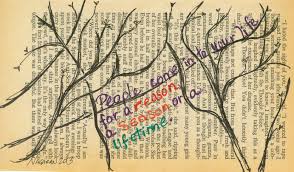
Reason, Season, Lifetime…

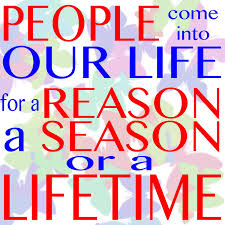
Maybe you’ve read the Reason, Season, Lifetime piece. It’s a rather cutesy idea about why certain people come into your life. When I thought about work relationships, the Reason, Season, Lifetime thought came to mind.

Let me start by saying that I don’t buy into the over-simplified idea that everything happens for a reason. But after re-reading the Reason, Season piece and thinking about work/friend relationships over the years, it is sort of a cool concept.

Read Reason, Season (click below) and then think about people in your life that fit each category.

Even more interesting – think about yourself and what categories you fit in according to your experiences with family, friends, coworkers, and students. In addition to all the great people who have impacted your life, think about those who presented a struggle. Sometimes difficult experiences move us to grow or change. At the very least, we can re-frame our intentions in tough relationships as an opportunity to practice patience, tolerance, or model acceptable behavior for others.

So now you’ve had your daily dose of sugar-coated philosophy. Best wishes to everyone for a fantastic spring break.

Is It Time for Happy Hour Yet?

That’s a pretty relevant question. It is Thursday, and the To-Do list is fairly long. So why not shirk all responsibility for 30 minutes or so and blog about happy hour? Sounds good to me. Happy hour is the obvious choice for this week’s writing prompt for Write6x6: Building Relationships. How do you build relationships with faculty, staff, and students on campus? How important are these relationships to you?

First, I’m going to point out the obvious. There will be no happy hour with students, but everyone else is fair game. It’s the perfect way to build relationships. When I left South Mountain Community College 8 years ago, one of the pluses on my Pro/Con list for leaving the college was building relationships and community. I have some wonderful friends at SMCC and built some long lasting relationships, but not many of those relationships went beyond the boundaries of the college. I just felt like if I was going to spend 6 hours a day with people, I should be friends with those people outside those boundaries – at least some of them. So I left. I felt like a bigger campus, more people would open up those doors. And I was right. I went from having 6 faculty in my department to 40. There might have been more at SMCC if I counted the Reading faculty, but I didn’t really know of any of them. But you get the idea.

Everyone is busy, and teaching schedules can be chaotic. It’s difficult to build relationships when you never see the people you work with. So I made it a habit of walking the halls and spending time in my office beyond the required 1 hour office hour, just so I could connect with my peeps. After a while, I quickly learned that I was never going to get much work done when I was in the halls of 05. I spent my time there popping into offices, talking with colleagues, answering questions and generally just chilling.  It was a great trade off. Not everyone agrees with that sentiment, as there were plenty of closed doors in the hallways.

But there are also many happy hours. Meeting up off campus allows for people to feel free, be more relaxed, and open up a bit more about how things on the job are really going. It gives us all a chance to problem solve together and brainstorm ideas. But it also builds stronger relationships. I work with a bunch of awesome people who travel to conferences for professional development together, submit proposals for grants together, work on projects together, and of course, attend many happy hours, dinners and gatherings in our own homes together. We’re just one big kumbaya song.