My son is learning piano… and so am I.

When your child shows interest in something you, as the parent, research their interest and find lessons, environments, or other experts that can help your child pursue those interests. For my son, that means WE are learning how to play the piano. Don’t get me wrong I have wanted to learn how to play the piano since I was in high school but I never made time for it. Having my son show an interest has pushed me to try something new and let me tell you, playing an instrument is not easy.

I have been pushed in so many ways while learning the keys and notes as well as how to read music. Playing the piano with both hands simultaneously while reading music and looking ahead to where your hands need to be for the next note is intense.

My son is learning at his level which means that I can help him practice what each key on the piano corresponds to the note in the music as well as his hand placement. I can even help him read the music that he is learning. I have loved learning this new skill with my son and I have found that the challenge is invigorating. This shared interest has helped us connect and makes our piano lesson days a mother-son adventure in patience and growth.

As I reflect on this current skill we are learning, I have found other things that I have learned that I did not know before having my son and helping him dive into his interests.

For example, I learned how to solve a rubik’s cube after we had an incident where my nephew jumbled up a solved cube and my son cried for hours about how it would never be solved again. I decided that I could learn how to solve the rubik’s cube and in essence stop any future tears on something that, in my opinion, did not need them. That is a win-win in my mom book.

ChatGPT, write a novel about a dystopian society that has been consumed by technology. Include book burning, and the death of creative thought.

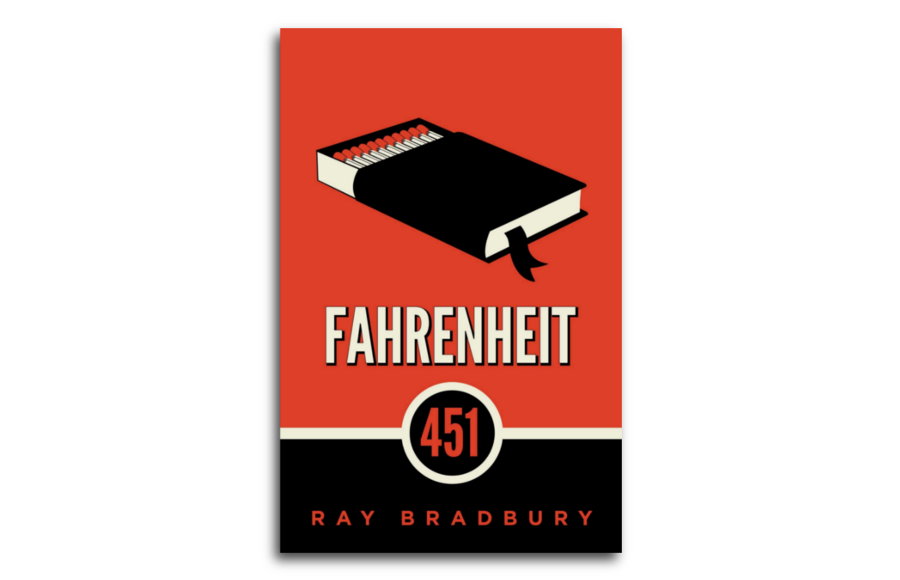
When my daughter was a freshman in high school, she was assigned to read Ray Bradbury's Fahrenheit 451. I admitted to her with great shame that I’d somehow navigated two degrees and a life-long love of reading without ever reading this classic. I decided to right this wrong immediately, and so we read the novel in tandem. 

I expected to like it. (It’s “a classic!”) It turns out I loved it. ADHD in tow, I promptly went down a Ray Bradbury rabbit hole, learning all I could about the life he lived and his beliefs about technology and the future. In my “research” (See also: Googling), I learned that he refused to release any of his work in digital form until 2011, a year before his death at age 92. He held a belief so strongly that he said no to publishing his writing in a way that would put his ideas into the minds of millions of people (and generate a significant bit of income to boot). 

How punk rock is that?

Did his protest against the future of technology do anything to stop it? Not in the least. I still respect the stand he took. I’ve been thinking about Bradbury’s boycott of digital publishing a lot lately as I grapple with my own feelings about technology and the future of creative and critical thinking. 

I recently attended a Zoom training hosted by a popular company that offers AI writing assistance. The woman leading the session enthusiastically shared how the AI components offered in their premium education accounts shepherd students past “the fear of the blank page.” Students can use generative AI to give them a list of possible ideas to write about or generate an outline for them to follow. It can check their tone or make a paragraph “stronger.” It can also, given a little nudge, write the whole damn thing for them. 

As a teacher of rhetoric and composition, I believe the point of what I teach is the process, not the finished product. I value my role as a coach, guiding students through the hard work of the writing process, starting with that frightening blank page all the way through to publication. Grappling with hard questions, carving new neural pathways of creative thinking, and showing yourself that you can do a really hard thing and survive it, or better yet, come out a little stronger in the end, are essential life lessons. I feel honored to guide my students through those experiences. 

But now our students can look at that long walk from the start to the finish of a writing assignment and opt to take the AI sky tram instead. They can arrive at their writing destination without breaking a sweat. 

As the future of AI in education breathes down my neck, I find myself wondering, do I want to be a Bradbury, digging in my heels in respect for my deeply-held principles about teaching, learning, and the craft of writing, knowing that my protest will do nothing to change what’s to come? Do I want to give in and say there's nothing I can do to stop what's coming, so let me grade this robot’s essay? Or might there be a space in between? 
~~

So, when I say I read Fahrenheit 451, I mean to say that I listened to it on my phone using the Audible app while communicating several hours each day to and from work, my kids’ two schools, and various music lessons and therapies. (Bradbury rolled his eyes in his grave, I am sure.) And, as I write this, I write it not with a pencil and a pad of paper with a dictionary at arm’s reach but on my laptop computer where I look up synonyms for words, move entire paragraphs around the electronic page, and allow the little red line to catch the spelling and punctuation errors I leave in the wake of my tapping fingers. 

Punk rock, I am not. 

Luckily, I peddle my philosophy of teaching here at GCC, where I am surrounded by educators who are devoted to the craft of teaching and student success. I teach on a campus that values the act of thinking and writing so deeply that every year, faculty and staff volunteer to do the hard work of wrestling ideas out of their heads and into the blogosphere for all to see. I know that my fellow Gauchos are scouting the horizon for that middle path forward into our future with AI in education, and if we don’t spot it, I am sure that we can tramp out a new path together.

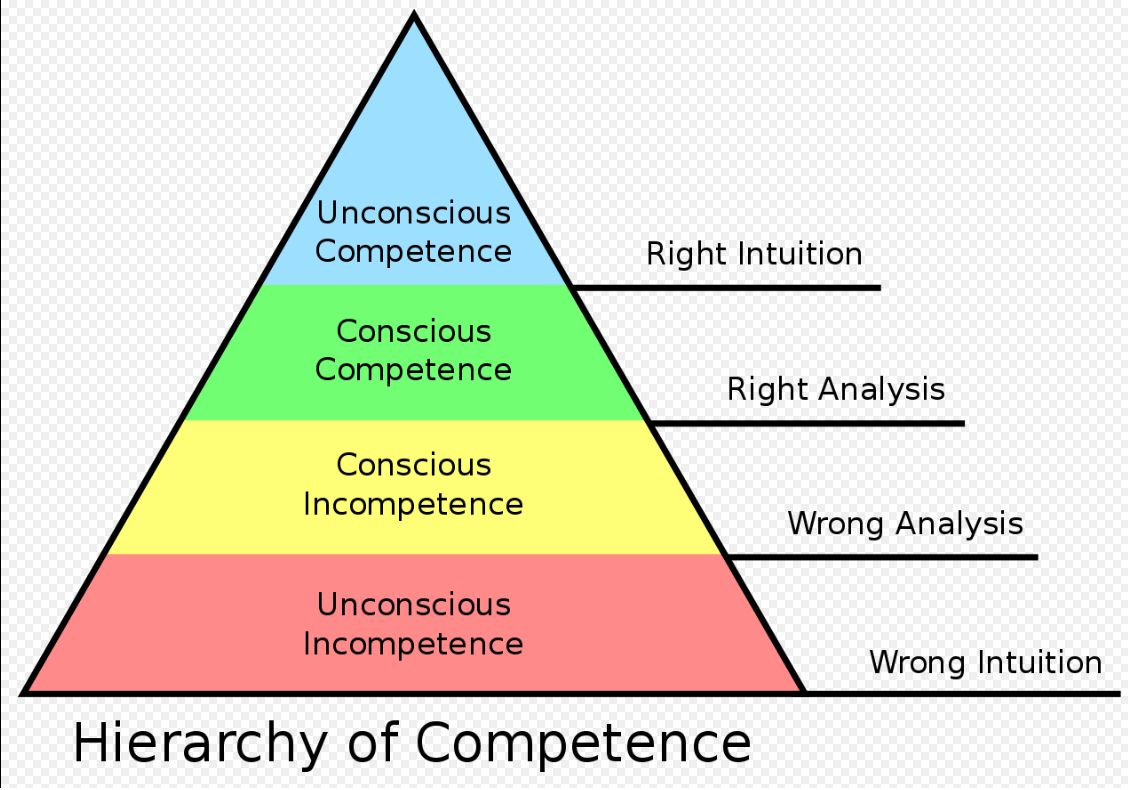
Unconsciously Competent

I would like to present something that probably 90% of you already know about. But it was new to me when I heard it the first time. It’s called the hierarchy of competence. Like a progression of learning.

This revelation came to me when I was engaged with the Literacy Partner’s Project training in the summer of 2022, at Mesa Community College. The training introduced us to the notion of Threshold Concepts. These are ideas that we as discipline faculty know instinctually, but our students don’t seem to be able to grasp, despite the numerous ways we attempt to explain it to them.

The revelation for me was that from a faculty perspective, competence in a subject does not mean we are gifted in the ability to teach said subject matter. Oftentimes, we are so gifted that we don’t know what we know! One example is teaching using language or acronyms that people might not understand outside of our circle.

In college, my swim coach encouraged me to teach a swim class as a graduate assistant. “How hard can this be?” I thought. Translating how you unconsciously move your body into words is not quite as easy as one might imagine. At times I wanted to say “just do it, it’s easy!”

Fast forward about 30 years to my debut as a student in an adult ballet class…

Just kidding, that’s not me.

What I experienced was a master teacher teaching former ballet students, and ME! While clinging to the bar attempting graceful moves and other things I can’t pronounce, my mind drifted to my swim class at the GCC pool where swimmers come to me for guidance. I teach all levels…some cling to the ladder for dear life, some splash around in frustration, and others swim with ease while hoping for continued improvement.

What I realized was that I was being unconsciously competent as a teacher. It’s great if a student achieves the mastery of unconscious competence, but the teacher should not teach from that platform. I believe that it is more helpful if the instructor is teaching from the platform of consciously competent, or dare I say consciously incompetent?

Why? Two reasons. 1) We should assume the students are not understanding everything we say because some of what we say is coming from a place of mastery, and 2) because if the students see you as a master who does not have room to learn, they can not fully relax in your presence.

When I went back to teaching my swim class after humiliating myself through adult ballet, I came with a newfound appreciation for empathy and listening skills. Swimming does not come naturally to everyone, but everyone can learn to swim. When I can put myself in the shoes of a beginner, I can teach with a completely new and fresh mindset. If you are my student, I will learn from you. Life is a learning journey.

Learning something new as a mindset: GCC’s Culture of Inquiry

I am currently taking a course through MiraCosta College entitled “Fundamentals of Futures Thinking.”  One of the learning outcomes is to be able to articulate why futures thinking is important for my institution.  As I mentioned in my remarks during our Spring convocation, I’m deeply interested in the answer to the question, “what if technology breaks humanity’s way?”  What could we be, as a community and an institution, if we intentionally design our future so that every student will succeed?  Wouldn’t this also have a deeply positive impact on faculty and staff, if we were all empowered with the professional development and resources that we need to thrive?

“Futures thinking” necessitates a mindset of curiosity and innovation with a thread of empathy running throughout.  Creating this collective mindset, a culture of inquiry, will require us to build and then nurture an environment in which we routinely ask “what if?” and “what truly matters?” in communities of exploration and practice.    

What tools should we have in our professional development toolbox at GCC to facilitate this culture shift?  I mentioned two at our College Conversations session this week: Interest Based Problem Solving (also called Interest Based Negotiation) and Human-Centered Design.  Many of us have already engaged with IBPS as a foundational principle in our shared governance practice.  Recently, the Administration Collaboration Team (ACT) learned about Human-Centered Design and I’m hoping we can start offering this opportunity college-wide in the coming months. 

What other tools do we need to build GCC’s culture of inquiry?  Which communities of practice can we create?  I’m asking not rhetorically, but intentionally, to collect ideas and identify champions in this work. 

Drop me a note at tiffany.hernandez@gccaz.edu or stop by my office (A-102) or catch me as we walk across campus or after a meeting sometime soon.  I’m ready to start this conversation.  Who’s with me?

High on Learning

When given the choice to write about AI or learning this week, I jumped at the latter. I absolutely love all things  learning. And if AI and I were in a relationship, right now we would not be speaking. I’ll look to my Write 6X6 colleagues’ posts on AI this week to help me find footing in this rapidly changing tech hellscape landscape. But back to the learning prompt:

When was the last time you learned something new? What was that like?

It’s the second question that caught my attention. Learning feels a-maz-ing. And that shouldn’t be a surprise due in part to the role of dopamine in the learning process. The human brain is attuned to novelty, and when we learn something new the reward center in our brain is activated.

For example, take this quick geography quiz:

1) Which city is farther west – Reno, NV or San Diego, CA?

2) Which city is farther north – Philadelphia, PA or Rome, Italy?

Perhaps you can remember the feel-good rush of mastering where different places are located on the globe. Geography provides unending opportunities to learn something new.

I’ve become obsessed lately with a Facebook page entitled Simon Shows You Maps.  On the page are wacky maps such as “The World According to Frank Zappa,” (who once said you can’t be a real country unless you have a beer and an airline). Another post shows the percent of people in various countries who believe in life after death. Yet another entry shows the location of various Seinfeld scenes on a map of Manhattan.

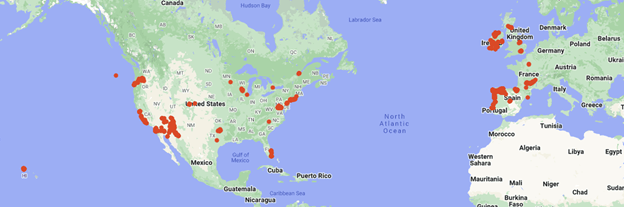
But a map that caught my attention lately is one provided by Google showing my own travel history (for as long as I’ve toted along a cell phone, at least):

Now that I have sufficiently distracted you, back to the geography quiz. San Diego is farther west, and Philadelphia is farther north, right? *Bzzzzzzzzzzzzzzt*

According to research on cognitive maps, people often use a rotation heuristic, which means we tend to see figures as more vertical or horizontal than they actually are. So, people tend to envision the coastline of California as vertical, even though it is curved:

And other research demonstrates the alignment heuristic, which is our tendency to line up two separate geographic entities. An example of the alignment heuristic is that many people place the center of the United States directly across from the center of Europe. But Philadelphia (in the northern US) sits at approximately 40 degrees north latitude, whereas Rome (in southern Europe) is actually farther north of Phili at around 42 degrees.

So how do you feel right now? If you’ve never heard of the rotation and alignment heuristics, you might feel a little glittery after-glow from the novelty/surprise of it all. Our students are just as attuned to novelty and surprise as we are. As such, injecting the new and unexpected in our lessons is a powerful way to stimulate learning.

And yes, the irony of the first paragraph of this post is not lost on me. AI is nothing if not novel, and I know I’ll get a little buzz from reading everyone’s AI posts this week. So, thanks in advance for the learner’s high!

Moments of Learning

My parents could have predicted it, but it took me walking into the classroom for the very first time in 2005, to realize that my greatest purpose was being able to impact students’ lives in ways that others could not. To this day, my “happy place” is the classroom. There is something about being in the moment, talking about a topic, and embracing the student experience of learning all within a period of time. So true that not all teaching experiences are transcendent and some of our best laid plans to inspire learning do not prevail. But, at the core of a faculty is a Moment Maker. 

This week, I learned so much from being in the classroom, watching our faculty in action. Class observations hold important value to me because I get the chance to go back into my “happy place” and experience the moments of learning and the excellence of teaching. Highlights from this week include:

  • Professional communication framework that nurses use to be succinct, clear, and direct when sharing patient information knowing that these “are not social conversations.”
  • The skin of an apple is a great illustration of various pressure injuries. I will never look at an apple in quite the same way as I recall stages 1-4 of pressure injuries.
  • Some of our best research content is on the “deep web” and our wonderful GCC Library databases can help us find the best sources to inform a topic.
  • And a nice reminder that “Research is about seeing connections between things and not just searching!”

Everyday can be a day of learning, a day for a new experience, or  a new moment. Our faculty embrace these opportunities; as I have grown as a professional and in my reflection of purpose, the drive for learning something new every day takes me back to my “happy place.” So, when was the last time I learned something new?  That answer is right now- I am always in the moment of learning.

Ouroboros

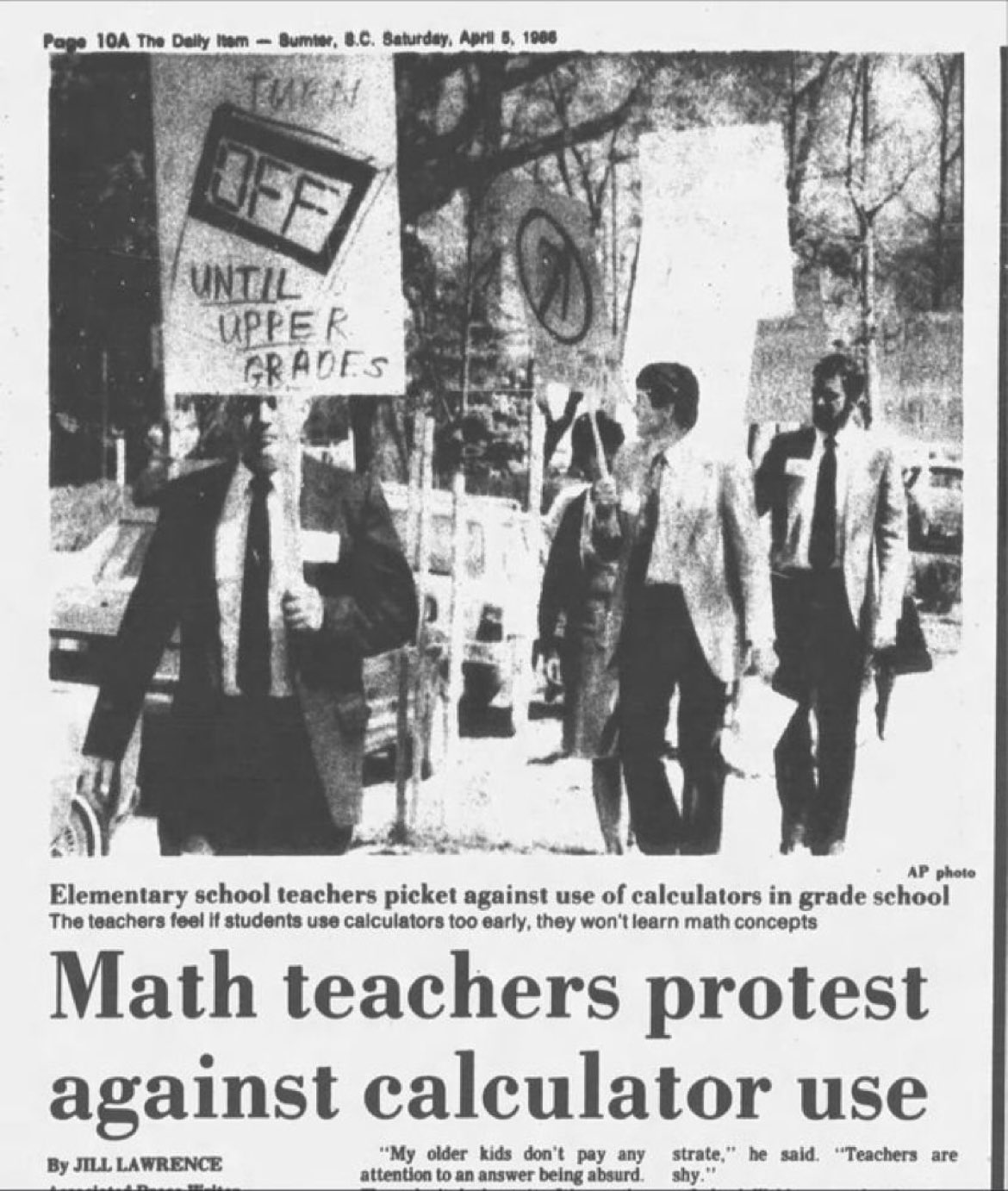
When discussing AI, I’m reminded of this old newspaper clipping.

As calculators proliferated the classroom, teachers angrily took to the streets in fear of what would happen. But what actually happened was…well, mostly good. Calculators supplemented our study of arithmetic, made us more efficient, and raised the bar for math literacy. I believe AI is the English teacher’s calculator.

I cannot deny the efficacy of a chat generator in assisting a student with essay composition. If used correctly, it can give them any number of ideas to supplement their writing: research questions, search terminology, counterclaims, revisions, etc. It can do things for them in seconds that I, as their teacher and aide, would need more processing time to accomplish.

We can’t ignore it. We are going to have to reinvent the way our classrooms function in order to properly utilize this new tool, and those boundaries are still very much undefined. One thing we absolutely must not do is continue running from the issue as if it will ever go away. It is here. And, yes, it is scary. However, if we can just reimagine our processes, we will find ourselves on a higher plane of learning. The redundancies that we endlessly re-teach in the English classroom will go by the wayside as we embrace new ways of writing and thinking.  We must only be willing to start the process of re-invention.

There’s a scene at the end of Fahrenheit 451—Ray Bradbury’s classic and contentious cautionary tale—that starkly underlines one of the novel’s subtle themes. After a lifetime of burning books as a ‘firefighter’, the newly jobless Guy Montag stumbles upon travelers living on the outskirts of civilization. The travelers have each dedicated their lives to remembering books, serving as the imperfect keepers for stories that would otherwise be lost to the world.

As Montag learns about their way of life, he watches the men huddle around fires for warmth. He notices how they use fires to cook their food. Fire, the weapon he had used to destroy culture throughout the book, was now a benevolent tool.  

Funny enough, Bradbury’s writing often warns against the dangers of an overreliance on technology; however, this scene alone reminds us that ethical failings are forever man-made. Technology is a tool. Like fire, we can use AI to burn everything down. Or, like these travelers, we can use it to enrich our lives. The decision is in our hands.

When I have the AI discussion with my classes, this is the moral conundrum that I present them with. Yes, the tool can absolutely write your essays for you. But, in that same vein, your car could be a death machine. Or it can take you to the hospital. Your knife can cut someone. Or it can chop your vegetables up. We must be taught how to use the tools given to us correctly—and we must choose to use them correctly.

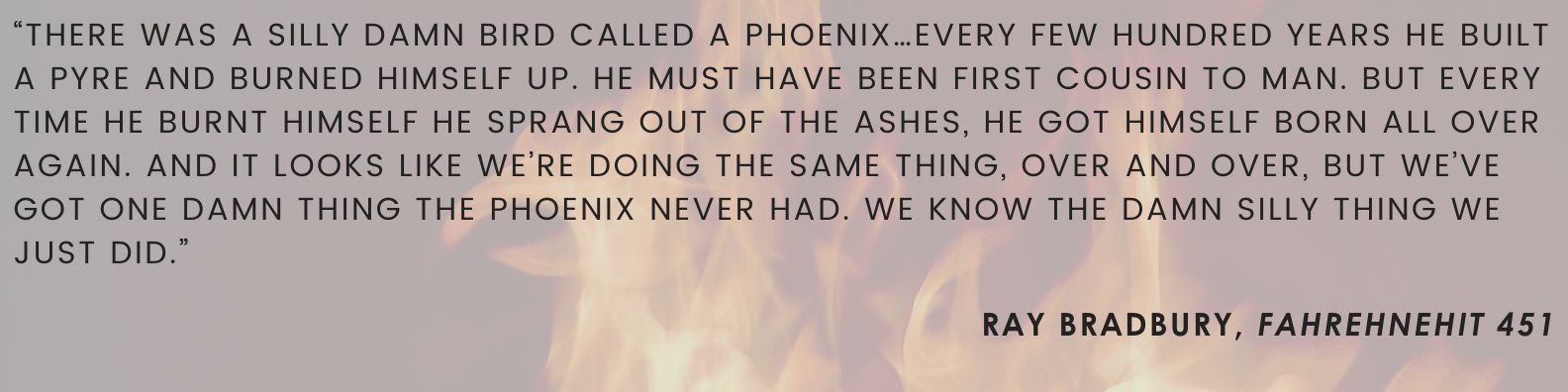
Like the Phoenix, we are going through the fires. But what emerges from those flames will be rebirth.

P.S. Montag is German for Monday—the start of a new week. The logo of the firefighters is a salamander: if you lop off the tail, it’ll grow back anew. Every major symbol in the novel points to new beginnings. That’s what we have to be willing to embrace—a new beginning.

AI, Oh My!

As a lifelong learner, I’m always learning new things. It keeps me young. About five minutes ago, I learned about Craiyon, an AI illustrator which will create anything you type into it. I’m in awe, and more importantly, I can see how I would use it. On Tuesday, I used a thinking protocol called See-Think-Wonder, learned from Betsey Wheeler, where students had to procure or draw an image which represented their research topics and discuss the image by answering the following questions: 1. What do you see?; 2. What do you think about it?; 3. What does it make you wonder?. I use this protocol to help students visualize their topic as an object, so it imprints in the front of their mind as they begin their scholarly investigations. The next time I do this, I’m going to have them use Craiyon. Oh! Maybe after my 101 students write their memoirs, I’ll have them generate an illustration with their own descriptions to see what happens when they literally create a picture with words. This is the extent I’ve used AI in my classroom.


We discussed the use of AI on the first day in one of my classes, and I asked students to use it as a tool to support what they are already creating but not to supplant it. A student offered feedback about how she uses it to finesse her sentence structure and typos in her writing, beyond Grammarly. Our first Writer’s Workshop is next week, so I think I will offer students that option. Of course, I’m thinking about how if they post their own work into ChatGPT, then they are adding to the proverbial “machine,” and I’m uncomfortable with the ethical implications, like how much is too much? Somewhere out there, Aldous Huxley must be saying, “See! I told you so!”


Beyond the classroom, I’ve used ChatGPT to generate a “strengthening and conditioning exercise routine for a middle aged woman,” “recipes to boost metabolism,” and “a healthy eating menu for a family of four and corresponding grocery lists.” On Linkedin, I’ve contributed to AI generated articles with my “human” professional expertise. I’ve also started to read about how it is being used to support neurodivergent students in breaking down potential barriers, which is important to me. Moving forward, since AI has clearly claimed permanent residence in our world, I’ll utilize it as a tool in my classroom, personal life, and research, but I will remain in ethical quandary.

Just 1 Click!

My best tech tips are for our Canvas instructors to assist students with easy and organized navigation within a course.

First, streamline all course content into modules. Start the module with an overview explaining purpose and content of the module. Load lectures, discussions, assignments, etc. in the order you want students to move through the content. Lastly, end the module with a wrap-up/summary page where you highlight the learning objectives and other related content you think students might find valuable.

Watching students scroll through modules to find their current module is painful. So the third tip is about module movement. As the semester progresses, the list of open modules gets longer and longer. Even mid-way through the semester the list can be quite long. By having the current module on top stops the scrolling. Students can easily identify the module they should be working through. This tech tip is also helpful for faculty because they won’t have to scroll either.

A third tech tip is make modules the home page. Most instructors, myself included, initially have the home page set to a warm welcome for students. The welcome might have pictures, textbook information or even a meme. However, realistically students don’t need to re-read the welcome after the first week. After the first week of class I have modules as my home page and the current module on top. This translates to one click from the student dashboard to students being in the correct location of current module. The student logs into Canvas, clicks on my course card and the first thing they see is the current module.

A fourth tip is hiding unnecessary navigation features. If students can get to all content from modules, files, assignments and discussions do not need to populate for navigation. Also there are many other features that are not needed for course navigation so those options should also be hid. In the end students will be more likely to get where they need since there is only one direct path to take them there.


A final tech tip that goes with this series is adding the most recent announcement to the top of the home page. By adding recent announcements to the top of the home page, students can quickly see important messages you sent. As many as 15 can populate, but that is too many. I prefer only the most recent.

These tips facilitate one click transition from dashboard to the correct module (no scrolling required), and current announcements visible immediately after just one click!

A special thank you to Jenn Alton (CTLE Program Analyst) for filming the scroll video and converting the video to a gif.