Before you read any further, take a moment to watch this video with the volume on high. (You’ll thank me later.)
When asked, “What area or areas on campus hold a special significance for you?” my resounding response is anything outdoors! I have a distinct memory of feeling awe while touring the grounds as a new faculty back in 2019. I texted pictures of trees, plants, and rocks to my husband and children. “Aren’t I lucky to get to see this every day!”
Then along came COVID, which is really a story for another day. To be sure, when we all returned to campus the following year I was excited to see my students and colleagues. But, I was also gratified to return to views like this:
I strongly believe that how GCC tends to its natural environment is an important factor in how students feel about school. An enriched natural setting communicates to students that we care about them and that they are worthy of being surrounded by such beauty. It’s as if all the trees and plants envelop students in a metaphorical hug each time they step on campus.
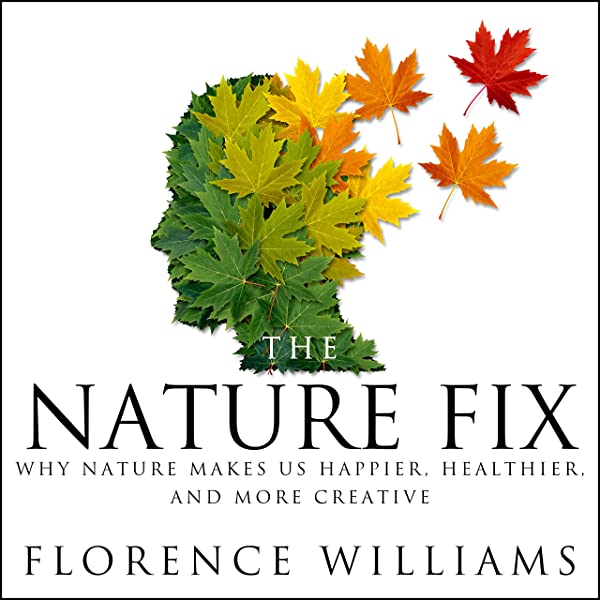
Okay, did I go too far there? Maybe, but I’m a true believer in the healing powers of nature. For anyone who needs convincing of this, I highly recommend the book The Nature Fix: Why Nature Makes Us Happier, Healthier, and More Creative by Florence Williams.
And when I snapped these photos this week, the sky was just showing off, don’t you think?
In preparing to write this week, I boogied down memory lane to find my song. While I didn’t really come of age in the 70’s (I’m an 80’s kid … Neon! Huge bangs! Who Shot JR?!), the songs from the 70’s were the soundtrack to my early childhood and set some wild expectations for what I thought adulthood would be like. As it turns out, I have far fewer groovy dance parties and bell bottom jumpsuits than I had thought I would.
I ultimately landed on We Are Family by Sister Sledge as a song that reflects my approach to working with students. I remember my sister and I dancing to this song in our family room with wood-paneled walls and orange shag carpeting. We were very cool. And what a wonderful way to live life… with the assurance that a group of people who love you, have faith in you, and also have your back. Consider these lyrics: “Have faith in you and the things you do; you won’t go wrong, oh no, this is our family jewel.”
In my first few semesters of teaching, I was focused on the content of my courses and how I would organize my lectures and exams. Over time, I learned that the course content was almost beside the point; students can access that content in other places. Building trust through relationship and creating a supportive learning environment was my biggest contribution to the success of my students. I am now convinced that teaching is caring.
How do we extend an Ethics of Care framework into the classroom? I’d love to explore this idea and learn from you in a community of practice at GCC. I’ll bring the fondue!
The one thing that excited me as a 7-year-old was the thought that I would some day be old enough to go to a disco like my older sister. My friends and I would chat constantly about the names of the local discotheques. “Mary’s” (St. Mary’s Rugby and Football Club) was one of the local hotspots. This was the late 70’s in Dublin.
ABBA was all over the radio and television. The kids were singing their songs, the parents were singing it, heck even the grandparents were dancing to it!
Circling back to 2024…To get my writing juices going for this week I decided to ask Alexa to play Donna Summer “I Feel Love” and also take advantage of ChatGPT, since I have been ignoring it up until literally this week! I asked for some 70’s era songs…I would have had to go to an actual record store for this data back in the 70’s…Anyway, this is what it spit out…
“Stayin’ Alive” by Bee Gees “Le Freak” by Chic “I Will Survive” by Gloria Gaynor “Dancing Queen” by ABBA “Don’t Stop ‘Til You Get Enough” by Michael Jackson “Y.M.C.A.” by Village People “Funkytown” by Lipps Inc. “September” by Earth, Wind & Fire “Boogie Wonderland” by Earth, Wind & Fire with The Emotions “Night Fever” by Bee Gees “Hot Stuff” by Donna Summer “I Feel Love” by Donna Summer “Get Up and Boogie (That’s Right)” by Silver Convention “Disco Inferno” by The Trammps “Ring My Bell” by Anita Ward
These songs capture the energy, rhythm, and vibe of the disco era, which was a significant cultural phenomenon in the 1970s.
It totally left out John Travolta!!! I will never trust AI again!!!
When I think back to my 7-year-old self, I realize that I learned best when I shared stories with my friends, and this usually happened on walks to and from school or friends houses. It was exercise combined with talking!
Here in 2024, no student escapes my class without doing 20 squats or a comparable activity. If they are lucky, they will get some disco music to help them get in the groove!
The disco-era song that best reflects my approach to working with students is “I Feel Love” by Donna Summer. “It does not sound very educational,” you say? Well, it’s all about passion. You have got to love what you do if you are going to spend a lifetime doing it. My job is to help my students find that love for learning and ultimately use that knowledge to help others with their health and wellness.
My students love to share their stories, so I always make time to hear about the things they do beyond the classroom and their future profession. We have such a vast array of hobbies and talents amongst our students! Their characters come alive when they tell their stories! I love to connect the learning material to their experiences and help them understand those difficult scientific concepts.
Other students are more likely to join in the fun when they see classmates sharing. The trick is to turn those stories into learning opportunities and close the learning loop. Students feel empowered when they are appreciated for who they are and what they bring to the classroom.
I want to see their passion. I want to feel the love.
Ever since joining Glendale Community College, I have felt a comforting gravitational pull coming from the Center for Teaching, Learning, and Engagement (CTLE). As a first year faculty member, all of our First Year Residential Experience (FYRE) meetings were held in the Robinson Room and was where I bonded with the other new residential faculty for the entire year. In those meetings we were introduced to many faculty and staff across the campus and how their work impacts the college as a whole. This meant that even more firsts happened in this space in terms of learning about the college procedures, meeting colleagues, and how to navigate the campus.
The CTLE provides many firsts for me with workshops and opportunities to grow. I was lucky enough to participate in the first Reimagine cohort which explored new teaching strategies and the support to take a risk in implementing the strategy of our choosing. I was fortunate to again have many first meetings with colleagues and learn new information in the Robinson Room.
Yet another first came when I became a co-faulty developer for the CTLE. I have had the privilege of working with all the contributing members in the CTLE which has led to me being a part of enhancing the gravitational pull that is the CTLE. Over the last six semesters, I have enjoyed bringing new development opportunities in the form of The Pulse@ GCC, Cleaning Your Digital Life, FLEX Gym, and Tiny Tech Tips to our GCC campus community. This has provided me with a huge amount of joy since I am able to facilitate firsts for others across our campus.
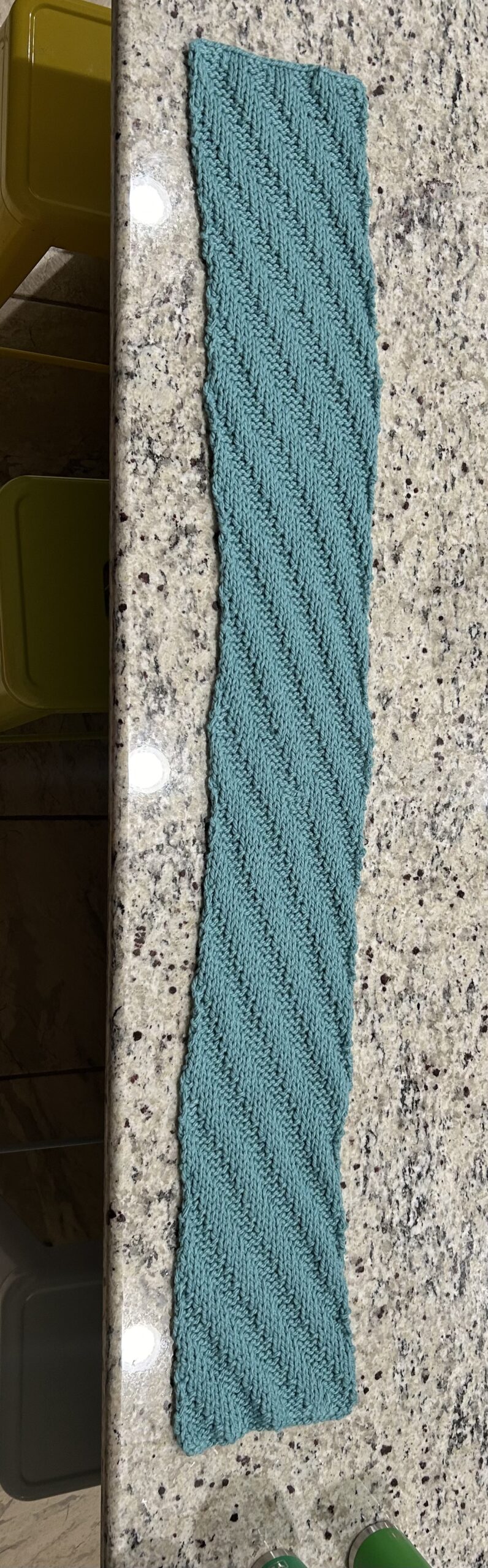
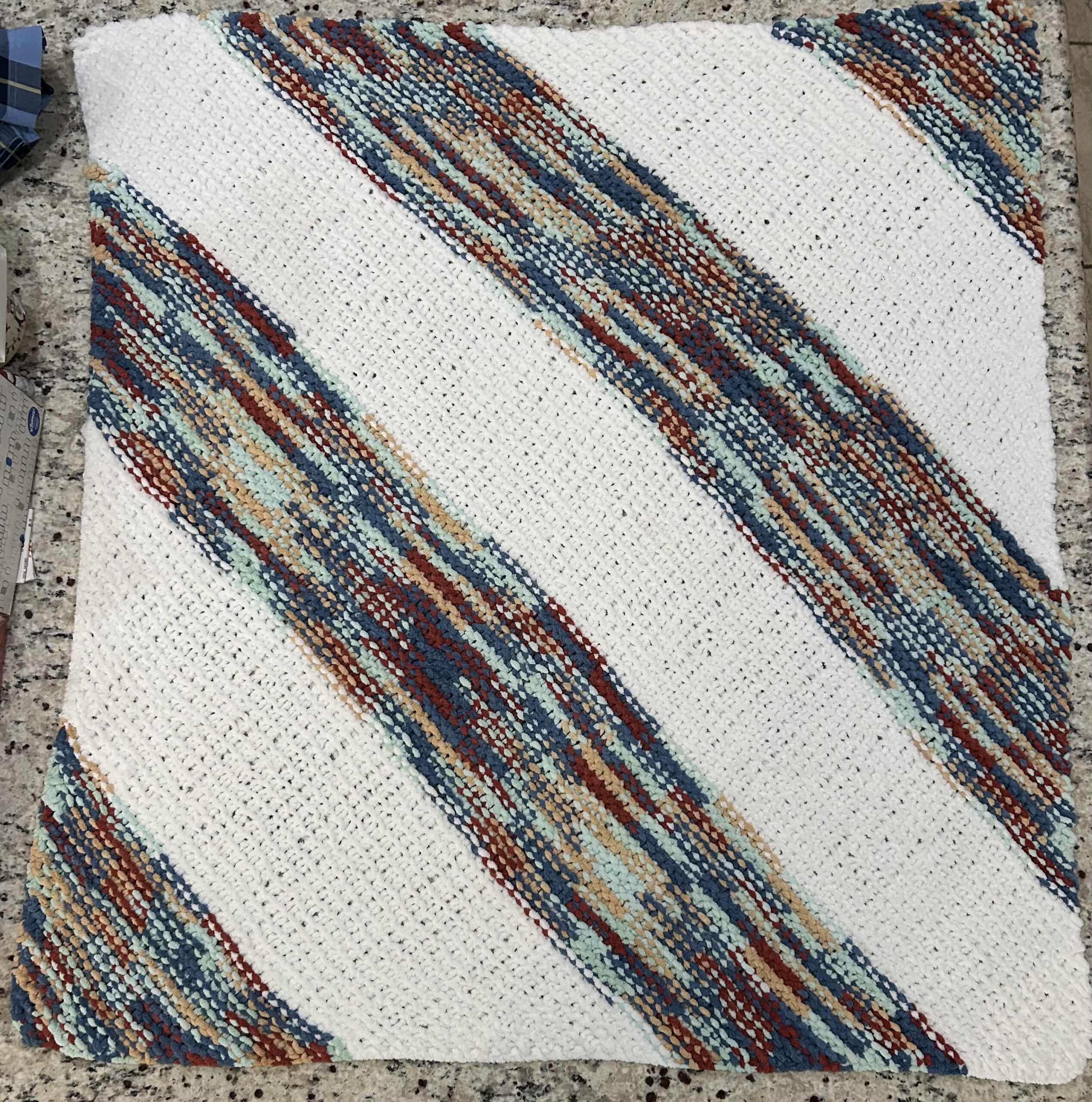
The most recent first I have had at the CTLE is once again in the Robinson Room. I attend the crafting group meetings on Wednesdays and Thursdays from 12:30 pm to 2pm. This has allowed me to meet more faculty and staff across the campus and connect based on our interest in crafting which includes, but is not limited to, knitting, crochet, coloring, gem art, cross stitch, embroidery, and many more.
Here are some of the pieces I have completed thanks to the assistance of Karen Conzelman
If you are looking for a place that specializes in helping you discover new firsts and try new things while meeting new people the CTLE is the place for you. They are one of my comfort zones on campus and I am glad that I have had the opportunity to share them with you.
You may not know that GCC has an unofficial student podcast. In this bonus episode for the Weekly Guacho podcast, I explain a little bit about the podcast and how I get students to contribute episodes as part of our journalism class, JRN213: Writing for Online. You can visit our blog and podcast here:http://weeklygaucho.com/?s=podcast
Students are very creative when given the opportunity, so my message to you is to “just jump.” Try something that might make you nervous for fear of failure. You’ll be surprised by what can happen. If you’re interested in trying it, I added the podcast assignment to Canvas Commons, so you can download it to your class and try it out.
And for an added bonus, here’s a link to my favorite student episode from Season 5.
During the pandemic I was adjusting to a new leadership role, overseeing the North Campus, with very few people around. Most of us were jumping from meetings in a virtual day that seemed to never end. Long days often filled with screen time, focusing on decisions about how to keep our employees safe, ensuring that learning was able to take place, and providing services to our students was no small task. The level of stress, demand on mental energy, and the anxiety of unknowns created leadership experiences that were not written about in books. I remember vividly the numerous impromptu meetings scheduled to address “a new development.”
Everyone’s world was changed as a result of the pandemic. While I learned that my work office was wherever I was and the comforts of routine and predictability were truly disrupted, I realized that my ability to persevere through these changes was rooted in a casual walk, along the back of the North Campus, on the short unpaved trail between the buildings and the open land. There were plenty of times I walked that trail so my eyes could readjust from the screen time. There were plenty of other times that I used that walk to decompress about a situation, talk with a colleague, or just be in the moment. The North Campus trail became my symbol of connection- the connection to nature, to people, and to myself. During a time when connections were lost and replaced by virtual distance, the significance of the North Campus trail gave me the outlet that I really didn’t have elsewhere and will always have a special place in my professional journey.
At GCC, I would have to say, without a doubt, that the CTLE is my “jam.” It is my go-to for training, for questions about Canvas, for how to design pretty email messages, for ensuring my syllabus is up to spec, and for designing new curriculum. Now that I think about it, I don’t know what I would do if we did not have this significant training platform available to us. So kudos to the CTLE gang!
I thoroughly enjoyed the carpool-karaoke-style-discussion about neurodivergence with Lisa and Beth. I’ll be honest, that is a new word for me and it was great to listen to two people talking openly about living with ADHD. I learned that empathy and scaffolding concepts are handy tools to have in your classroom. I enjoyed the creativity of the video recording and editing, and it reminded me that learning can happen in many ways. I appreciate humor because it breaks down many learning barriers.
In addition to attending conferences and webinars in the field of exercise and wellness, I find it critical to have a physical book to read and an audio book to enjoy in the car or during walks with the dog. I find that these books can be on any interesting topic ranging from autobiographies of rockstars, to historical fiction, to fantasy. My rule is that every other read should be about a topic that is related to health and wellness so that I can stay current. In summary, reading is critical for the brain and for learning in general.
The most important thing I do to help me be better at my job as a college instructor is that I make time for exercise. Exercise is medicine for the brain. If you don’t believe me, ask your Chat GPT to tell you all about BDNF.
In summary, call your local CTLE professional, listen to fun podcasts, go to conferences, read real and audible books, and move your body often!
I recently had a quick getaway to Borealis Basecamp, which is located about an hour outside of Fairbanks, Alaska. My lifelong friends and I were there to celebrate one of our crew’s 60th birthday and, of course, chase aurora borealis shows.
These gals are my learning network. Together we have traveled far and wide to learn new things while enjoying each other’s company. We have gone on long distance hikes in Ireland, France, Spain, and Portugal. We’ve hiked the Grand Canyon three times together. We feverishly share books, most recently Lessons in Chemistry. This trip was one more opportunity to add to our collective knowledge banks.
And sure, I learned a lot on this trip about the aurora borealis, (perhaps most notably that’s it’s not as easy to spot as shown in the movies!) I learned interesting facts about the boreal forest biome in general as well as the Alaskan pipeline. I learned about the sport of sled dog racing and the lifestyles of caribou.
But perhaps the most powerful learning was not factual in nature. On one day we went on a 6-hour snowmobile tour, which, before we left, I calculated would be about 5 hours and 59 minutes too long.
I wasn’t far off. I am a careful person by nature, and fear had it’s death grip on me as I tried to maneuver the machine without toppling over into a snow bank at best or a tree at worst. But my friends helped me with tips such as leaning away from a fall and using the palm of my hand on the throttle. They coached and cheered me on.
I had a flash of how I encourage my students all the time to take risks and be unafraid of mistakes. I soon realized that I often do so from a lofty perch. This experience reminded of how much I live in my comfort zone and how branching out and trying new things can make me stronger. How pushing myself in this way can help me handle more mundane fears in life, such as initiating a difficult conversation or saying no in certain situations.
I would lie if I said that I learned to love snowmobiling and mastered the beastly machine. I did not technically like a lot of it. But now that it is in my rear-view mirror, I am extremely glad I did it. This is an example of the vast hidden curriculum of traveling with my adventurous learning network.
From our prompts, I found myself thinking about one of my favorite teachers. I thought my first favorite teacher would probably have a lot to do with discovering the fun of learning – and I was enthusiastic about learning right from the start. So, Mrs. Salter, my third grade teacher, came to mind, who introduced me to Brighty of the Grand Canyon, (whose shiny nose I have now seen and touched on the North Rim of the Grand Canyon – shiny because of all of the little kids and grown kids who have touched the wonderful nose that Marguerite Henry brought to life for so many) and Misty of Chincoteague Island, another of the many Henry books. But then I realized, I started with books much earlier than that, and I really should give credit to someone who taught me, but was not considered my teacher – my father’s roommate from college – Jim Jensen, who ultimately became a college professor in English.
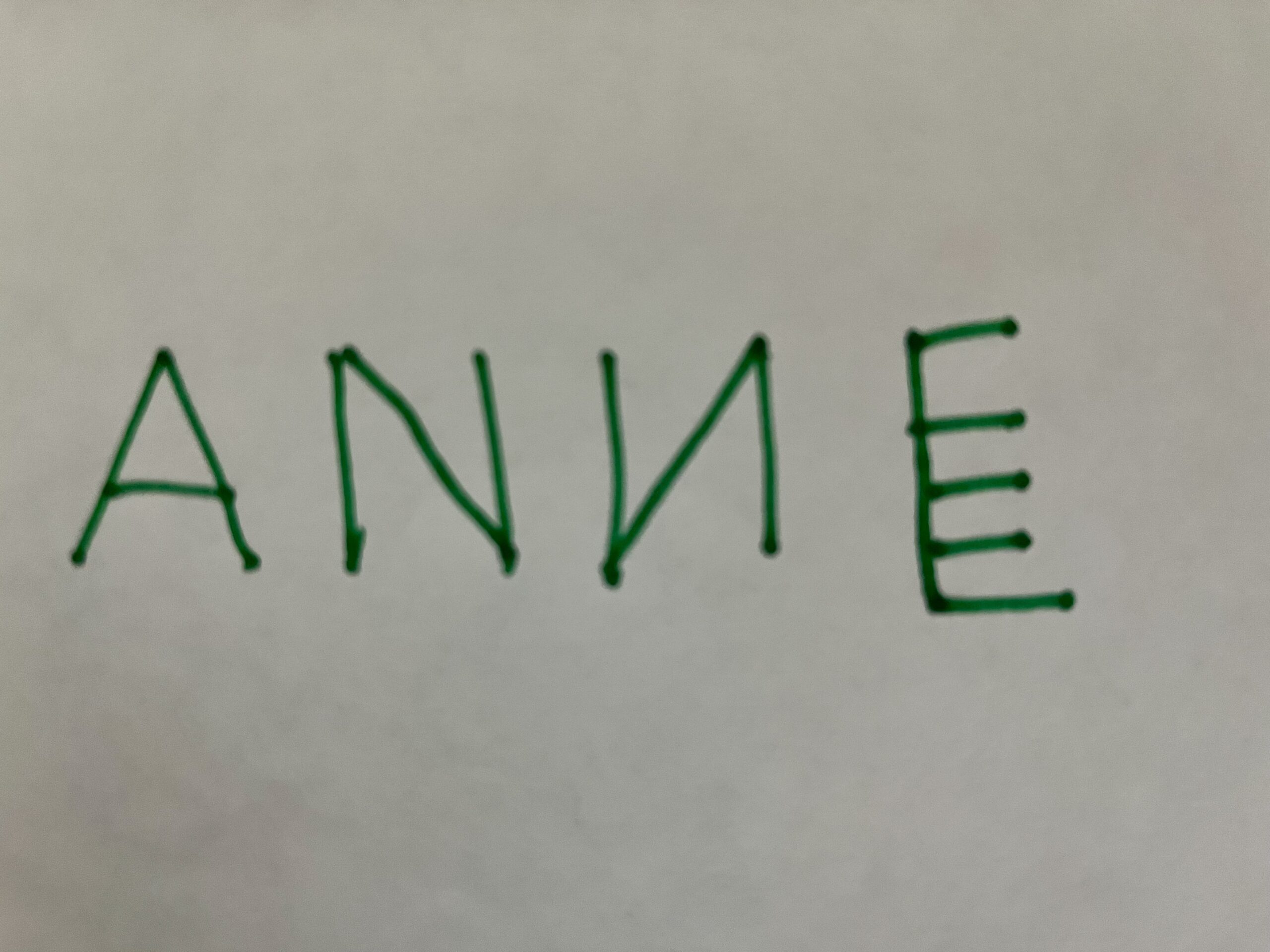
I always enjoyed having Jim visit. He drove a Karmann Ghia, which I thought was very exotic, and to an extent, still do. Every time he came to our house and visited my parents, both of whom he knew from high school, if not earlier, he always brought me a book as a present. Nothing fancy but a Golden Book of some sort, and I ended up putting my name in all of my books even though I technically did not know how to write yet. I always started with the verticals and the slants and horizontal lines were added more creatively.
Yup, looking below, I knew I’d get mixed up from the first to the second N but after I had done it, I’d know it was wrong. Somehow, I couldn’t cross the vertical lines correctly twice in a row. I had no control or memory of how to do it at that age. And then the E had several lines across it, going down, but I never knew quite how many. More than two, but, in this example, obviously five was too many.
Anyway, Jim got to sleep on an air mattress in our attic, which I also thought was very exotic. I also noticed that when I looked at the air mattress in the morning it no longer had any air in it – so thinking back, it was probably the worst possible “bed” for comfort and little more than sleeping on the floor.
Learning What to and Not to Do
It wasn’t until I moved to Arizona that I heard the word Lifelong Learner, but knew that I was one, but had never heard the expression. It was something that I suggest to all of my students. You are not just learning in this class. You are always learning, and you will learn from every job or opportunity you have whether or not you like that job – so pay attention. Coming from so many different jobs over the years, retail sales, draftsman, receptionist, manager, editor, teacher, word processor, musician, and writer, among other jobs that I don’t even remember – I did know one thing – food service would be a disaster – so I never attempted that. The important thing was that I always paid attention, even if it meant that I would learn not to do something in a particular way because it didn’t make sense to do it the way “they” were doing it.
Favorite Authors
I appreciate some of our 6×6 authors mentioning Ray Bradbury. I went through as much of his stuff as I could find when I was younger, and loved being reminded of that journey, including “Fahrenheit 451,” among others. I’ve tried to read everyone’s work in 6×6 this spring because I’ve felt in previous years people weren’t trying to read each other’s works. I decided to make sure that I did. It’s the spirit of the thing.
I’ve mentioned a few of my favorite current authors, Louise Penny, a Canadian author, who created a wonderful arc between a number of books, to tell a much larger story, Mick Herron, of Slough Horses or Slough House fame, I’ve read even more arcs from his books, and the way he can create an introduction using a spirit is beyond inspirational. If I could write a book, I’d like to write like he writes, but I don’t think I have the talent. He also has short stories that are part of that very large arc, so I really have to pay attention when I read him because he uses so many word references to the back story of characters. My favorite line of his was when an individual was trying to dial a phone in an emergency and he created this beautiful play on words, “his fingers felt like thumbs, his thumbs like bananas.” Who hasn’t been there! Malcolm Gladwell can tell you why we can be “all thumbs” when the going gets tough – it’s psychological! John Camp (I mentioned his pen name in a different writing, but his Pulitzer is under this name), from the St. Paul Pioneer Press, whose works I simply devour – I can’t put them down. I have to re-read them later because I try to read to go to sleep, but find myself still reading at 3 a.m.! I’ve read ALL of his books. Michael Connelly is another fabulous writer. I started with the Bosch books, and have since read all of his books twice. That got me through a broken shoulder where I was in bed for the better part of three months.
I no longer put my name on the inside of books, written correctly or not, and most of what I now read is in a Kindle because my hands and neck can’t tolerate holding large books anymore. We all make adjustments; some are just to allow us to continue reading more and more from those that first introduced us to the excitement of books and learning and where authors can take us on their journeys – Berlin, London, Toronto, Brittany – and I didn’t even mention that French author, or the English one, that put Provence on everyone’s map!