All posts by Elena Beltran

The Interstate: GEN Z in the Workforce

Article By: Lauren Sundblom, STEM Connect Student Service Specialist

Recent discussions in the media suggest that many Gen Z workers struggle to meet employer expectations, with some experiencing difficulty retaining jobs in their early careers. While concerns about workplace preparedness are valid, they must be examined in the broader context of evolving workforce values and changing educational preferences.

Unlike previous generations, Gen Z places a high priority on work-life-balance, mental health, and job satisfaction. Rather than adhering to traditional career trajectories that emphasize long hours and gradual advancement, many young professionals seek immediate fulfillment and efficiency in their work. This shift challenges conventional workplace norms but also presents an opportunity for organizations to reassess how they attract, train, and retain the new age of employees.

This preference for efficiency extends to education. Many students today may be less inclined to pursue the standard four year bachelor’s degree and instead find value in certificates, boot camps, and accelerated programs that offer quicker entry into the workforce. Insights from experienced student advisors suggest that this trend reflects a growing demand for flexible, skills based learning pathways that align with industry needs. While this approach may shorten the time spent in formal education, it also requires students to develop key professional competencies such as communication, adaptability, and problem solving outside of traditional academic settings.

To better prepare students for the workforce, educational institutions must emphasize the development of transferable skills alongside technical knowledge. Experiential learning, internships, and mentorship opportunities can help bridge the gap between education and employment. Additionally, fostering resilience and a growth mindset will be crucial as students navigate a rapidly changing job market.

Rather than viewing Gen Z’s approach to work as a challenge, it can be seen as an opportunity to create more sustainable and engaging professional environments. By balancing the need for workplace adaptability with Gen Z’s values of flexibility and purpose driven work, both employers and educators can play a role in shaping a workforce that is both skilled and fulfilled.
Changing Space for a Changing Student

Article By: Jeff Weigant, STEM Connect Student Specialist Sr.

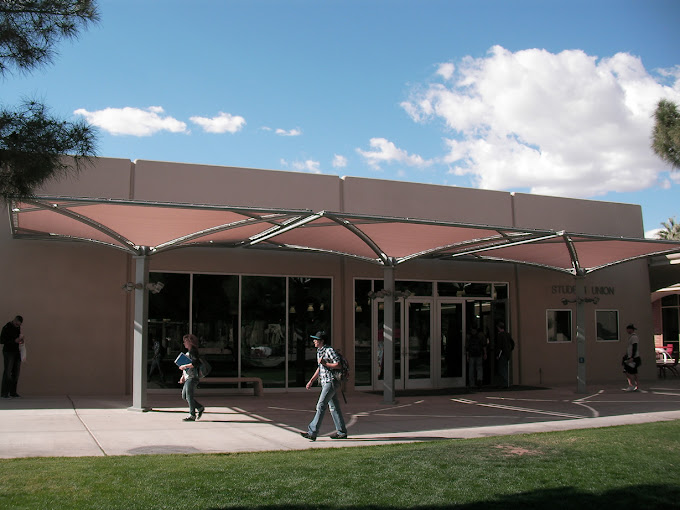
The student union is a central hub for campus life, providing students with a space to connect and collaborate. However, many students may not use this space fully or view it primarily as a dining or lounging area rather than a center for engagement and support. A revitalized student union could foster a greater sense of belonging by incorporating more interactive and inclusive elements that match students needs.
I envision a more vibrant and multifunctional environment that blends academic, social and wellness resources in a seamless way. This could include expanded study areas with a variety of seating options as well as soundproof collaboration rooms for group projects. Additionally, I would want to see designated areas for cultural representation and student clubs/groups. These spaces could include cultural organization, leadership development and various student clubs.
Modernizing the student union to fit the changing needs of students is a must. Possible ideas to generate more interest: wellness pop-ups, interactive career panels and networking nights. All of these upgrades to the student union could change the student mindset from a dining and lounging experience to a modern center for engagement and support.

Break Glass in Case of Emergency

Article by: Gloria Lorenz, STEM Connect Student Specialist Sr.

You’ve probably seen those pictures…Break Glass in Case of Emergency, and the item behind the glass is something hilarious like a candy bar. Truly life-saving, even if you now have to sweep up the broken shards. 

I don’t have one of these glass cases in my work area, but in situations where it feels like everything is falling apart, we often just wish we could find something that will make everything right again. 

Something, or someone? When failure feels imminent, the best thing I’ve found is to seek the support of someone who can help. 

It seems obvious, but how often do we try to do everything ourselves? How often do we keep fears inside, shouldering all of the burdens, when there is someone close by ready to step in to assist?

You may be in a situation where it seems like you can fix everything yourself, but then it turns out you’ve created a domino effect of consequences that you now have to take care of. Before this happens, think about the people in your life who are there to support you, a supervisor, a peer, or someone who isn’t even in your department. Others bring so many unique experiences and perspectives, it is likely they will know how to guide you in turning a tough situation into a moment of victory. Sometimes it just takes a listening ear or an encouraging word to let you know that all is not lost. Whether in the classroom or in your office, when it seems like things are going wrong, just remember that you are not alone in your journey. There is someone looking out for you, someone who can save the day. 

Instead of breaking the glass case, turn to others for guidance. There will be less of a mess to clean up. 

Creating Community With STEM Connect

Article By: Cecily Davis, STEM Connect Analyst

At STEM Connect, we believe that community is the heart of the college experience. Whether it’s guiding students through the early days of their journey, celebrating milestones, or offering support when challenges arise, we’re here to ensure no one navigates it alone. Our seasonal programs create opportunities for students, faculty, and staff to connect, build lasting relationships, and grow together. In a space that can sometimes feel overwhelming, we strive to cultivate an environment where everyone feels welcome, supported, and celebrated. By coming together, we make the STEM experience not just about academics, but about fostering a sense of belonging and shared success.

The joy of Arizona Summer – bright, hot, and sticky! But there’s a cool way to enjoy it at STEM Connect: the Summer Bridge Program! The Summer Bridge program keeps students comfortable with ambient lighting, and our Advising Team ensures they stay sticky-free! With so much information out there, some of which may or may not be accurate, our team hosts a three-day Summer Bridge program to guide students in the right direction. Navigating the college experience can be overwhelming, but we ensure students leave with a stronger sense of community within STEM. And of course, no one goes hungry – there’s always food and refreshments at our events!

Let’s talk about our start-of-season and end-of-season events! As we transition between the Fall and Spring semesters, we love to celebrate! Welcoming students at the start of their semester journey shows that we care about their new beginnings – whether they’re starting a new program or continuing one. It also helps them feel excited about what’s ahead, knowing they have the support of their STEM community. At the end of the semester, we’ve learned that it’s just as important to celebrate course completion! Many students go through semester after semester without recognition, so we’ve made it a tradition to acknowledge their hard work, reward them, and come together. Success is not only determined by degree completion; it’s also about completing the semester goals students set for themselves. By celebrating, we invite students and faculty to join us at the STEM Connect center to connect over semester accomplishments. We play games, win prizes, take pictures, and offer freebies and raffles! Again, we have plenty of refreshments!

The last season of events – Spring! The lovely Spring Break: a time to recoup, rejuvenate, and reset. It’s also a time for midterms, spring cleaning, and all those to-dos. But what better way to bring back the excitement than with a day of Spring Fling events! STEM Connect coordinates a series of tables representing various STEM departments, clubs, and organizations, along with advisors, tutors, peer success coaches, university transfer reps, and STEM-related organizations such as the Military and the SciTech Institute. Whew! That was a long sentence!

We also started a brand-new tradition last year: hosting a reception for STEM students days before they walk across the stage at graduation. Yup, another party! The STEM Grad Reception is an opportunity for students and faculty to celebrate degree completion with food, fancy mocktails, pictures with loved ones or their support teams, and a Certificate of Achievement personally designed by STEM Connect. We hope you enjoyed our Scenic Route of STEM Connect, which embraces a sense of community and togetherness for STEM students, faculty, and staff!

Milestones Define the Student Journey

The student educational journey is filled with important milestones and new thresholds that they pass on a regular basis. It’s our job as educators to help them navigate each new step. So, let’s have a frank conversation about what that even means to us as Student Success professionals.

At the community college, students come to us from all stages in their lives. We encounter the new-to-college student who just turned 18, experiencing adulthood for the first time, all the way to seasoned adults coming back to reeducate for a new career or promotion. No matter where they come from or at what stage of life they are in, every single one of them is looking to us to help them navigate these milestones. The million-dollar question is always: How?

The simplest answer is, there isn’t one way. Years of student service tells us that national best practices and strategies in student success always comes down to the amount of human interaction we can give to our students. What makes a Guided Pathway model so successful is not just the concept of gathering similar academic programs into one cohesive group, it’s the experience the student has with the advisor in that area who helps them to explore their options. The online FAFSA form students and their parents can fill out within minutes isn’t what helps them to feel confident in their ability to fund their education, it’s the financial aid representative that takes the time to explain the process. Even early alert systems with their ability to help us flag students in crisis are meaningless without the person reaching out to the student to discuss their issues. Academia is great at thinking up innovative strategy to approach student success, but each student and their journey is unique. Implementing strategy is never enough, it inevitably comes down to the that one person on campus interacting with the student, that often times yields the best results.

Like I said before, the student’s journey is a collection of milestones and thresholds. They encounter something new in almost every step of the way. When we work with a student it’s our job to assess in that moment where the student is coming from, what is the issue, and how best can we help. Active listening is paramount to understanding and allowing the student to fully explain or express their questions or concerns before we start telling them the solution. Listening is essential to not only giving the most accurate info, but to also validate who they are and what they are dealing with. In our experience, most students, when they walk into our spaces seeking our help, are just looking for that connection. They are more than ok when we tell them we don’t have an answer for them. Often times our best tool is to sit and listen. Getting to know our students is the first step in providing the right kind of help at the right time.

As a rule, we encourage our students to come back and see us multiple times a semester, not because we feel they need tracking, but because we get to know them and vice versa. Each visit is an opportunity to cultivate mutual respect and trust. Before long the student feels comfortable coming to us when they don’t understand something or encounter a new experience. Our relationship allows us to help them navigate in a way that makes sense and in a manner that makes sense. Which then equates to a better student experience overall. They aren’t intimidated by something new, because they know they have allies who can help them through it.

I challenge you to get to know your students, to evaluate your processes and put student learning and experience at the center of your decisions. Can we take our time during these interactions to allow for better understanding? Can we relate our own stories to help us connect to their experience? Can we remind ourselves that our interaction with our students is the purpose of our work?