
Category Archives: Write6x6

6x6x6 Tiny Stories in the Rarely Seen Internet Corners

With time and the accretion of stuff that accumulate from years of tossing things on the web, again and again I stub my toe happily onto very small bits of serendipity that quietly sits there, doing it’s own, unnoticed bit of marvelousity (yes web editor red underline, I made up my own word).

Note: This is a last installment in my participation in the 2022 Write 6×6 Challenge, where has the weeks gone? But hardly the last blog post here, hope the other 6ers keep going.

I have been in the twitters and here on the blog doing semi regular bit of web yodeling for my collection of web serendipty stories.

This one here is not quite in the vein, but it resonates more with what I find many people miss about this. And that a story is not just “this happened, here’s the tweet”. The story is all context that surrounds it and also a telling that gets at to some kind of emotional level. It’s not Joe Friday imploring, “Just the story facts, ma’am.”

Actually I was flitting around trying to find a topic for his post, looking through a few browser tabs that have been sitting there long enough to be showing web dust. One was my own photo that I had plans to use for a new post, and it was sitting in the tab so long, I forgot what the post was about.

I think I was trying to recruit volunteers to take over a recurring (fun) web task. Maybe I do remember, But that’s not this post. Sure Unsplash is full of photos that look so professionally perfect and so like all the others there, that I often look for things in my own flickr pile first. I probably searched on “help wanted” and found this image:

Odd Job Names 1
Odd Job Names 1 flickr photo by cogdogblog shared into the public domain using Creative Commons Public Domain Dedication (CC0)

It’s a job advertisement from a New Zealand newspaper, that alone hints at the antiquity of the photo (November 2004). That time ripples off the memory cells and clicks that that was maybe the 2nd of 3 times my colleague Richard Elliot in Auckland had found a way to invite me to his institution (UNITEC) to do some workshops and visits.

That alone, a point in time and a location trigger a whole stream of connective pieces. That’s why I think that the A in AI is the bigger factor in making sense of Artificial Intelligence. I guess I was being intrigued by the names of jobs, an “All Rounder” needed for a bakery.

I did not have (or maybe just did not use) online dictionaries, I can easily now find it’s not a reference to the cricket position but I did a fair job of inference in my caption to the photo:

Funny names for “help wanted” ads- I guess this is for an “all around” worker?

https://flickr.com/photos/cogdog/1279464

The camera information on my photo sends more associative trails- flickr reminds me I took the photo with an Olympus C4040Z maybe my first personal digital camera? I remember that I had access to one at my work at the Maricopa Center for Learning and Instruction (for the MCLI still around, now the I stands for Innovation) and I ended up buying one for my personal use.

Adjacent photos indicate I was intrigued by the Kiwi job titles – Panel beaters and Paper Runners are all very descriptive of the work.

But going back to the All Rounders photo, I spotted a comment:

Hi – Borrowed your photo to illustrate a blog post which asks where’s the green job revolution, that was promised as Thanet off-shore wind farm goes live in the UK amidst figures that only 20% of the 900 million spent went to UK companies.

(there now I’ve gone and spoilt the plot!)

Thanks for sharing your photo – very keenly observed.
Cheers – Jonathan.

p.s here’s a link to your photo in situ:
http://solarpanelquoter.blogspot.com/2010/10/congratulations-to-thanet-but-wheres.html

https://www.flickr.com/photos/cogdog/1279464/#comment72157625071500986

I would have seen this… 12 years ago when the comment was added! That seems almost surreal that a web sie would be around long enough to keep ancient comments alive. But better yet, that blog link to the Solar Panel Quoter blog is still alive (alas they gave up the blog posting in 2014, last new post).

It was a nice find for me as over the last maybe 6 years I have been tracking known reuses of my flickr photos in an album, and the All Rounder photo needed to be added.

So it took me 11+ years to respond to the comment but I did

Ha! It only took me 11 years to see your note of reuse, thanks, and its a welcome relief that your post is still alive. I hope the green revolution finally got “’round” to it

https://www.flickr.com/photos/cogdog/1279464/#comment72157720131431500

I guess they last bit if interesting finds in this flickr photo is, woah, this little silly thing has been seen 7,683 times!

This is hardly a crowning post in the realm of blogging, but to me it’s all these little threads and memory jogs that can come from a tiny little quiet corner of the internet that gives me a good feeling about things.

The little things and the mind ripples they can generate, that is much more exciting to me than cryptocurrency and the metawurst.

Featured Image: My Google Images search for “tiny flower cracks” (with results set o Creative Commons license only) yielded a result from pxfuel – from experience I know that sites like that just yank from the source sites, so I went upstream to locate the original image from Pixabay by klimkin. I always try to not just grab free photo but get them from a place where I can give credit, even if a license says I do not have to.

Onward Nurses!

The New Nursing Student

Dr. Ingrid Simkins

Where do you see yourself in 5 years? 10 years? 

You might be saying to yourself, “I’m just trying to make it through to the end of the semester…I can’t even think that far ahead!”. Small measured goals are certainly a way to assure your immediate success, but every so often pause, reflect and examine a future goal. These goals marked by time are not finite, but instead open to opportunities that present themselves and opportunities you create. However, no matter what direction you are currently headed, remember that as a professional your learning is life-long.

Week 8 – Lifelong Learning | Teaching in a digital world

Perhaps you wish to be a L&D (or insert current desired specialty here) nurse. Then put things in motion to network and shine during that rotation. Ask for those letters of recommendation from your clinical instructors, introduce yourself to the staff and leadership of that unit. Be prepared to be asked this very question in the interview for your dream job.

Your desire to be the best nurse would include keeping current by attending workshops and conferences and to seek certification. As you acclimate and grow in the role you may want to pursue becoming a midwife…again endless opportunities exist.

It is important to formulate some long term goals, then in times that are stressful or attempting to derail your efforts you can refocus and get yourself on track. So moving forward…what are your goals?

The new Graduate Nurse

Dr. Mary Resler

The hardest part of becoming a nurse is over. You have completed a rigorous nursing program; kudos to you! However, the most challenging part of nursing is just beginning. Moving forward after a hard shift can be challenging. After losing a patient that you have spent countless hours helping, moving forward can be challenging. Moving from a high census shift with low nursing staff can be challenging. Moving forward after a code can be challenging.

Georges St-Pierre Quote: “Set your goal and keep moving forward.”

Moving forward from a student nurse to a new graduate nurse to an experienced nurse happens quickly but not without bumps in the road and growing pains. Moving forward is learning from your mistakes or watching others’ mistakes. Moving forward is forgiving those mistakes, learning from them, and becoming a better nurse because of them.

Moving forward is joining a professional nursing organization and participating in it. Moving forward is taking continued education classes. Moving forward is precepting a nursing student or a newly hired nurse. Moving forward is advancing your degree. Moving forward is improving patient outcomes. Moving forward is almost anything but standing still. Which means moving forward is the only direction to go! Remember, nurses are lifelong learners.

The new Nurse Educator

Dr. Grace Paul

Free Career Development Cliparts, Download Free Career Development Cliparts  png images, Free ClipArts on Clipart Library

Nurses indeed must strive to be lifelong learners, whether bedside with patients or in the classroom with students. A great bedside nurse may not be a great instructor, and a great instructor may not be the best nurse. As nursing faculty, we help motivated students who know their chosen profession and want to do their best. Therefore, faculty is expected to be equally vested in their students’ success.  Faculty should be able to help students of different ages, learning styles, needs, and life experience. We must be flexible and adapt to students’ needs.

Inspire your students to be lifelong learners by being one." - #education  #educationquote #teach… | Education quotes, Motivational education quotes,  Education blog

While it is important to learn different ways to help students and develop your role as faculty, it is also important to invest in your career growth. Career development and career growth are different. Career development is short term and career growth is long term. How do you see yourself in three, five, or ten years? What is your career trajectory? What is your path moving forward? If you don’t plan your career goals, you may be stuck for decades. Due to the healthcare industry’s explosive growth, nurses have more choices. You must be deliberate in charting your career goals.

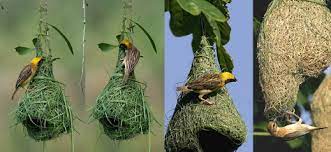
Strategically weaving a nest!

A career trajectory plan keeps you on track. A simple plan like the one below helps us write down what we want to do with our career. Plan strategically. It helps us to keep us energized, focused, and engaged. You can revisit these plans (for example, once a year) to decide whether to continue on or change direction. Your career trajectory can be a combination of vertical and horizontal movements. Vertical movements are promotions within your institution. These are far and few today. Horizontal movements are lateral moves which are more fulfilling, more engaging, make more of an impact, or make more of a difference in people’s lives.  Movement is the key! Good luck!

Career Trajectory Plan

Focus AreaCareer GoalsStrategiesExpected Date of StartDate completedExperience or Evaluation
Professional Development     
Scholarship – Teaching/learning, Research     
Community or Voluntary Service     

Get Ready to Stretch

In 10 years, I see GCC providing quality education that meets the needs of our students and their ever growing need for flexibility.

In order to meet the growing demands of flexibility from our students and their employers, we need to be willing to make schedules strategically. I am all for faculty teaching courses that they want, however the time, format, and frequency of class meetings need to meet the needs of our students. I would like to see us adopt a more positive outlook on reviewing our data. I want all of us to see how our students are doing as they progress from our course into the next. Are there areas that we can grow as instructors to better meet the demands of the next course in our students sequence?

Then I want us to look further into the students’ future careers. What are we leading them toward? What will their work environments look like? What areas can we as faculty grow in order to provide them with the skills they need in their future careers? Can we partner with companies to ensure relevance to our content and our students’ future work environments?

Our faculty are strong and more malleable than we know.. If we get back to the root of the reason why we are all teaching and given the evidence to support change for the betterment of students, we can overcome the discomfort change brings.

Our students are our customers and we need to be sure they want to keep purchasing our product, “knowledge.” We want to create classroom spaces that are collaborative and dynamic. These spaces require ingenuity and innovation. We are teachers but that is only the surface. We are learners and cheerleaders for our content and our students. We are already taking steps to bring more flexibility and change to our classrooms, curriculum, and college. We can see these changes in the online tutoring, the new modalities for courses (live online, flexible attendance), online test proctoring, student services chat systems, instructional videos, grace periods on assignments, allowing students to Zoom into a class session, and many more that I am sure I have missed.

We are well on our way to seeing a full scale change in our campus and yes it will probably take us 10 years to truly adopt the growing world of flexibility but it can be done and I cannot wait to see it.

Into the FYRE!

The group that has been most culturally relevant for me, has been the First Year Residential Experience cohort. I was pregnant when I was hired and was out for 6 weeks during my first semester at GCC. This made it hard to connect with my department.

The FYRE meetings were my favorite part of my first year. It was a place that I felt connected to and that I belonged. Everyone no matter their age, life, past work history, etc. are all starting new at GCC. This made it easy to connect and feel welcome. Chris Neilson cultivated a judgment-free space for us to feel safe asking questions. He was always available to talk to and about anything. My whole cohort was comprised of individuals that I admire still to this day and have continued to be valuable members on the campus. We span multiple departments and act in many different roles.

I feel so blessed to have had them in a challenging time in my new faculty life and still regularly get together with them to discuss the campus and life as a probationary faculty member. This is our final year as probationary faculty. I cannot wait to see where we grow from here!

Flip or Flop

I have been working hard to keep my students actively engaged in class and have found that making class worthwhile is what keeps them coming back. 

I have to ask myself, “what can my students get from me that they cannot get from watching a youtube video?” We are literally competing with the internet and all of the knowledge it holds. We must be better than the videos, even the ones we create, when students are in front of us. Why should they come to class if they can have the same experience online?

This is why I have embraced flipped classroom models and active learning. Putting the learning onto my students ahead of class and creating dynamic and engaging cooperative learning on the days and times that my class meets has created the draw for students to come to class consistently. 

If you are going to flip your classroom I suggest making video assignments (preferably video cued), where students watch a short clip of a longer video, answer a question or two related to the content in the video, then proceed to watching more of the same video or another short video, then answering more questions, and so on. This models more of the classroom feel of taking in some information and practicing it or reflecting on the new information before taking on more new information.

Before using video assignments, my students were not prepared for the active group learning activities that I had planned for the scheduled class times. These video assignments assess their progress and help to motivate the students to be prepared for class.

A Balancing Act

A Little of This – a Little of That

One of my goals as an instructor here at GCC is to improve students’ listening skills. Most of the time I do this without them consciously knowing it. That sounds rather odd. It’s not that they aren’t conscious, but they may be distracted — paying attention to other things — while improving their listening at the same time.

I ask questions that I hope will make them think about what they listen to in their every day life. I ask them to describe what they are hearing and what their first reactions are. I’ve found if I can include visuals they will listen a lot longer and understand more clearly what the music is trying to convey. I have discovered that students start paying more attention to everything that is part of their listening day, and that is my intention.

One of the questions I often ask is “Do you listen to orchestral music?” Most students answer, “No, never.” I then talk a little about film. Do they watch films? Again, most of them say, “Oh, yes, I watch movies all of the time.”

With that they usually realize that they have listened to lots of orchestral music. Here’s an example: Composer John Towner Williams (we have learned through trial and error that there are a lot of ‘John Williams’ out there so I have become accustomed to using his middle name just to make sure we are all talking about and listening to the same guy), who has had the temerity to scare us out of the water, share the feeling of flying under all sorts of conditions, whether on a broom, a bicycle, or as a bird, and show us the martial qualities of The Dark Force. I chose this clip because of the content, the audience reaction, and, in this case, not for the visual images, which are slightly blurry. The answer to your question about the first instrument you see is – a contrabassoon. This is as iconic as Bernard Herrmann’s strings in Pyscho, but I digress. One of these days someone will re-master it and it will be clear — but in the mean time, I dare you to stick your toe in the water….

Williams’ Jaws

Known for many different kinds of music, Elmer Bernstein’s music has been patriotic and poetic. Here is a well-known theme. I usually choose something from the film “To Kill a Mockingbird,” but you should all be familiar with this.

Elmer Bernstein’s National Geographic Theme

There are a number of others I could have included if we were learning some specifics, but I thought it might be interesting to simply poke a little fun with Vangelis:

Mr. Bean with one of my favorite conductors – Sir Simon Rattle

I hope you enjoyed the listening.

Apologies for any advertising that may have appeared. In Canvas this does not show up.

6x6x5 That One Thing

a hand with the first finger in the air against a solid blue sky

Now I slide down a potentially slippery incline plane to make a case for a life philosophy based on a line from a cheesy comedy-western film. Hardly the fodder for rigorous academic inquiry.

Note: This is another installment in my participation in the 2022 Write 6×6 Challenge, they must sometimes shake their heads at what gets syndicated into their site! PS who even remembers what I mean by blog syndications? Oops I am already writing off my intended path…

But there was always something more to this sequence between Billy Crystal’s Mitch character and Jack Palance’s Curly in City Slickers:

Here I have the dialogue:

Curly: Do you know what the secret of life is?

Curly: This. [holds up one finger]

Mitch: Your finger?

Curly: One thing. Just one thing. You stick to that and the rest don’t mean shit.

Mitch: But what is the “one thing?”

Curly: [smiles] That’s what you gotta figure out.

As usual with the internet, I am hardly the first or only to find meaning in it.

You find Curly’s Law used in blog posts that offer wisdom in marketing / branding, purpose-finding, theology, even skeet shooting. My first reference and maybe one of the more clever is Jeff Atwoods framing for an approach to programming.

To me I think in the edtech field there is often a Secret of Life desire for the “best tool” or teaching strategy or resource or X, this is the allure of solutionism (AI! eportfolios! Blogs! Web 2.0! Web3! Metaverse! the LMS! Badges!) when the better approach as a practitioner (be it teaching, using technology, etc) is that you have to (a) work at something like a practice (“stick to it”) and (b) that you need to figure out what it is, not rely on some company/blogger/consultant/keynoter to tell you what it is (“That’s what you gotta figure out”).

The one thing is… there is no one thing.

For me this has been at the core of things like a [obsessive] Daily Photo practice, the merging of that approach with the DS106 Daily Create, (which evolved into a WordPress theme for doing your own daily prompt activities) at one time it was running (which I still hate).

It’s not the most Important Thing (c.f. love, family, etc) it’s one thing you choose to devote energy to as a practice.

And yes I even once presented on this at Glendale Community College!

That’s fine, the usual CogDogBlog trope of sweeping up crumbs of the past. What about 2022?

Well…

I am slated to do an online conference session May 6 (yes I am being fuzzy on the details, still waiting confirmation) pitched as:

Take all suggestions for pitched solutions to pandemic sized challenges, inspirational messages from keynote speakers, promises of educational technology tools or teaching strategies as a magic fix, with the largest grain of salt. What can we get from a cliché dialogue from a Hollywood western character? Maybe more than you might think. I offer some lessons learned from the serendipity of the internet, tours of rabbit holes of curiosity, kitchen metaphors, image thinking, all to drive some discussion about finding and sticking to your one thing.

What’s Your One Thing?

I am seeking examples of types of “things” educators… well actually anyone, takes up in a Curly-like fashion. Something you do, likely outside the worky-work stuff, that you just stick with. That you find the practice eventually awards in maybe an achievement (running a marathon, baking a quiche, building a giant sculpture) but also, that gives you an internal sense of that Curly spirit.

It’s not something you are passionate about, it’s a thing you take on with a regular practice.

Is anyone willing to share their one thing? Often it is something our colleagues may not even know about.

What’s Someone Else’s One Thing?

If you are stuck on that, share what you know from a friend, colleague, maybe someone you see signs of the one thing in social media as a “One Thing” they seem to do…

Like I know Dave Cormier builds doors and garden gnomes and other wood things in his workshop.

Or Laura Ritchie runs a lot and wrote a book!). I see other colleagues building log cabins, long distance trail runners, being master gardeners, flying planes, making beer at home, heck I know 5 colleagues who make wood pens.

You see, these One Things would not really work for me, but it works for them. That’s a key.

It’s more than a hobby- I have a sense that the focus and practice that goes into someone’s one thing helps them decompress and even rethink their work or teaching practice.

That’s my experience when I take that deliberate time each day to go outside with a camera, try to relax and find something that would make for an interesting photo. I’ve not been doing Daily Photo thing 15 years to get an award or claim some achievement, it’s that the practice, the focus itself is the real reward.

Again I ask, what is your One Thing (and likely you have more than one, it’s not exclusionary). What is something you “stick to” doing on a regular basis? What does it do for you?


Featured Image: Yes a bit ironic that my photo was posted for the original @DailyShoot challenge (which inspired the DS106 Daily Create) but also references Curly’s Law.

Curly's Law
Curly’s Law flickr photo by cogdogblog shared under a Creative Commons (BY) license

Our PLC is Wizzy WIGging It With 4DX

I have to be honest. When people started throwing around the term 4DX last year, I tuned them all out. After teaching for over 30 years, I think I’ve pretty much seen everything come and go over the years. It wasn’t that I’d planned to not participate. As I’ve said before, I’m a team player, so you want to play 4DX? I’ll play. I may not like it, but somebody somewhere thinks this is worthwhile. So I’ll play, but I’m going in blind.

So our department set up two professional learning communities (PLC), and apparently, we’re doing a good job of making and keeping our goals each week. Our team lead informs us that we are at 94% for making and keeping our goals. That’s good. Attendance is not so great, but seriously, I think we’ve all figured out that meeting once a week just to say you’ve done what you were supposed to do is a bit of a waste of time. That’s indicated by our 41% attendance last week. But overall, I get a sense that our team really wants to reach our goal.

What is our goal?

Well, apparently we have an overall college super goal and then 3 Battle WIGs. A WIG is a wildly important goal. Each departs chooses a WIG to align with any of the three institutional Battle WIGs. Below are our goals.

GCC SUPER GOAL: Increase completion with equity from 23% to 33% by Fall 2024.

  • Battle WIG #1- Increase headcount of the new-student fall cohort with equity from 3,395 to 3,500 by October 2022.
  • Battle WIG #2- Increase student successful course completion with equity from 62% to 65% by October 2022. <–WE ALIGNED TO THIS ONE
  • Battle WIG #3- Increase Fall-to-Fall retention with equity from 54% to 57% by Fall 2022.

Our Dept WIG: Because we value learning, we will increase student successful completion with equity from 67.3% to 70.3% averaged across all department course offerings by October 2022.

Each week we’ve come up with some really good interventions to help our students be successful in our courses, but I’m getting a sense that most of us are not seeing any changes in student success. All the things we are trying can’t help a student who is just over his or her head. I think many students have this unrealistic view of what it takes to be successful in college. Our students have jobs. They have families. They have a lot going on. And then they register for 3-4 college courses and think they have enough time to be successful. Well, we’re all learning that these students are not set up to succeed. We’re doing all this outreach only to discover that many of our students are never going to be successful because they are already behind the 8-ball.

We recruit them and tell them to register. It’s affordable. We have flexible courses. You can take online courses or live-online. What we should be telling students is how much time it takes to be successful in a course. They need to be told to map out their time on a calendar and see how much time they have left for a course. They need to be told about support on campus before they start a class and perhaps given some suggestions for how to ask for help and/or how to read the course syllabus. But the most important skill they need is how to motivate themselves to do their work.

With all the weekly interventions we’ve tried this semester, most are met with silence. Students don’t even reply. After just two weeks into the semester, I was ghosted by a number of students. And those who did reply had excuses and promises to submit the missing assignment which never did materialize. Those that I could get to talk to me said they just didn’t have enough time to do all the work and seemed surprised that they had so much to do in one class, which is the case when you register for an 8-week or even a 12-week class.

Sadly I think we’re wizzy WIGging to no avail. I think the best interventions are those that could happen before students register for their courses. I think it’s too late for most after the course has started. They can’t quit their job. They can’t quit their family. So what’s left? Not doing their coursework. Basically quitting school before they’ve actually started.

The Other DEI… Diversity in Examining Ideas

The Other DEI… Diversity in Examining Ideas

There is the need for civil dialogue on the complex and controversial issues of our time.  It should be one of the tasks of higher education to illuminate the path toward such a goal.  This quest, however, is fraught with danger in that there are some who would rather shut down dialogue and debate rather than engage in rational intellectual interchange.  The examination of ideas and perspectives different from one’s own can be disorienting.  I often remind students to embrace the cognitive dissonance they may at times experience as they learn new philosophical ideas, rather than simply run from it.  Even if one does not change their views on a given topic, the challenge of working through the intellectual discomfort of foreign ideas can lead to a deeper understanding and appreciation of the views which they hold.  I hope all would resonate with the words found in the Arizona Revised Statutes when they state:

“It is not the proper role of an institution of higher education to shield individuals from speech protected by the first amendment, including, without limitation, ideas and opinions that may be unwelcome, disagreeable or deeply offensive.”

Toward this end of promoting free exchange in the marketplace of ideas, the GCC Philosophy and Religious Studies Department along with the GCC Philosophy Club continues to sponsor its bi-annual panel discussions—God & Truth; Critical Dialogues.  These events allow a spectrum of speakers to engage significant and, sometimes, controversial topics in an atmosphere of mutual respect and reasoned engagement.  The issues discussed run the gamut from religious issues such as the meaning of life and God and morality to the political and cultural issues of transgenderism and religious rights and civil rights.

Our recent Critical Dialogues panel was titled “Religion and the Public Square: Scope and Limits of the First Amendment” and, as the title indicates, dealt with the extent of religious speech and expression in light of other recognized rights. 

We are already planning our next Critical Dialogues panel discussion set for October and we are planning to tackle one of the most contentious issues in our culture—Abortion.  Dealing with a topic which is prone to sloganeering and emotion is challenging and we are hopeful of examining the philosophical and legal aspects of this debate from different perspectives.  And, as always, we will be seeking to model to our students, staff, and community how to have a serious and substantive conversation in an engaging and civil manner. 

I wrote a piece for the 6×6 blog series back in February 2020 (before Covid!)—Celebrating the Value of Free Speech!—and I ended that piece with the following words which still seem apropos:

The Need for Vigilance

The culture of free expression and civil disagreement is healthy at Glendale Community College. This is partly a function of the laws enshrined in the Arizona statutes as well as the legal precedents handed down in defense of the Maricopa County Community College District.  For example, in a 2010 decision by the U.S. Court of Appeals for the Ninth Circuit—Rodriquez v. Maricopa County Community College District—these powerful words are found:

“Without the right to stand against society’s most strongly-held convictions, the marketplace of ideas would decline into a boutique of the banal, as the urge to censor is greatest where debate is most disquieting and orthodoxy most entrenched.  The right to provoke, offend and shock lies at the core of the First Amendment. This is particularly so on college campuses.”  

Laws and legal precedent are necessary but not sufficient.  There is always the need for vigilance.  There must continue to be a firm commitment to freedom on the part of individuals who inhabit our institutions of higher learning.  As Alan Charles Kors and Harvey A. Silverglate remind us, “Freedom dies in the heart and will before it dies in the law.”  It is for this reason that institutions like Glendale Community College with their commitment to the free exchange of ideas ought to be celebrated and emulated.

The keys to student success!

The New Nursing Student 

Dr. Ingrid Simkins

A recipe for success:

Set your long term goals to a year of completion 2023-2024.

Meanwhile, in a large mixing bowl add:

1 c. positive attitude: This may at times be on backorder, but if you search you will find it. 

1 tsp teamwork: Success tastes the same achieved all alone or in tandem with your peers.

1 TBSP motivation: Remembering why you are here and your dreams helps!

1 c. time management: An essential item in the nursing school/life process. Measure accurately!

1 oz of hope

Stir until well blended. Cover and set in a warm place allowing for Success to rise for 2 years. Bake and serve at pinning. Enjoy!

The new Graduate Nurse

Dr. Mary Resler

Congratulations! As a new graduate nurse you have successfully completed a nursing program and have completed your NCLEX exam. This may seem like the end of the road for education but it is not. Nurses are lifelong learners! Success is keeping current on evidence based practices. Success is participating in policy change. Success is improving your patient outcomes. Success is maintaining your license. Success looks different as a lifelong learner then it does for a nursing student. 

Many new graduate nurses measure success by completing a difficult patient assignment. They measure success by the years they have worked. They measure success by working on a specialty unit. They measure success by catching a medication error. They measure success by favorable patient satisfaction scores. True success as a lifelong learner or new graduate nurse is to never be complacent in your knowledge. Always push yourself to learn by asking questions and continuing in your education. Knowledge is of no use if you do not use it. 

The new Nurse Educator

Dr. Grace Paul

Students have jumped over hoops, taken several exams, sacrificed participating in several occasions, and spent several hours pondering and even working in a hospital environment to know if this is indeed what they want to do with the rest of their lives. They know what their career goal is, and now they are in our classrooms. 

HCC Henderson Association of Nursing Students - Home | Facebook

Once they are in our classroom, they are our responsibility. While there may be several factors connected to student success like age, gender, previous experiences, GPA, etc, these are all non-modifiable factors that we as educators, can do nothing about. What we have in our hands to help these students succeed are the modifiable factors – factors that we as educators can help make a difference in these students’ lives, and allow our students to be successful in their chosen careers. 

There are several modifiable factors that we can use to our advantage for student success. One such factor is responsiveness.  Responsiveness is responding to a student. This can be in the classroom during class. A slight nod, a smile, a positive gesture, direct eye contact or a positive note sent to the student are all ways by which the student feels safe and positive about themselves. Smiling eases the students and makes it easier for students to come forward with questions and be communicative. 

Cartoon boy with positive attitude N28 free image download

As the new nurse educator figures out how things work in the new environment, the curriculum, and the work culture, students are usually quick to recognize that the instructor is new. But the timely response, open communication, a smiling and respectful attitude, and humor in the classroom, makes a huge difference as to how the students accept and respond to the instructor. 

The responsiveness of the instructor makes the students feel loved and cared for, knowing that they are the priority for the instructor. Keep the classroom space non-judgmental, which helps students to focus on the learning. This creates a trusting relationship between the students and the teacher, contributing immensely to the success of the class as a whole and the individual student. 

Responsiveness is also important when corrections have to be made. When a student makes a mistake, and when the mistake is recognized and acknowledged,  use the situation as a learning opportunity. Do not make it punitive. If the student does not learn from the mistake, then it is an opportunity lost. It is important for the educator to provide resources to correct the mistake. 

Corequisite remediation showing signs of success in NC - EducationNC

Another important tool for responsiveness is remediation. Remediation is a powerful tool when it comes to improving test results. It is helpful for the instructor and the student to go through the test, and look for a pattern, and to understand the reasoning behind the right and wrong answers. It is helpful for the student to bring another student to these meetings, as students tend to learn better from their peers rather than from the instructor. 

To summarize, student success is a commitment from the student as well as the educator. There are modifiable and non-modifiable factors when it comes to student success. Responsiveness is one such tool that will help to promote trust, and therefore a positive relationship, which  will help promote student success.