

When I’m traveling — if I’m driving — I don’t choose the scenic route unless it’s a relatively quick trip (speaking metaphorically). Otherwise, it’s Interstate all the way, baby. As fast as I can go. No, we can’t stop and see that scenic spot even though we’ve driven by it 20 times and we’re ahead of schedule. I’m trying to get a lot done, and to be very honest, I’ve asked to do it. I’ve made promises and I’m looking forward to keeping them so I need the “Freeway” to get things done efficiently, so there will be times when the Interstate is the best access to accomplish my goals that week. So, when I write about transitions, pathways, and doors, as was suggested as an alternative, I realized, the rest of the time, when I’m not whizzing by, I do take the scenic route, because I think that leads to understanding the given subject.
I’m going to choose both options for this writing – the scenic route and the Interstate because I’m engaging students through our GCC Canvas website and I want it to be inviting, comfortable, and visually appealing – and yet have the access of going through a lot of important and relevant material. I want my students to feel that this course is where they would really would like to spend their time each week and just listen to music and, hopefully, think about what they’re listening to.
So many people think that by studying or learning about Bach and Mozart will make them smarter, especially as children. That’s not how it works. Music helps them learn how to use their brains in new ways — and can work in virtually any genre, especially if you show the influences of that genre.
I have had students who were heavily into STEM or specifically Math or Science, who told me at the end of class, “This course was the only thing that kept me sane because I had such a heavy workload. I looked forward to working on this class and learning about music. I didn’t know what it would be like, but it became so much more, and was just what I needed. Thank you for offering a place where learning could be comfortable and I could share my thoughts about what we were listening to, and learning about.” Those kinds of comments are what I live for. To me, it’s what teaching is all about. Connecting and knowing that you have connected.
Moving on to doors, I have two specific images that I like to use that I think makes students think “it’s open, let’s go in.” I’m hoping that’s what they’re thinking. Before the semester begins, students are practically begging to get in, so I hope that these two visual elements help to welcome them. (When I taught in the classroom, I never had people try to “learn early,” but it seems to be something that they do in asynchronous classes, and I don’t blame them.) When I’m working asynchronously, I’m trying to get a jump on things as well, because I know how many deadlines I have coming down the pike, and how many decisions – artistic, educational, health wise, semester-wise are coming that I need to be on the job “working the problem.”

The idea is to invite students each week with more visual elements. I usually start with the photo above in week one. Somewhere later, I usually include this next one.

Regarding transitions, I just finished a book the other day by Mark Rashid, Horses Never Lie, (Simon and Schuster), and I thought how appropriate to come across this for my life and my teaching at this moment.
It was meant to show people how to be “soft” when riding a horse. You don’t need to jerk them around and try to be “the boss,” or to “dominate,” but you can gently guide them with light cues, allowing the horse to decide what to do. They have a wealth of information that they’ve often been taught and the author thought, as he was trying to get a particular horse to do something, “this horse knows what to do,” so subtlety will help better than a firm hand in order to let him figure it out.
And I thought, this is exactly what I’m trying to do with my students. I give them certain information, then we listen to exemplify that. I often ask them to share a piece with the rest of the class, and I ask them to discuss what and why they chose the music they included and what they thought of others choices as well. “Soft.” The metaphor may not be what they, as students, would use to describe what they’re doing, but I know they can do it – just like the horse usually knows what he/she is supposed to do. I ask them to keep their comments positive, and I think they appreciate that because they know they’ll be treated the same way with their choices. No judgement. Their opinion is honored.
We’ve already talked about the requirements for writing cues, so as the educator, I give them time to figure it out based on what I offer as prompts. And I’m willing to offer as many prompts as they need.
I had just finished reading this and I thought “I need to read more by this author because I think he’s on to something.” It allows students (and riders) to be more creative, to use their knowledge and what they’re learning about in the course, and all of the learning they’ve amassed up to this point. I used to tell my students (I don’t usually do this anymore) “you already know so much about music because you have so much music available to listen to.” I don’t say it anymore, because I think it’s obvious. Perhaps not.
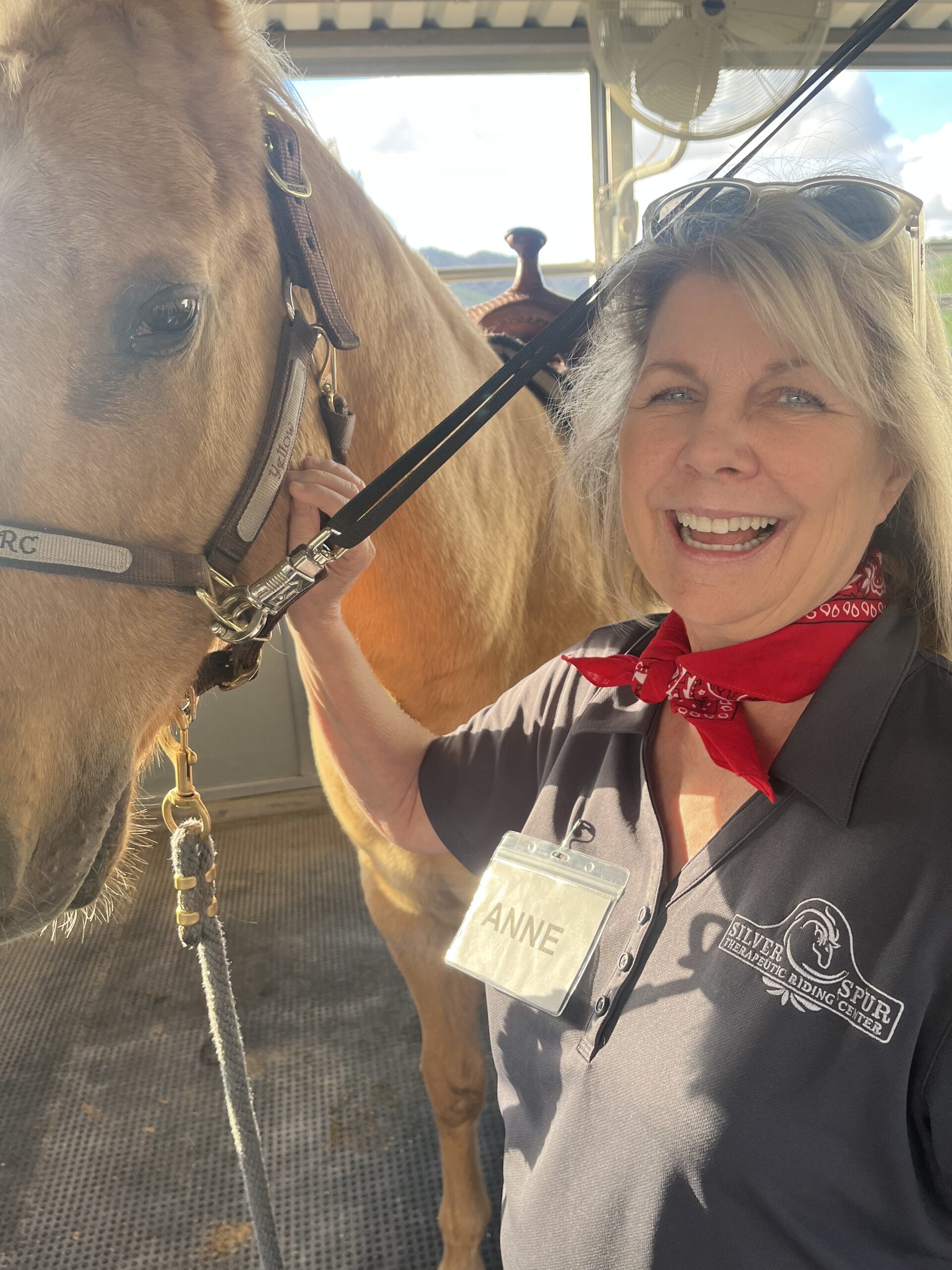
Here is Yellow Horse, a very wise 22-year old Palomino, who has cotton candy for his forelock. Over the years, he has taught me the meaning of being soft in my prompts and cues. I rarely have to do much of anything. He’s so attuned to everything and is such a joy. I hope that I can bring more of that to my students.