
We likely all have a certain type of neurodiverse learner in our classrooms — the student with a history of childhood trauma. Whereas definitions of trauma vary and our understanding of the effects of trauma are constantly being updated, one thing is clear: Complex trauma physically changes the brain.
Although trauma manifests in many ways, one hallmark effect is the development of an overactive stress-response system. This can lead to hypervigilance, attentional difficulties, distrust of teachers as authority figures, loss of self-efficacy, and a host of other issues that interfere with learning.
The infographic below outlines some practices college instructors can employ to more effectively teach students who have experienced trauma. The good news is these are not instructional “add-ons,” but rather universal best teaching practices that benefit all learners.
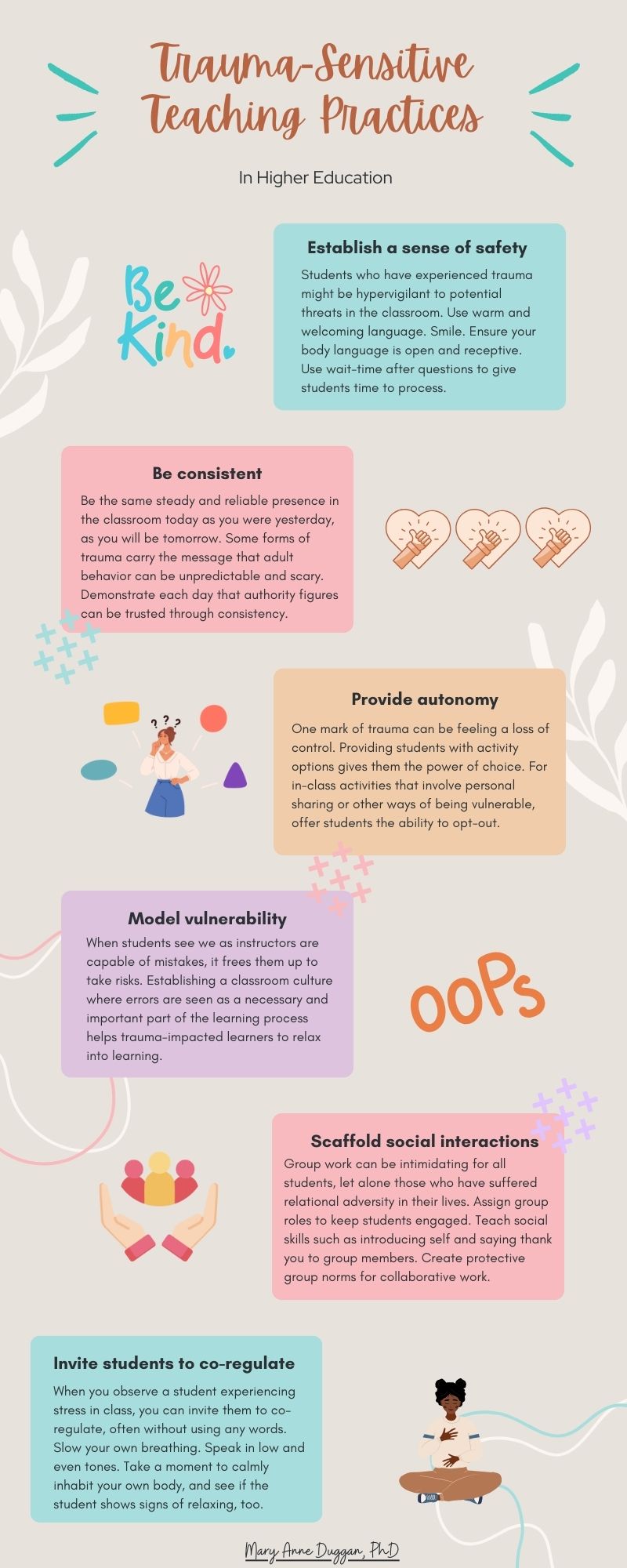
View Trauma-Sensitive Teaching Practices for Higher Education on Canva
Do you have a trauma-informed teaching strategy that works well for you? Add it to the comments!
Hi,
Love this! Do you have this in a 8.5 by 11 flyer? We want to print it but the size is coming out blurry. Thanks for any help!
Hi Jennifer – I just e-mailed a copy of the 8 1/2 X 11 inch flyer to you. I am so glad you will be sharing it with others! – Mary Anne
I have a few suggestions that I make sure that our therapeutic equine riders have access to when the stress-response takes hold. This was also offered recently at a Fulbright National Conference as well.
– A Quiet Room where one can chill out, there can be activities there that one can use as well, colors, yarns, other finger activities that are quiet
– Quiet, in general, so that the amount of stimuli is reduced
Quiet voices during lessons – when needed. Neuro-typical don’t always realize when the aggregate of voices becomes too loud.
Headphones or Headgear to calm those that can’t take the noise or can’t leave a room where noise may be escalating in a room or an area
Thank you for these, Anne!